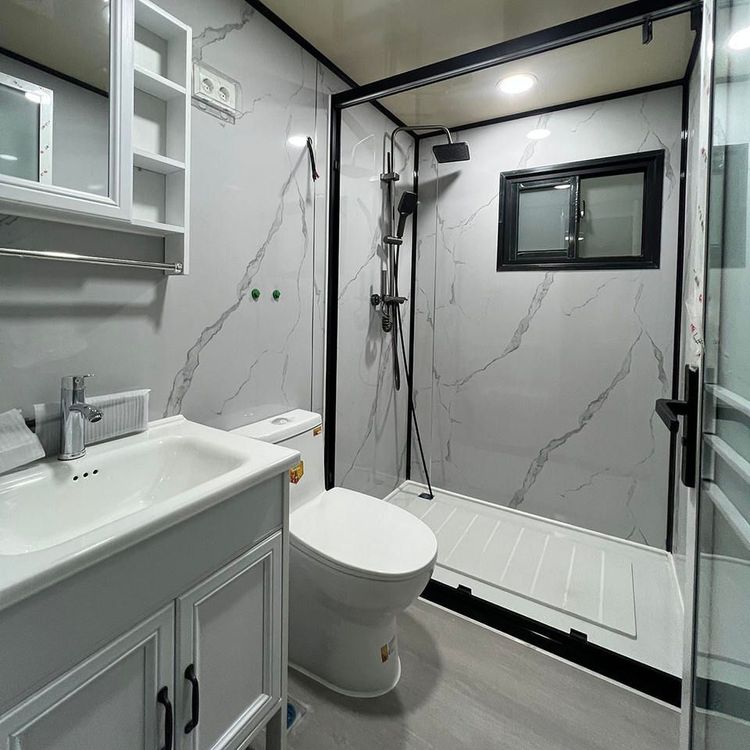
Engineering Mobile Toilet Fixture
There are various types of engineering mobile toilet fixtures, mainly including the following:

In terms of material and operation mode, the 304 stainless steel foot-pedal packing squat toilet is one of the common types. It is made of 304 stainless steel, which has good corrosion resistance and durability and can adapt to a variety of complex environments. Its foot-pedal operation design is simple and easy to use. Users do not need to touch the toilet with their hands, avoiding the risk of cross-infection and ensuring high hygiene. Moreover, it is suitable for waterless environments and can well meet usage requirements in some water-scarce areas or temporarily built places, such as outdoor construction sites and large-scale outdoor event venues.
The 304 stainless steel squat toilet with separate urination and defecation is also quite distinctive. It is equipped with an odor-proof flip cover, which can effectively prevent the emission of odors and keep the air in the toilet fresh. The large-diameter design makes it more convenient to use. The characteristics of separating feces and urine as well as dry and wet substances are conducive to subsequent feces treatment and resource utilization. This toilet is made of 1.2 thickened plates, which is sturdy and durable, and will not rust or corrode, allowing for long-term use. It is mainly suitable for waterless areas such as rural renovations and outdoor dry toilets, helping to improve rural sanitation conditions and outdoor toilet environments.
From the perspective of sewage treatment methods, engineering mobile toilet fixtures can be divided into water-flushing and waterless suction types, circulating water-flushing types, and dry packing types. Water-flushing toilets flush feces away with water flow, providing good cleaning effects, but they require connection to a water source and sewer and are suitable for places with complete water and electricity facilities. Waterless suction toilets use suction equipment to remove feces without water, making them suitable for water-scarce areas. Circulating water-flushing toilets purify water through a circulation system and reuse it, saving water resources. Dry packing toilets pack feces in biodegradable bags, which are convenient for cleaning and transportation and are often used in temporary events or mobile places.