
Engineering Mobile Temporary Toilet
An engineering mobile temporary toilet is a facility that can be moved as a whole and provides toilet services to the public, suitable for various places such as stations, docks, and tourist attractions.
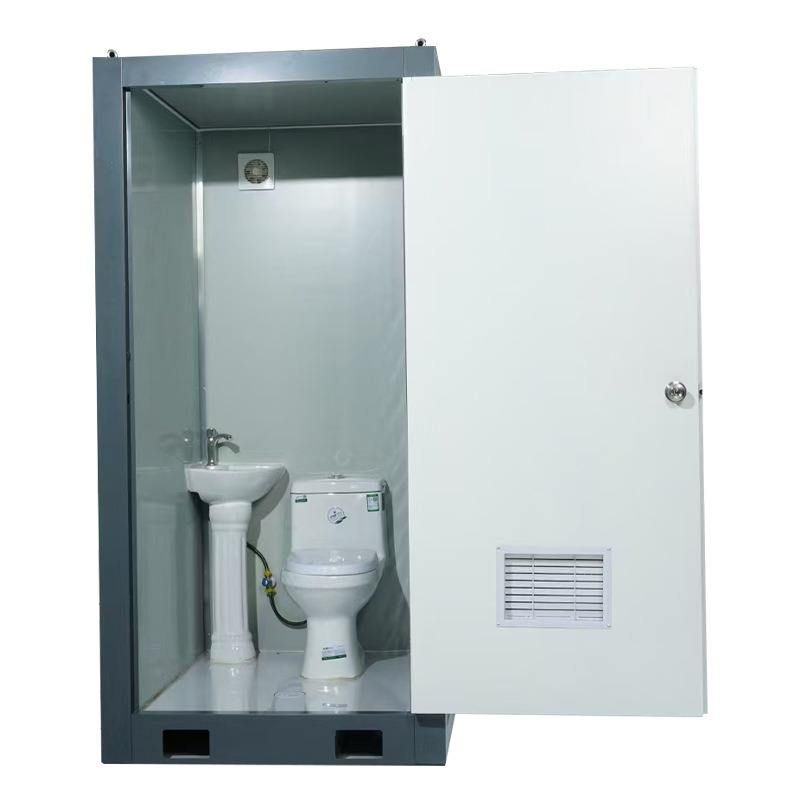
I. Basic Composition An engineering mobile temporary toilet generally consists of a fecal sewage storage tank (or disposal device), flooring, sanitary ware, walls, washing equipment, water tanks, roofs, and mobile devices. Among them, the fecal sewage storage tank is used to collect excrement, the sanitary ware includes toilets or squat pans, and the mobile device ensures its overall relocation.
II. Classification Methods
- By structural form: It is divided into single-structure mobile toilets (independent units) and composite-structure mobile toilets (multi-unit combinations).
- By mobility method: It is divided into lifting and handling types (requiring external equipment for assistance in moving) and powered and towed types (with their own power or capable of being towed by vehicles).
- By sewage treatment method: It is divided into water-flushing and waterless-flushing suction types (relying on water sources or vacuum suction), circulating water-flushing types (where sewage is purified and reused), and dry-packing types (where excrement is collected in biodegradable bags without the need for a water source).
III. Core Advantages
- Mobility: It can be quickly deployed to places with temporary needs (such as large construction sites and exhibitions) and then relocated to other places after use, avoiding the demolition costs of fixed toilets.
- Economic durability: The design follows the principles of being lightweight and sturdy, using corrosion-resistant materials (such as stainless steel and high-density polyethylene) to reduce maintenance frequency.
- Environmental protection: Dry-packing and circulating water-flushing types reduce sewage discharge, meeting ecological requirements; some models are equipped with solar power supply systems to reduce energy consumption.
- Human-oriented design: It takes into account barrier-free needs (such as ramps and handrails) to enhance the user experience.
IV. Price Range Prices vary depending on specifications and manufacturers: A simple steel-structure mobile toilet may cost around 50 yuan (possibly for small accessories or second-hand equipment), while a fully functional outdoor environmentally friendly mobile toilet (with a sewage treatment device) can cost up to 7400 yuan. High-end models may integrate air conditioning, smart sensor flushing, etc., and have higher prices.
V. Design Principles It is necessary to balance mobility convenience (controlling height and width), structural stability (wind and earthquake resistance), material lightweighting (for easy transportation), and functional integrity (such as ventilation and lighting). Mobile devices (such as axles and tow hooks) need to be reasonably laid out to ensure transportation safety.



