
Encounter with a Mobile Toilet
Encountering a mobile toilet is usually a novel experience, but in special circumstances, it may come with safety risks.
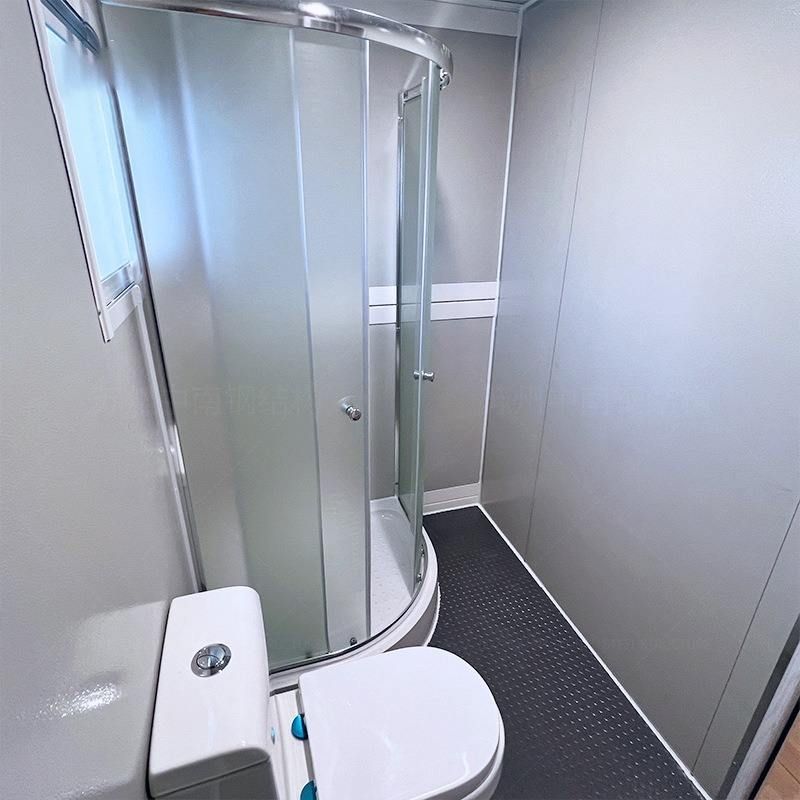
Basic Definition and Functions of Mobile Toilets
A mobile toilet (Portable toilet) is a sanitary facility that can be moved as a whole. It meets the toilet needs of fixed or temporary locations through modular design. Its core components include a fecal sewage storage tank (or treatment device), floor panels, sanitary ware, etc. Some high-end models are also equipped with ventilation and lighting systems. According to the method of movement, they can be classified into trailer-mounted, self-propelled, and vehicle-mounted types; based on sewage treatment methods, they can be divided into direct-discharge, recycling, and packaging types. Their core advantages lie in mobility, rapid deployment, and strong adaptability, and they are widely used in stations, docks, tourist attractions, large-scale event venues, and other scenarios.
The 'Mobile' Experience in Daily Scenarios
In most cases, the 'movement' of mobile toilets is the result of human planning. For example, scenic spots adjust the positions of toilets according to tourist traffic, or municipal departments temporarily place toilets during road construction. This type of movement is usually carried out by special vehicles (such as forklifts and trailers), and the process is slow and controllable. The public does not directly perceive the 'movement' process but can only observe the change in position. Some innovative designs, such as self-propelled mobile toilets (equipped with wheels or a power system), may achieve position adjustment through slow driving, but the speed is extremely low (usually not exceeding walking speed), ensuring relatively high safety.
Safety Risk Cases in Special Scenarios
On May 11, 2025, an extreme case occurred in Hangzhou: Tourist Xia Xia was using a mobile toilet marked '24-hour Convenience' in the parking lot of the West Lake scenic spot when the toilet was mistakenly loaded onto a truck. It 'raced' 38 kilometers on the Shanghai-Kunming Expressway at a speed of 120 kilometers per hour for 23 minutes. This incident exposed potential risks in the management of mobile toilets:
- Lack of fixing measures: The toilet was not fixed to the ground with equipment such as chains or ground anchors, making it easy to be moved by external forces;
- Monitoring loopholes: The parking lot management failed to detect the loading of the toilet in a timely manner;
- Insufficient emergency mechanisms: The people in the vehicle lacked means of alarming or self-rescue. This incident has drawn public attention to the safety standards of mobile toilets and prompted the industry to improve fixing norms and emergency plans.
Summary and Suggestions
The 'mobile' characteristic of mobile toilets is their core advantage, but strict safety regulations must be followed. When encountering such facilities, the public can observe their fixing status (such as whether there are chains or abnormal weight) and avoid using them in unsupervised areas. Management departments should strengthen inspections to ensure that the toilets are firmly connected to the ground and mark emergency contact information. In special circumstances, such as when a toilet moves unexpectedly, one should immediately call the police and stay away from the vehicle to ensure personal safety.
You may also like

Portable Toilet Container in 2026: Buying Guide & Recommendations
Read More
Portable Toilet Color Steel Custom & OEM: Design & Bulk Production Guide
Read More
Portable Toilet Color Steel: Top Options & Considerations
Read More