
Photography Skills for Empty Houses - Containers
When photographing empty container houses, consider the following tips to comprehensively and clearly present the condition of the house while avoiding distractions:
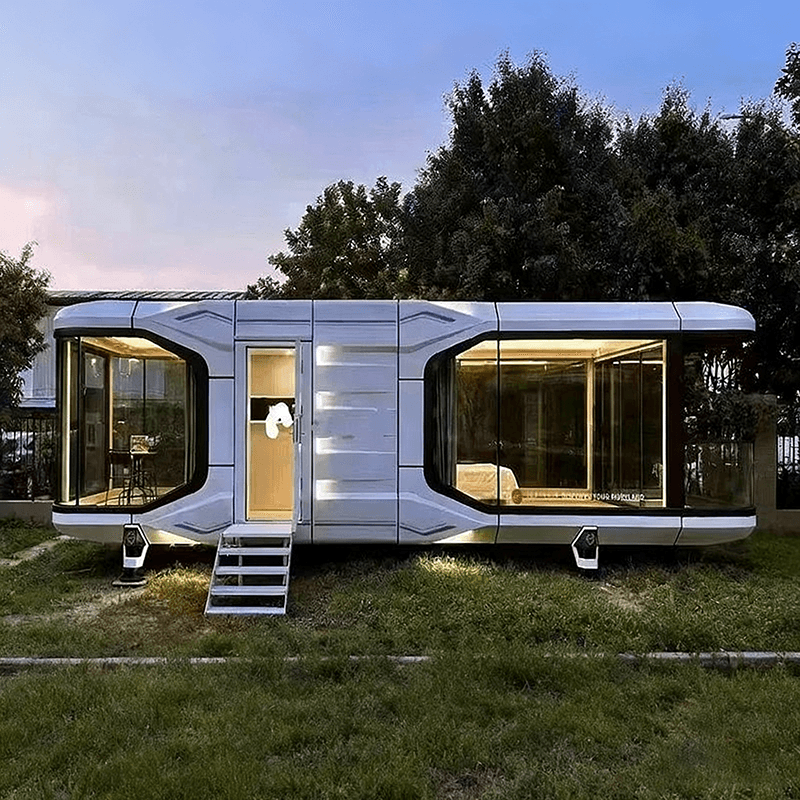
1. Shooting Angle and Composition Open the 'door' of the house (such as the container door or house entrance) fully. Stand to the left of the door and shoot at eye level or a slightly upward angle, ensuring the lens captures the entire interior. The frame should include the floor, four walls, and ceiling to create a panoramic view, avoiding partial cropping. If the space is narrow and long, step back to an appropriate distance or use a wide-angle lens to reduce distortion, but keep the vertical lines in the frame straight to avoid tilting.
2. Highlighting Key Details
- Cleanliness and Dryness: Focus on photographing the floor and four walls to ensure there is no dust, water stains, or clutter. If there are stains or damp marks on the floor, take additional close-up shots and adjust the lighting to highlight the issues.
- Structural Integrity: Check the ceiling, four walls, and the bottom of the container (or house floor) for cracks, dents, or rust spots. For the bottom structure, take both overall and close-up shots, especially focusing on the seams and edge areas, to confirm there is no deformation or damage.
- Clarity of Identification: If the house has a number, identification mark, or nameplate (such as a container number), take clear and distinguishable photos, avoiding reflections or obstructions. The identification is usually located on the right inner wall or near the door frame, so adjust the angle to ensure the text is complete.
3. Supplementary Shots for Abnormalities If abnormal dents, rust spots, or cracks are found on the bottom of the container, take separate close-up shots and mark the location (such as 'dent on the right side of the bottom'). When shooting, use a reference object (such as a coin) to help show the size or use oblique lighting to highlight the texture. If there are scratches or coating peeling on the four walls, also take close-up shots of the affected areas and ensure the focus is clear.
4. Avoiding Distractions
- People and Clutter: Ensure there are no people, tools, or other items in the frame to avoid obstructing key areas. If there are fixed facilities in the house (such as lights or brackets), remove or adjust them in advance.
- Partial Cropping: Do not shoot only partial areas (such as just the ceiling or floor). Present the spatial structure in its entirety; otherwise, it may be questioned as 'selective shooting' or hiding problems.
- Obstruction of Key Parts: Do not move or obstruct the locks, seams, or structural connection points of the house randomly. These parts are important for judging the condition of the house. If you need to open the lock or lift the cover for inspection, restore it to its original state after shooting.
5. Lighting and Post-Processing Prefer natural light and shoot during the day to ensure even lighting. If the indoor lighting is insufficient, use fill lights, but avoid reflections or shadows. Only allow adjustments to brightness and contrast in post-processing. Do not retouch to cover up problems (such as removing rust spots or cracks).



