
How About Emergency Mobile Toilets
Emergency mobile toilets offer advantages such as modular and rapid installation, adaptability to complex environments, user-friendly functional configurations, diverse environmental protection treatment solutions, easy installation, and multi-scenario suitability, making them an ideal choice for addressing temporary public health needs.
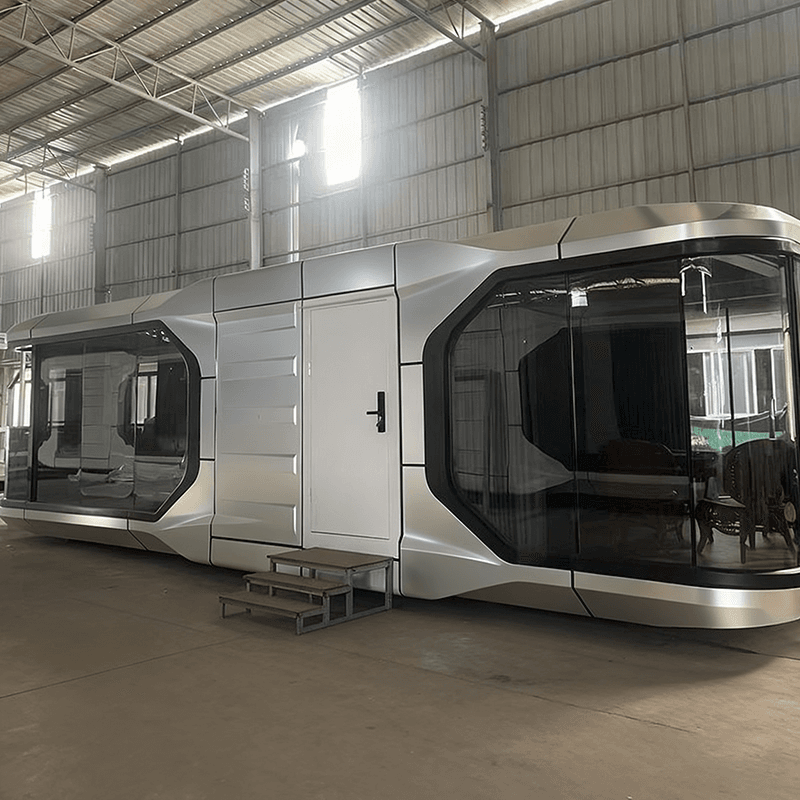
1. Modular Design and Rapid Installation
Emergency mobile toilets feature a modular structure that enables quick disassembly and flexible combination. For example, a single module of an assembled mobile toilet has an unfolded area of approximately 4 square meters. The four-person configuration version includes two squat toilets and one sink, with an assembly time that can be shortened to within 30 minutes. The modules are connected through standardized interfaces, allowing for simple assembly to form multi-squat toilet combinations (such as 4, 8, or 16 units). They have low requirements for the foundation ground, with hardened surfaces or flat and compacted soil being sufficient for installation. This design enables them to be quickly put into use in scenarios such as disaster relief, large-scale events, and temporary construction sites, effectively addressing short-term public health needs.
2. Weather-Resistant Materials and Adaptability to Complex Environments
The main structure is made of lightweight and high-strength materials such as galvanized steel sheets, stainless steel, or engineering plastics. The interior is equipped with freeze-resistant PVC or PPR pipelines, enabling adaptation to harsh environments such as low temperatures and humidity. In response to the intense ultraviolet rays in high-altitude areas, some products have their outer surfaces coated with weather-resistant polyester coatings to delay material aging and extend service life. For example, fiberglass-reinforced plastic mobile toilets stand out in scenic spots and long-term outdoor locations due to their corrosion resistance and ease of cleaning.
3. Functional Configurations and User-Friendly Design
Standard configurations include a water-saving vacuum toilet flushing system (with a single flush water consumption of approximately 0.5-1 liters), hand-operated or sensor-operated flush buttons, lockable doors with emergency opening devices, ensuring both hygiene and safety. High-end products further incorporate facilities such as baby care stations and barrier-free handrails to meet the needs of special groups. Some integrated designs incorporate functions such as washing and preliminary wastewater collection into the same module, forming a micro personal hygiene support point and enhancing user convenience.
4. Sewage Disposal and Environmental Protection Treatment Solutions
Sewage disposal methods are divided into direct discharge and sewage collection types: direct discharge requires connection to the municipal sewage pipeline network and is suitable for fixed locations; sewage collection types are equipped with sealed sewage storage tanks (with a capacity of 100-500 liters) and are flexibly applicable to areas without a pipeline network through regular pumping and treatment. Some products adopt biodegradation technology, using microbial agents to decompose feces, reducing the frequency of pumping and lowering environmental pollution, in line with the trend of green environmental protection.
5. Multi-Scenario Suitability and Future Innovations
Assembled mobile toilets, due to their modular design, are widely used in construction sites with tight schedules and large-scale temporary events; fiberglass-reinforced plastic mobile toilets are the preferred choice for long-term locations in scenic spots due to their corrosion resistance. In the future, emergency mobile toilets will develop towards system integration and intelligent management. For example, sensors will be used to monitor the full status and schedule cleaning and transportation through networking. More efficient biodegradation or dehydration and volume reduction technologies will be adopted to further enhance emergency response efficiency and environmental protection performance.



