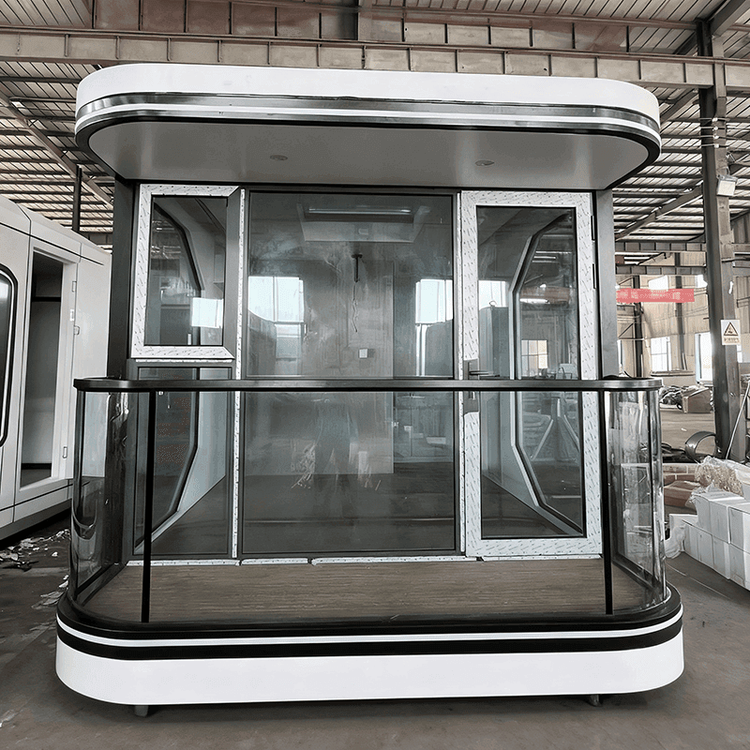
Electrical Wiring Structure of Mobile Toilets
Although there is no unified fixed pattern for the electrical wiring structure of mobile toilets, the power supply plan and wiring layout must adhere to strict standards to ensure safety and stable operation.

1. Power Supply Plan and Distribution Design
The power supply for mobile toilets should be designed independently based on the actual electrical load. It is recommended to use a dedicated distribution box to avoid sharing circuits with other equipment, preventing overloads or interference. The distribution box should have leakage protection and be installed in a dry, well-ventilated, and easily accessible location to ensure quick power cutoff in emergencies. If the mobile toilet is equipped with lighting, ventilation, heating, or smart devices (such as sensors or displays), the total load should be calculated based on device power, and appropriate cable specifications should be selected (e.g., the cross-sectional area of copper conductors must meet current-carrying requirements) to avoid overheating and potential safety hazards.
2. Wiring Layout Methods and Safety Requirements
- Overhead Installation: Temporary power supply lines should preferably be installed overhead, with a minimum height of 2.5 meters and a minimum safety distance of 0.5 meters from ground objects (such as vehicles or trees) to prevent contact or damage. Overhead lines should be fixed with insulators and not wrapped directly around metal or wooden structures.
- Underground Installation: If buried, lines must be protected with PVC pipes, with a burial depth of at least 0.7 meters, and should avoid water sources (such as drainage pipes), heat sources (such as boiler rooms), and areas subject to vehicle碾压 (crushing) to prevent pipe damage or line aging. Maintenance wells should be installed at turns for easy future upkeep.
3. Wiring Connection and Protection Details
- Joint Treatment: All wire joints must be wrapped with multiple layers of insulating tape and fixed in dry, vibration-free locations. Exposed joints are strictly prohibited to prevent short circuits or electric shock risks.
- Socket Protection: External sockets on mobile toilets should be equipped with waterproof boxes to ensure safety in rainy or humid conditions. Sockets should be splash-proof (IP44 or higher) and regularly checked for sealing.
- Labeling Management: Wires should be labeled with their purpose and direction, and circuit diagrams should be posted inside the distribution box to help maintenance personnel quickly locate issues.
4. Adaptability to Special Scenarios
If mobile toilets are used for outdoor events or temporary locations, the power supply plan should consider environmental adaptability. For example, in areas with strong winds, overhead lines should include wind-resistant fixtures; in low-temperature environments, buried lines should use cold-resistant PVC pipes to prevent material embrittlement. Additionally, the frequency of mobile toilet relocation affects wiring design; frequently moved toilets should use detachable quick connectors to reduce repeated installation costs.
By standardizing the power supply plan, adhering to strict installation standards, and focusing on detailed protection, the electrical wiring structure of mobile toilets can balance safety and practicality, meeting the power needs of various scenarios.