
Electric Container House Customization
The customization of electric container houses requires a comprehensive design that integrates functional requirements, structural performance, installation efficiency, and compliance. The following elaborates on this from three dimensions: customization key points, technical implementation, and application scenarios.
I. Key Points of Customization
Structural Stability
High-strength steel (such as galvanized steel) should be used as the main frame to ensure wind resistance of at least Grade 10 and earthquake resistance of at least Grade 7, in compliance with the GB50011-2010 Building Seismic Design Code. For example, Shandong Guoheng's double-wing container houses adapt to high-altitude, high-wind-speed environments by increasing keel density and using low-temperature ductile steel; Suzhou Zhongnan's packing-box units employ a fully steel structural frame, with a deformation of only 0.18% under 12-grade strong winds, well below the industry threshold of 0.3%.Flexible Spatial Layout
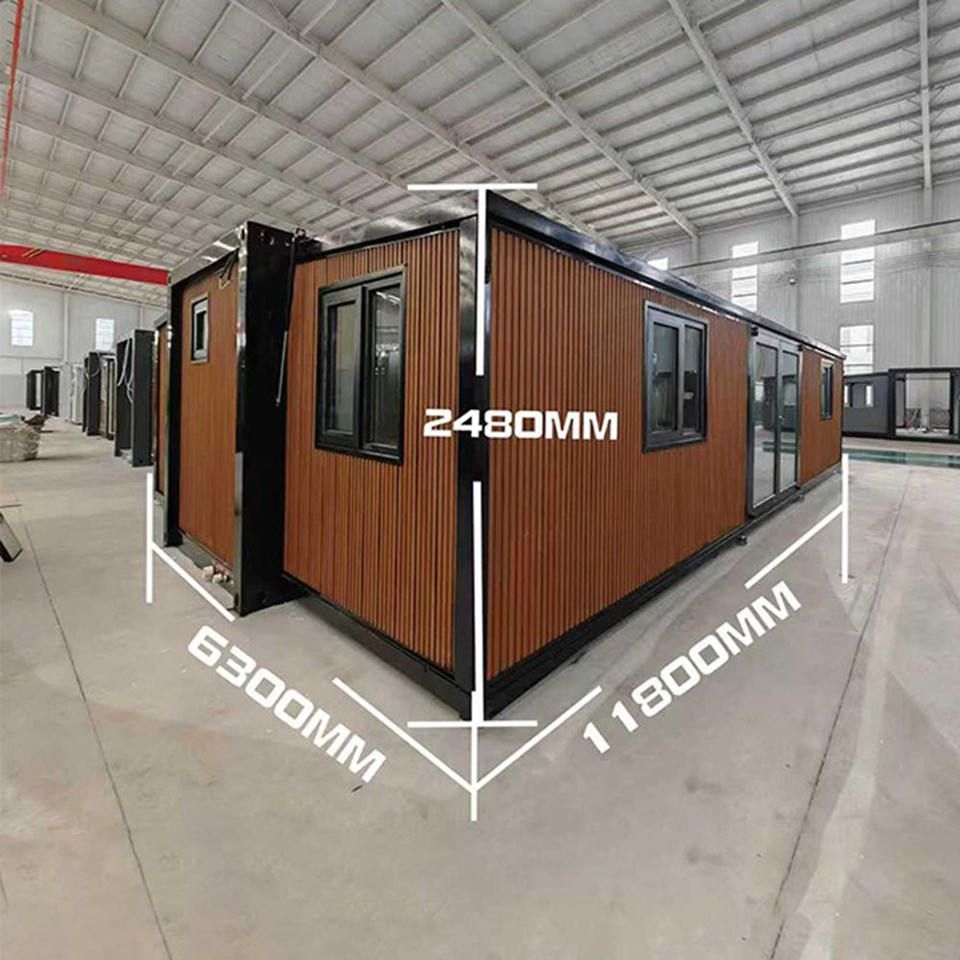
Support horizontal/vertical splicing and expansion. A single container has an approximate usable area of 18㎡, and multi-level combinations can quickly construct composite functional spaces such as office areas and dormitories. For example, Shandong Guoheng's double-wing design increases usable area by 20% through expandable modules on both sides, optimizing natural lighting and ventilation; Suzhou Zhongnan's quick-assembly containers support on-demand splicing, enabling the construction of 10 standard dormitory units in one day.Integrated Functional Modules
Systems such as photovoltaic power supply, rainwater harvesting, and intelligent temperature control can be integrated according to needs. For example, Chengdu Zhongye Zhichuang's AI computing container integrates air-cooled/liquid-cooled heat dissipation modules; Shanghai Yaotuo's mixing plant control room uses built-in air conditioning outdoor units to ensure transportation safety.
II. Technical Implementation Paths
Materials and Processes
Fire-resistant and thermal-insulating composite panels (with a heat transfer coefficient of ≤0.45W/(㎡·k)) and double-glazed windows are used to achieve thermal insulation and soundproofing effects; fully automated welding processes (such as at Suzhou Zhongnan's 50,000㎡ production base) ensure weld strength complies with the GB/T 19001-2016 standard.Rapid Deployment Systems
Patent-pending connectors or tool-free disassembly designs shorten construction periods. For example, Shandong Guoheng's double-wing container houses can complete deployment of standard units in 2 hours, saving 60% time compared to traditional products; Suzhou Zhongnan's packing-box units come with pre-installed interiors at the factory and are ready for use upon on-site hoisting.Environmental Adaptability Optimization
Special improvements are made for extreme environments, such as thickening insulation layers (by 30%) in high-altitude areas and adopting multi-layer composite sealing processes; adding sand-proof coatings in desert areas; and enhancing corrosion resistance in coastal areas.
III. Typical Application Scenarios
Temporary Facilities for Infrastructure Projects
Serve as on-site offices, dormitories, and kitchen spaces, addressing the poor fire resistance and insufficient thermal insulation of traditional prefabricated houses. For example, CIMC Modular's standard container houses completed the delivery of 1,000 accommodation modules for the Qatar FIFA World Cup project within three months.Emergency Rescue Scenarios
Quickly construct temporary medical stations, command centers, or shelter housing after disasters, with basic functional spaces deployed within six hours. For example, Tianjin Yufada's ordinary container houses maintain structural integrity under simulated earthquake conditions.Commercial and Cultural Tourism Facilities
Suitable for camping bases, boutique homestays, mobile shops, and other scenarios, creating personalized spaces through creative painting and modular design. For example, Chengdu Zhongye Zhichuang's commercial solutions, including container cafes and cultural tourism camps, have covered three continents: Asia, Europe, and the Americas.



