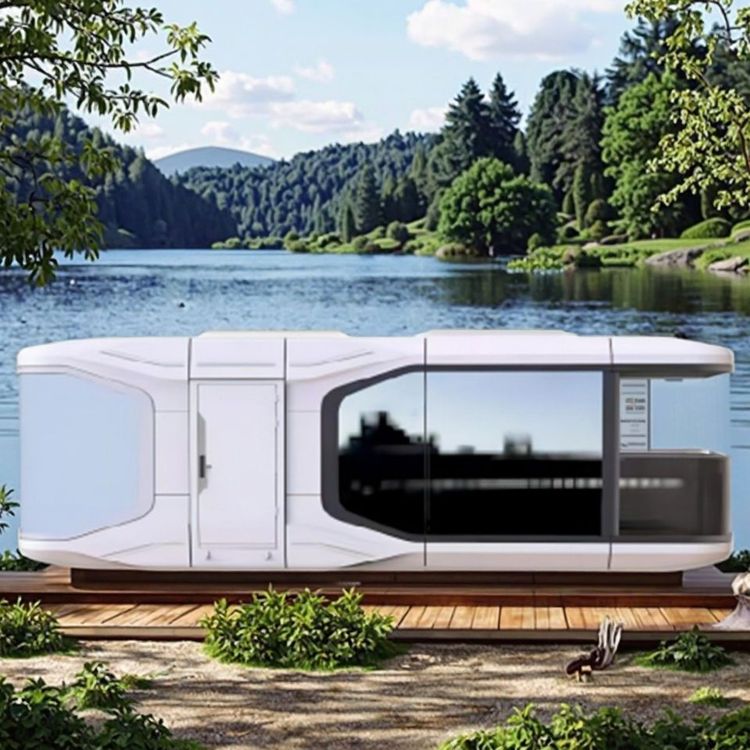
Economic Efficiency of Container Houses
The economic efficiency of container houses is significant, primarily reflected in the costs of construction, usage, and relocation, showcasing a comprehensive cost advantage.
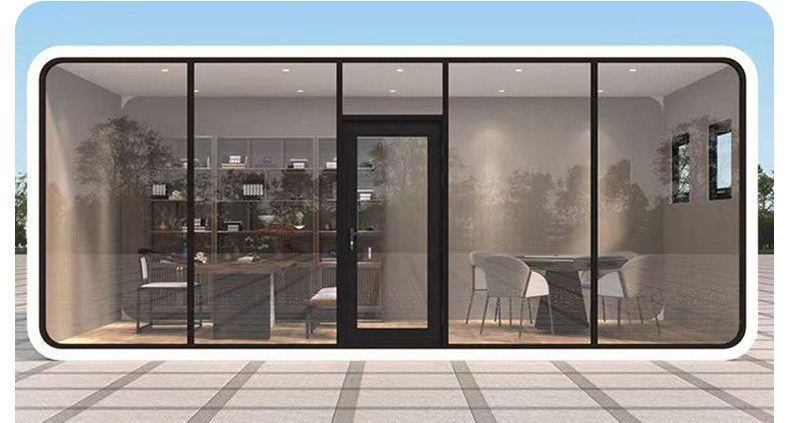
I. Low Construction Costs and High Cost-Effectiveness Container houses adopt a modular design, with each unit priced reasonably and allowing for flexible combination. Taking a 3×6-meter container as an example, the custom purchase price per unit ranges from 10,000 to 20,000 yuan, with the combined cost of multiple units being 30%-40% lower than that of traditional brick-and-mortar buildings. Their economic efficiency is also evident in foundation engineering: traditional buildings require complex foundation treatment, whereas container houses have low geological requirements and can be placed directly on flat ground, saving foundation costs. Additionally, the factory prefabrication and rapid on-site assembly model significantly shorten the construction period and reduce labor costs. For instance, the assembly period for a standard container house typically ranges from a few days to a few weeks, while traditional buildings may take several months or even longer, highlighting a significant time cost advantage.
II. Low Usage Costs and Significant Long-Term Benefits Container houses achieve a balance between low energy consumption and long lifespan through structural optimization and material upgrades. Their walls use thermal insulation materials, effectively reducing the frequency of use of air conditioning and heating equipment, thereby lowering water and electricity costs. The structure employs high-strength steel, offering excellent wind and earthquake resistance, with a lifespan of over 20 years. Daily maintenance only requires simple inspections and cleaning, without the need for frequent repairs or component replacements. In rental scenarios, for example, the daily rental fee for a 3×6-meter container is only 8 yuan, with monthly and annual fees of 200 yuan and 2,160 yuan, respectively, far lower than the rental costs of traditional temporary buildings. Furthermore, their modular design supports flexible expansion or reduction, allowing for adjustments in space scale according to demand and avoiding resource waste.
III. Low Relocation Costs and High Reusability The core advantage of container houses lies in their ability to be hoisted and relocated as a whole, without the need for demolition and reconstruction. When the usage scenario changes, they can be quickly transferred to a new location and reassembled using professional equipment, avoiding repeated construction investments. After project completion, idle houses can recover some costs through rental or resale. Compared to traditional portable cabins, although the initial investment in container houses is slightly higher, their reusability can reach over 80%, resulting in lower long-term usage costs. Compared to traditional buildings, their short construction period and strong flexibility make them more suitable for semi-permanent scenarios such as temporary offices, construction site dormitories, and emergency shelters, further highlighting their economic value.
In conclusion, container houses achieve a unity of economic efficiency and practicality by reducing costs throughout the construction, usage, and relocation cycles, making them the preferred option in the field of temporary or semi-permanent buildings.