Easy-to-Clean Mobile Toilet
Easy-to-clean mobile toilets typically have the following characteristics:

1. Appearance and structural design facilitate cleaning
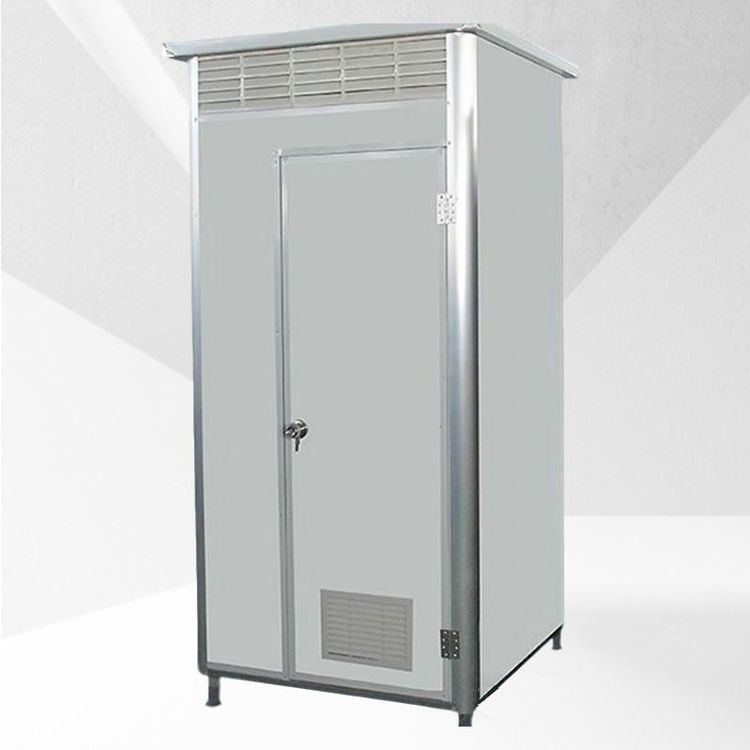
The exterior of cost-effective mobile toilets features a gray and white metal carved panel. This material has a smooth surface, is corrosion-resistant, and does not easily attract dust or stains. Daily cleaning only requires wiping with a damp cloth to restore cleanliness. The toilet compartments are designed with independent squatting positions, featuring a compact spatial layout without any hard-to-reach areas, avoiding the cleaning difficulties caused by complex structures in traditional toilets. The design of independent squatting positions allows each compartment to be cleaned separately, reducing the risk of cross-contamination and facilitating deep cleaning with disinfectants.
2. Odor-proof and easy-to-clean design of the movable toilet bowl
The movable toilet bowl adopts a bench-style flip cover design. When the cover is closed, it effectively blocks odors, reducing the frequency of cleaning. Its surface material is usually smooth plastic or metal, which does not easily retain stains and can be cleaned with just water. Additionally, the toilet bowl can be lined with garbage bags, allowing excrement to go directly into the bags. Cleaning only requires replacing the garbage bags, avoiding the cumbersome steps of flushing and scrubbing required by traditional toilets, making it especially suitable for scenarios with scarce water resources or no sewer systems.
3. Material selection emphasizes ease of cleaning
The overall design of mobile toilets follows the principles of cost-effectiveness, durability, and environmental friendliness. Some products use materials such as fiberglass-reinforced plastic (FRP) or polyethylene. FRP is corrosion-resistant and aging-resistant, with a smooth surface that does not easily attract dirt, eliminating the need for strong corrosive cleaners during cleaning. Polyethylene is lightweight and moisture-resistant, with a high surface density that prevents stains from penetrating, allowing quick removal of stains with ordinary cleaners. Compared to traditional wood, these materials are more wear-resistant and less prone to mold, maintaining a clean state even after long-term use.
4. Environmentally friendly design reduces cleaning burden
Some mobile toilets are equipped with waterless or low-water flushing systems, reducing the volume of excrement through biodegradation or chemical treatment technologies and lowering the frequency of cleaning. For example, toilets using biodegradation technology have excrement decomposed by microorganisms into harmless substances, requiring only periodic cleaning of residues, without the need for frequent flushing or the use of large amounts of cleaning agents. This design not only conserves water resources but also reduces the sewage generated during cleaning, meeting environmental protection requirements.