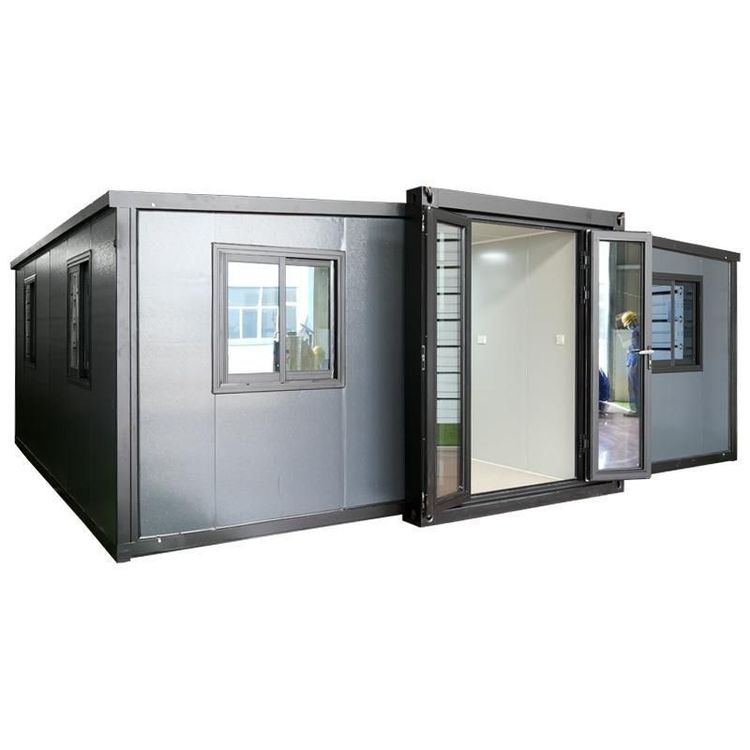
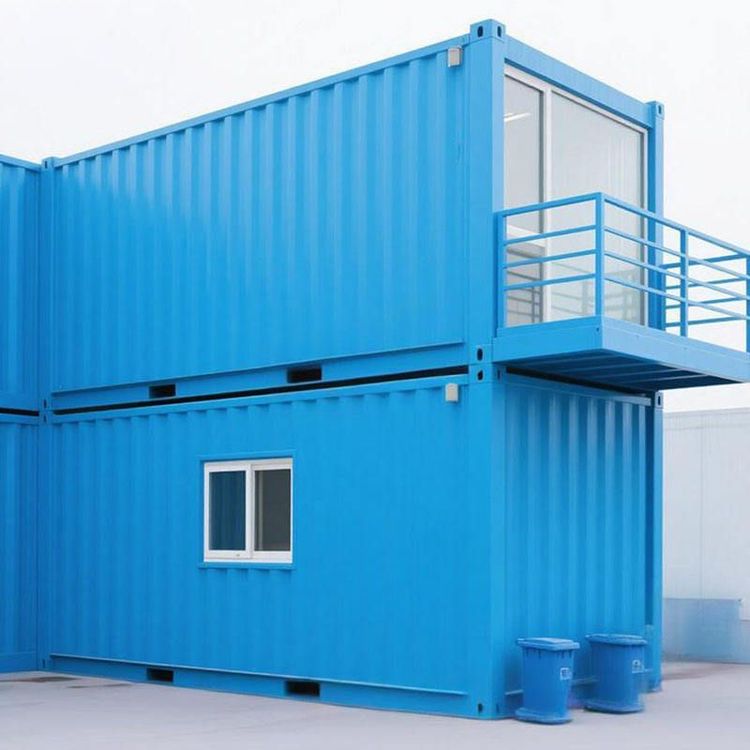
Earthquake and Wind-Resistant Prefabricated Housing
Prefabricated housing that is earthquake and wind-resistant, represented by prefabricated concrete houses, possesses high capabilities in resisting earthquakes and winds, along with features such as short construction periods and wide applications.

Earthquake Resistance
Prefabricated concrete houses adopt a 'full-frame shear wall' design, using Φ10 - Φ14 national standard threaded steel bars to construct the framework, combined with C35 concrete for integral pouring. Each module weighs over 20 tons, with wall thicknesses ranging from 150 - 200mm and floor thicknesses of 120mm. This structure enables them to withstand earthquakes of magnitude 8 (with a designed seismic fortification intensity of 7 degrees), equivalent to withstanding vibrations of the same intensity as the Wenchuan earthquake. Crack widths in the walls are controlled within 0.2mm, with no damage to the main structure. However, prefabricated panel houses built before the 1980s had lower earthquake resistance standards, only capable of withstanding earthquakes of 6 degrees. Newly built prefabricated panel houses have improved their earthquake resistance to 7 degrees, but still fall short of the overall integrity of reinforced cast-in-place houses.
Wind Resistance
Under a typhoon of magnitude 12 (with wind speeds of 32.7 - 36.9m/s), the prestressed bolt connections between modules remain loose-free, and there is no risk of the roof waterproofing membrane being lifted. During the passage of Typhoon 'Jambi' in Zhangzhou, Fujian in 2024, a certain concrete house homestay withstood wind forces of magnitude 11, with the exterior walls and roof of the house remaining intact, fully demonstrating its wind resistance capabilities.
Technical Features
Factory-standardized production allows a single module (30㎡) to be constructed from steel bar binding to concrete pouring in just 7 days, with on-site installation of a 100㎡ house taking only 1 day, reducing the construction period by 90% compared to traditional methods. Water and electricity pipelines are pre-embedded in the modules before leaving the factory, allowing for immediate use upon on-site connection, achieving 'hoisting today, moving in tomorrow'.
Applications and Market
Regions such as Fujian Province have established industrial bases through policy support, achieving a reduction in construction waste of over 70%. In the first four months of 2026, the Guangzhou Customs District exported movable houses worth 1.4 billion yuan, a year-on-year increase of 38.1%, with Chinese-made prefabricated houses selling well overseas. New types of assembled prefabricated houses (such as mobile staff dormitories and double-story concrete movable houses) support customization, with prices starting from 200 yuan per square meter, featuring wind and earthquake resistance, as well as aesthetic durability.