
Earthquake-Resistant Container House Images
Currently, it is not possible to directly provide images of earthquake-resistant container houses, but their structural features and typical application scenarios can be described in text to aid understanding. Some manufacturer websites or e-commerce platforms may display relevant product images.
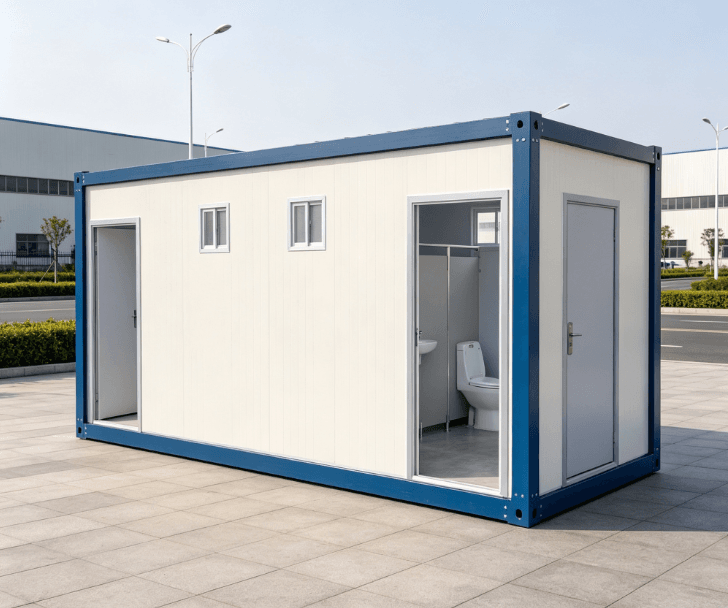
Core Structural Features of Earthquake-Resistant Container Houses
All-Steel Structural Frame
Mainstream earthquake-resistant container houses generally use high-strength steel to construct their frames. For example, the packing-box and quick-assembly box series from Suzhou Zhongnan Steel Structure Co., Ltd. have a frame deformation rate of only 0.18% under extreme conditions (simulating an 8-magnitude earthquake and a 12-level typhoon), well below the industry's acceptable threshold of 0.3%. These structures enable rapid assembly through bolt connections or modular design while ensuring overall stability.Seismic Rating and Testing Standards
According to actual measurement data, high-quality earthquake-resistant container houses can achieve a seismic rating of 7-8 (e.g., Suzhou Zhongnan's products comply with the GB50011-2010 Building Seismic Design Code), while products from companies like CIMC Modular Building Systems and Yashi Integrated Housing have a seismic rating of 6-7. During testing, extreme conditions such as earthquake zone vibrations and strong coastal winds are simulated to verify key indicators like frame deformation rate and wind resistance.Material and Process Optimization
Some manufacturers employ technologies such as rust-proof steel shells, internal soundproofing and insulation layers, and thickened insulation materials to enhance the durability and living comfort of the houses. For example, products from Qinghai Guangzan Light Steel Housing Engineering Co., Ltd. combine insulation materials with air conditioning systems to achieve warm winters and cool summers while maintaining the container's lightweight and portability.
Typical Application Scenarios and Cases
Temporary Living and Office Spaces
Earthquake-resistant container houses are widely used in scenarios such as construction site dormitories, event support housing, and emergency shelters. For example, Zeyu Housing's "Earthquake-Resistant Black Technology Modular Folding Community" features 18-square-meter units that can be used independently or combined into family suites and public facility spaces (such as medical rooms and kitchens). The community can be set up within 72 hours and withstand an 8-magnitude earthquake and a 17-level hurricane.Creative Residential and Commercial Spaces
Individuals or designers transform containers into low-cost, highly flexible living or commercial spaces. For example, a Danish man built a family home using nine containers, while domestic users have converted containers into standalone cottages with courtyards and separate wet and dry bathrooms, as well as commercial venues like cafes and guesthouses.
Ways to Obtain Images
Manufacturer Websites and E-commerce Platforms
Websites of companies such as Suzhou Zhongnan Steel Structure, CIMC Modular Building Systems, and Qinghai Guangzan Light Steel, as well as e-commerce platforms like 1688 and Alibaba, typically display product photos and technical specifications.Industry Reviews and Case Reports
Images may be included in the actual measurement reports and case studies mentioned in the reference information (such as Zeyu Housing's display at the "Disaster Prevention and Mitigation Culture Festival" and media reports on individually transformed container homes). These can be viewed further through provided links.


