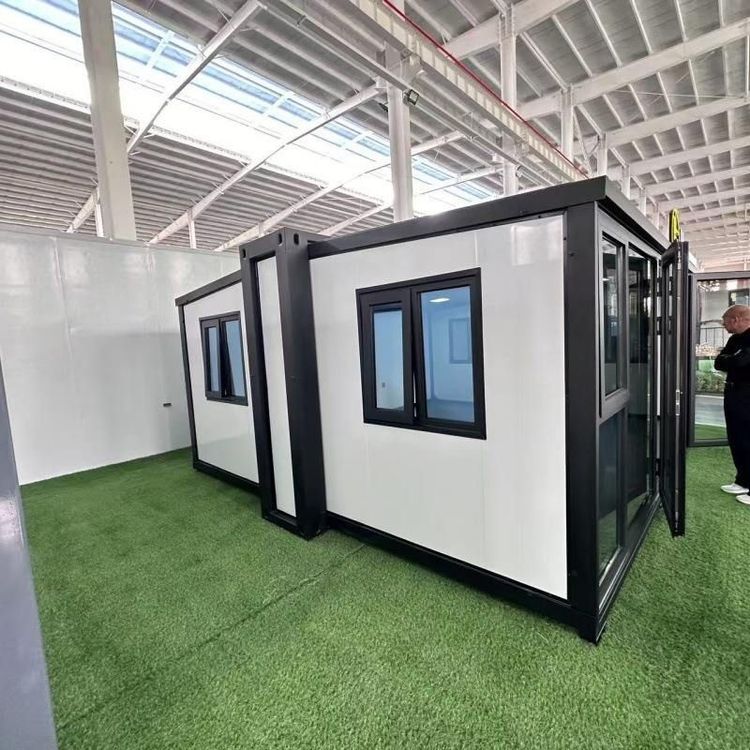
Durability of Mobile Toilets
The durability of mobile toilets is relatively high, primarily reflected in aspects such as the outer shell, main structure, and overall frame design.

Some mobile toilets adopt a design featuring an integrated outer shell combined with a reinforced chassis. An integrated outer shell means that the shell is formed in one piece during the manufacturing process, without excessive splicing seams. This process ensures the integrity and continuity of the outer shell, reducing weak points caused by poor splicing. The reinforced chassis further enhances the stability of the bottom of the mobile toilet, enabling it to withstand a certain amount of external force impact during placement and use, making it less prone to deformation or damage and providing a solid foundation for the entire mobile toilet.
The main body of mobile toilets is usually welded using high-quality galvanized square tubes and galvanized steel plates. Galvanized materials have excellent anti-corrosion and anti-rust properties, effectively preventing metal components from rusting and corroding under different environmental conditions, such as humidity and heavy rain, thereby extending the service life of mobile toilets. After being treated with high-temperature spray coating on the surface, not only is the appearance enhanced, but the anti-corrosion ability is also further strengthened. Moreover, this welded structure tightly connects all parts of the main body, forming a whole that can withstand significant pressure and tension, ensuring the structural durability.
The overall structure is generally composed of a frame-type structure welded from steel. The bottom is welded using channel steel or I-beams, which have high strength and rigidity, capable of bearing the weight of the mobile toilet itself as well as the loads generated by personnel activities during use. The columns are made of square steel, with each of the four sides providing stable support, enhancing the stability of the entire frame. The frame-type structure meets the requirements for lifting, indicating that its design and manufacturing take into account the stress conditions during movement and installation, enabling it to withstand the tension and pressure during lifting and ensuring that there are no structural damages or deformations during movement, further demonstrating its durability.