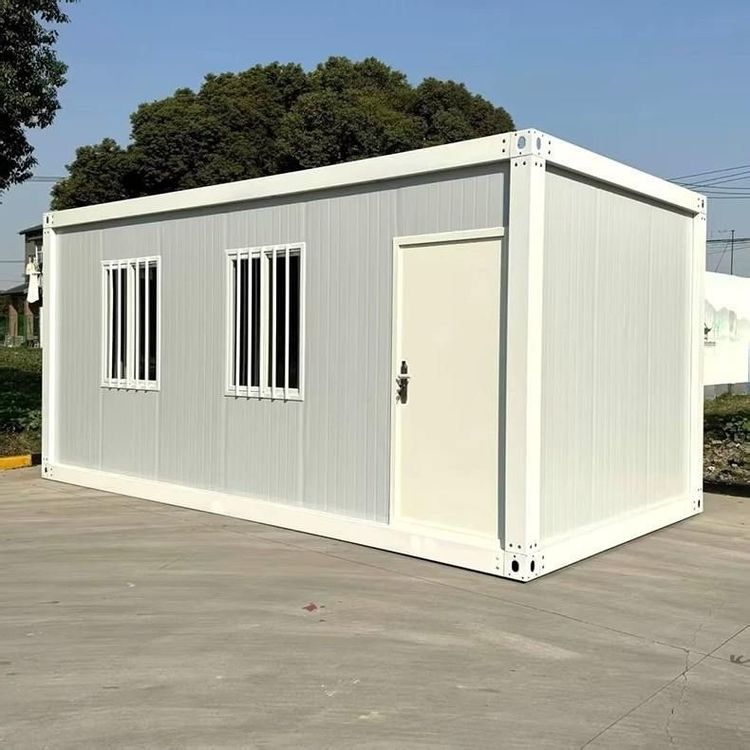
Dual-Body Temporary Mobile Toilet
The dual-body temporary mobile toilet is a composite-structure mobile toilet specifically designed for temporary venues with high foot traffic, featuring flexible deployment and simultaneous use by multiple people.

Design and Structural Features
The design of the dual-body temporary mobile toilet can refer to that of dual-connected mobile toilets, typically combining a wood-like exterior with ceramic sanitary facilities to ensure both aesthetic appeal and durability. Its standard dimensions are 2 meters in length and 2.8 meters in height, with an internal design featuring two independent toilet compartments that can simultaneously accommodate two users, effectively alleviating queue pressure during peak hours. For large-scale events, an upgraded version with partitions is recommended; this type of toilet usually includes six independent compartments for each gender, ensuring privacy through physical partitions while optimizing space utilization, making it suitable for high-density foot traffic areas.
Deployment and Suitable Scenarios
As a composite-structure mobile toilet, the dual-body temporary mobile toilet supports two deployment methods: hoisting or manual handling, allowing for rapid installation or relocation based on site conditions. Its core advantage lies in its flexibility, requiring no connection to municipal sewage networks and only needing a level ground for operation, making it particularly suitable for temporary events such as marathons, music festivals, and sports competitions. Additionally, its modular design allows for the adjustment of the number of toilet compartments based on actual needs, such as forming larger toilet clusters by combining multiple dual-body units to further adapt to events of varying scales.
Functionality and Practicality
The ceramic facilities (such as toilets or squat pans) in this type of toilet meet hygiene standards and are easy to clean and maintain, while the wood-like exterior blends into natural environments, reducing visual intrusiveness. The independent toilet compartment design avoids the awkwardness of traditional mobile toilets' 'one-room-for-multiple-uses', making it especially suitable for families or individuals of different genders traveling together. In large-scale events, the partitioned version significantly enhances usage efficiency through clear zoning (such as gender-specific zones) and signage systems, preventing congestion caused by gender confusion.
Conclusion
Through structural optimization and functional upgrades, the dual-body temporary mobile toilet has become an ideal choice for temporary public events. Its design balances privacy protection, hygiene standards, and deployment efficiency, meeting basic toilet needs while also addressing high-traffic challenges through modular expansion, making it an essential facility for modern urban emergency services and event support.