
Dragon Boat Mobile Toilet
The 2026 China (Foshan) Diejiao Dragon Boat Drifting Competition effectively addressed the issue of toilet access for tourists through a combined model of 'fixed public toilets + mobile toilets + resident-opened toilets', with mobile toilets playing a crucial role as an important supplement.
Basic Configuration of Fixed Public Toilets and Toilet Cubicles
The competition has installed a total of 22 fixed public toilets across four competition areas, providing 142 toilet cubicles. These toilets are typically constructed with brick-concrete structures or modular designs, equipped with basic functions such as ventilation, lighting, and sewage disposal to meet daily usage needs. The locations of fixed public toilets are usually close to the core areas of the competition venues or tourist concentration zones, facilitating quick access and reducing waiting times. The number of toilet cubicles is calculated based on the scale of the competition areas and historical visitor flow data, with more cubicles potentially allocated to the main competition area to handle peak visitor traffic.
Flexible Supplement of Mobile Toilets
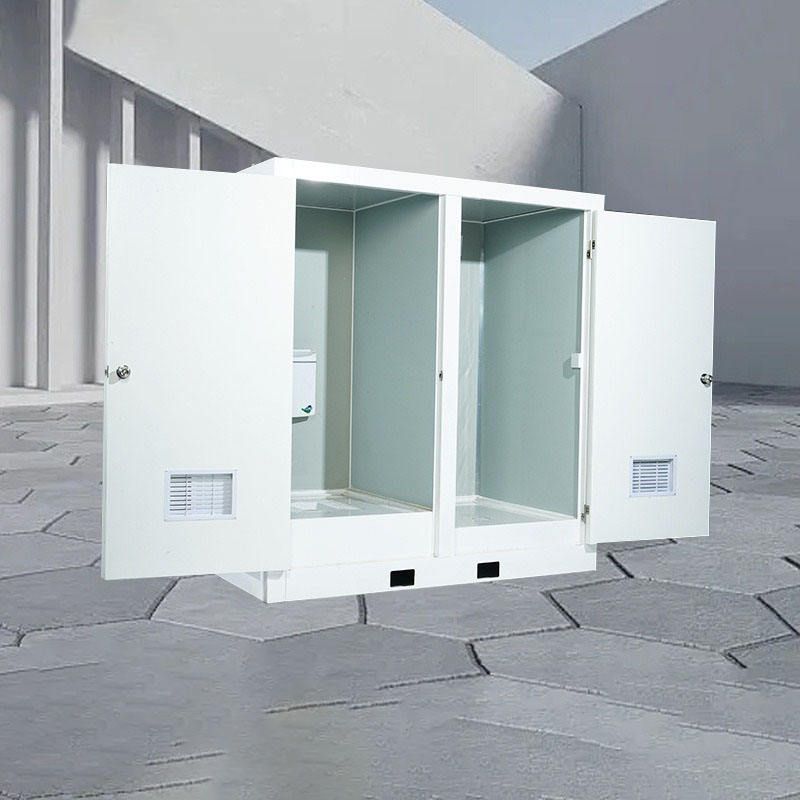
During the competition, an additional 48 mobile toilets were introduced, becoming the 'main force' in addressing toilet access issues. Mobile toilets are mostly designed with environmental protection in mind, utilizing sealed sewage disposal systems or connecting to temporary pipelines to prevent environmental pollution. Their advantages lie in flexible deployment—they can be dynamically adjusted according to tourist distribution, such as adding more in hotspots like queuing areas and dining zones; rapid setup—they are typically installed and commissioned 1-2 days before the competition and can be dismantled immediately after, not occupying long-term space; capacity adaptation—each mobile toilet generally has 2-4 cubicles, with 48 toilets adding nearly 200 cubicles, significantly enhancing overall supply capacity.
Shared Support from Resident Toilets
Residents were encouraged to open up 30 of their own toilets, reflecting the concept of 'community co-governance'. These toilets, mostly renovated from family bathrooms, although fewer in number, are dispersed and can cover 'blind spots' of fixed public toilets and mobile toilets, such as back alleys or near residential buildings. To ensure hygiene standards, the competition organizers typically conduct unified inspections of resident toilets, provide disinfectants and temporary signs, and offer appropriate compensation to encourage more residents to participate in sharing.
Rationality of Overall Toilet Cubicle Supply
Through '22 fixed public toilets (142 cubicles) + 48 mobile toilets (approximately 192 cubicles) + 30 resident toilets (approximately 30 cubicles)', a total of 364 toilet cubicles are available (the '172 cubicles' mentioned in the reference information may be initial planning data, with the actual implementation significantly increasing the total through the addition of mobile and resident toilets). This configuration takes into account tourist scale, toilet habits, and venue conditions. For example, based on an average daily visitor count of 50,000 and one toilet visit per person, 364 toilet cubicles can meet peak demand and avoid long waiting times.
You may also like

Portable Toilet Eco-Friendly: MOQ, Samples & Quotation Guide
Read More
Top Portable Toilet Color Steel Manufacturers: How to Choose a Factory Partner
Read MorePortable Toilet Picture: Types, Features & Buying Tips
Read More