Dongxing District Modular Container House
The modular container houses in Dongxing District are architectural forms based on container modularization and transformation, applied to urban service scenarios or specific functional requirements. Their core characteristics and application scenarios can be explored from the following aspects:

1. Modularity and Mobility
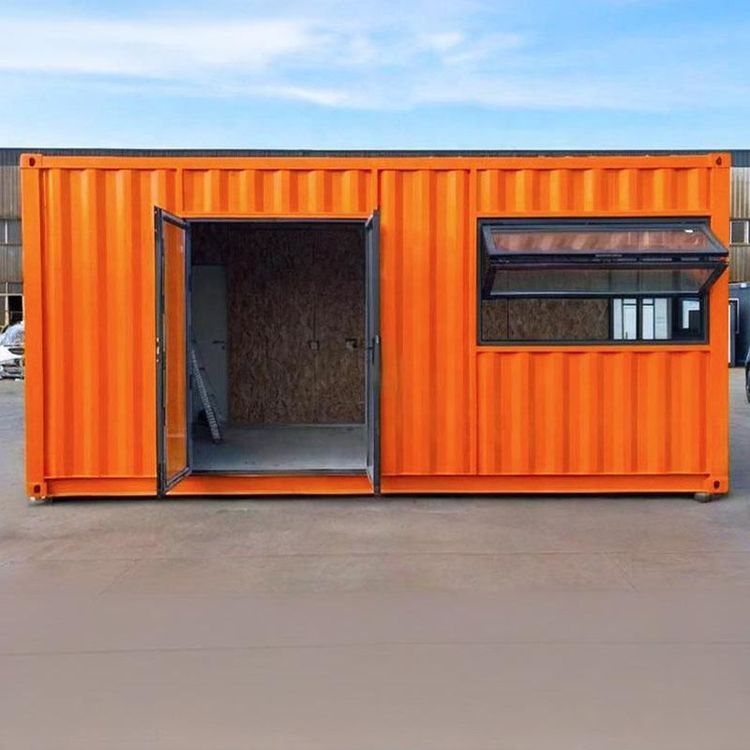
Modular container houses are not simply stacked traditional containers but are formed by deconstructing and reorganizing standardized industrial products into flexible spatial units. For example, the container city stations that have emerged in Dongxing District quickly generate diverse spatial volumes through modular design, meeting both single-function needs (such as temporary offices and guard rooms) and composite-function spaces (such as health stations and quarantine areas) through assembly. Their mobility is reflected in the ability to dynamically adjust open status, internal layout, and even relocate entirely to other locations based on regional pedestrian traffic data and event types, adapting to the dynamic needs of urban development.
2. Functional Complexity and Application Scenarios
The functional design of these houses is closely tailored to actual needs. Taking products provided by Guangxi Lvzhu Prefabricated Building Co., Ltd. as an example, its model yd-jzx-632.8 residential container house adopts a light steel structure and assembled construction method, with dimensions of 600029802890mm and a service life of up to 20 years. This product can be applied in scenarios such as offices, office buildings, construction sites, quarantine areas, and guard posts, covering both temporary and long-term usage needs. For instance, in construction site scenarios, its rapid assembly feature shortens the construction cycle; in quarantine area scenarios, modular design facilitates quick deployment and functional expansion.
3. Technical Parameters and Structural Advantages
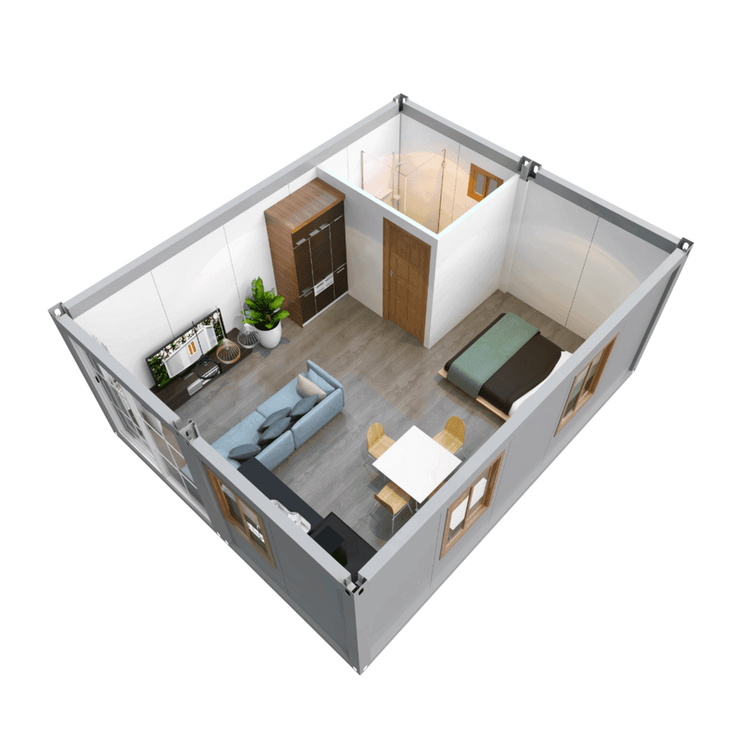
The materials and structure of modular container houses directly affect their performance. Taking Lvzhu's products as an example, the light steel structure provides high strength and durability while maintaining a relatively light weight for easy transportation and lifting; the assembled construction method does not require complex construction equipment and can be quickly completed on-site by a professional team. Additionally, standardized dimensions (such as a length of 6000mm) facilitate seamless connection between modules, and the internal space can be divided into functional areas (such as rest areas and office areas) according to needs, with functional customization achieved by adding doors, windows, partitions, and other accessories.
4. Innovative Applications in Urban Services
The container city stations in Dongxing District are typical examples of modular container houses in the field of urban services. They form public activity nodes through modular combinations, such as community service stations and convenience stores, addressing the issues of long construction cycles and high costs associated with traditional buildings while achieving dynamic resource allocation through mobility. For example, additional station modules can be added in high-traffic areas, and the number of open modules can be reduced or relocated to other areas during low-demand periods, improving the efficiency of urban space utilization.