
Dongguan Container Renovated House
The container renovated houses in Dongguan have formed a complete industrial chain from design, production to construction, boasting advantages such as personalized customization, low cost, and short construction period. They are suitable for a variety of scenarios including residential, commercial spaces, and temporary buildings.
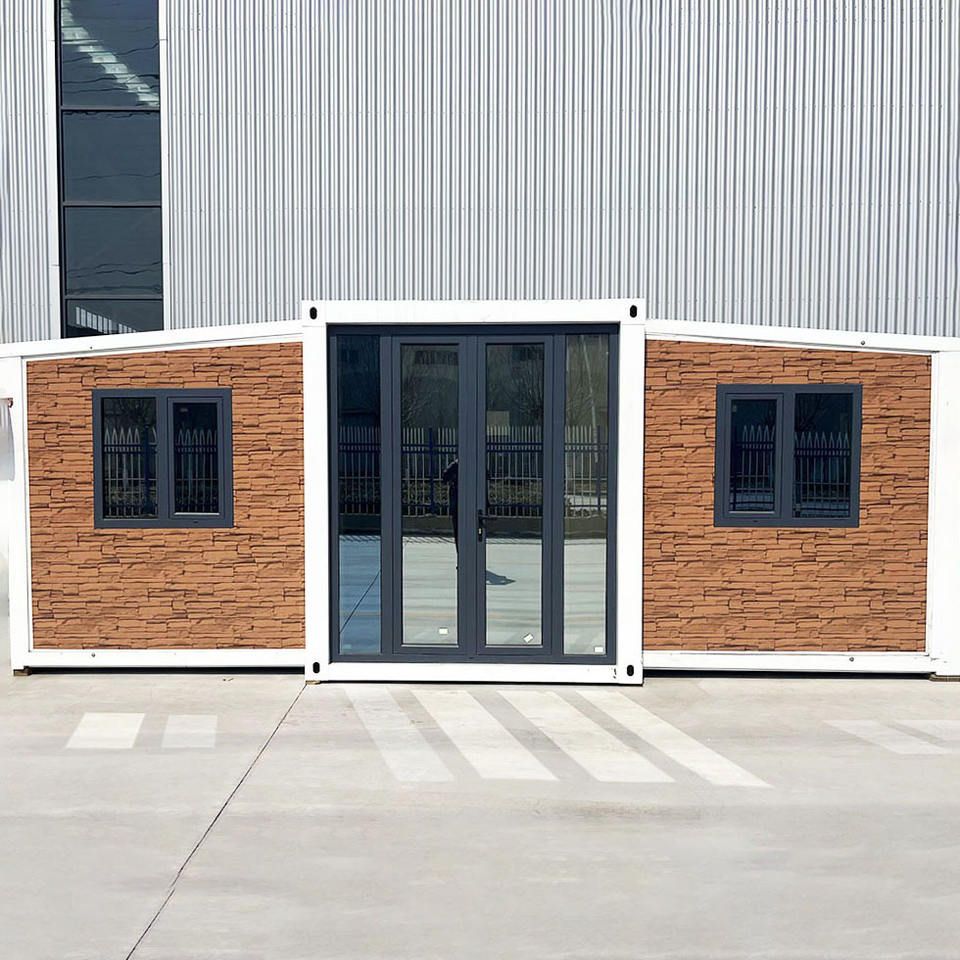
I. Core Advantages of Dongguan Container Renovated Houses
Significant Cost-Effectiveness
Taking the Liaobu Auto City project as an example, the total investment for renovating 14 containers was approximately 227,500 yuan, with an average cost of about 16,000 yuan per container, significantly lower than traditional buildings. The material loss rate is only 3%-5%, more than 50% lower than traditional construction sites, and labor cost savings are even more prominent—permanent workers on projects in remote areas can be reduced by 40%, and there is no need to bear additional costs such as visas and accommodation.Efficient Construction Period Compression
The modular production model shortens the on-site construction period by more than 50%. For instance, the MRDC Hotel project in Papua New Guinea would have taken 14-18 months with traditional construction, while the container solution took only 7 months (including sea freight time), making it particularly suitable for urgent housing needs.Flexible Personalized Customization
Companies such as Jinhua Xin'an Steel Structure Engineering Co., Ltd. offer one-stop services from 'design-production-installation', supporting size customization (2-12 meters), functional zoning (such as integrated bedroom, kitchen, and bathroom), and appearance renovation (such as dark green tea rooms, minimalist villas), meeting the needs of various scenarios including residential, office, and commercial use.II. Typical Application Scenarios and Cases
Residential Field
- Small Apartment Renovation: Containers ranging from 15-30㎡ can achieve 'small but complete' functionality. For example, a couple's case utilized folding beds and integrated cabinets to achieve flexible space utilization, with a total cost of 110,000 yuan.
- Villa-Level Renovation: A 12-meter container can be expanded to 30㎡, with additional terraces and second-floor spaces, combined with upgraded configurations such as solar panels and fireproof materials, to create a luxurious living experience.
Commercial and Public Spaces
- Temporary Buildings: The Liaobu Auto City project was used for offices and dormitories, adopting full renovation of civil engineering and water and electricity, meeting the short-term needs of enterprises.
- Creative Spaces: Containers have been transformed into cafes, pop-up street shops, etc., enhancing commercial value through designs such as wooden door frames and large glass windows.
III. Key Technical Points
Structural Safety
Standard containers inherently possess high strength. During renovation, it is essential to focus on strengthening connection nodes (such as welding and bolt fixation) to ensure stability during stacking or staggered-layer designs.Environmental Adaptability
- Thermal Insulation: Inner insulation layers (such as rock wool and polyurethane) and triple-glazed windows are used, providing better thermal insulation performance than red brick walls. In winter, they can be paired with stoves or electric heating equipment.
- Anti-Rust Treatment: In coastal or humid areas, anti-corrosion coatings are required, with regular inspection and maintenance.
- Ventilation and Moisture Prevention: Through roof skylights, eaves designs, and dehumidification equipment, condensation problems are avoided.
Compliance Requirements
Approval procedures for planning and fire protection must be completed to ensure compliance with the 'Construction Enterprise Qualification Standards' for professional contracting of building decoration and renovation at Grade II or above.



