
Back to blog
Article
Dong'e Prefabricated Cement House
Admin September 18, 2026
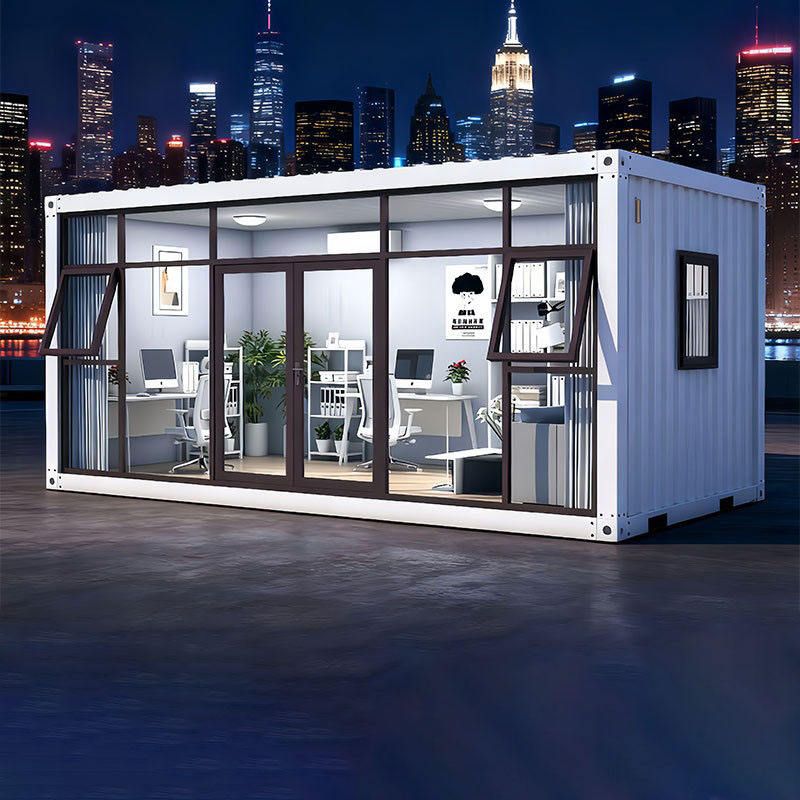
The Dong'e prefabricated cement house is a form of prefabricated housing constructed primarily with cement. It is efficient, environmentally friendly, and economical, suitable for various construction scenarios.
Features and Advantages
- Sturdy and Durable: Built with high-strength cement, the overall structure is stable and can effectively withstand natural disasters such as earthquakes and typhoons, with a service life of several decades. For example, in earthquake-prone areas, its stable structure can reduce the risk of house collapse and ensure personnel safety.
- Environmentally Friendly and Energy-Efficient: Cement production has relatively low pollution, and the house has good thermal insulation properties, reducing energy consumption and aligning with green building concepts. This helps reduce dependence on traditional energy sources and lower carbon emissions.
- Diverse Designs: Cement materials are highly malleable, offering ample space for exterior design. Houses can be designed with unique features according to customer needs, meeting different aesthetic requirements.
- Efficient Construction: Components are prefabricated in factories and assembled on-site through hoisting, resulting in a short construction period. For instance, the main structure of a three-story villa covering 200㎡ can be hoisted in 4 hours, and a 100㎡ house can be ready for occupancy in just 5 days from an empty lot, significantly shortening construction time.
- Cost-Effective: Labor costs are reduced by 60% compared to traditional construction methods, with a 98% reduction in construction waste. The cost per square meter is approximately 300 yuan, and the total price for a 200㎡ house is around 60,000 yuan, offering high cost-performance.
- Quality Assurance: The modules are highly durable, with a warranty period of up to 70 years. However, the rationality of the joint design affects seismic performance and requires reasonable design.
Technical Principles
- Standardized Production: Components are manufactured in factories through mechanized processes, with errors controlled within 2 millimeters to ensure dimensional accuracy and surface smoothness.
- Connection Technology: Dual connections using mortise-and-tenon joints and bolts, combined with high-strength mortar filling at the joints, enhance overall stability.
- Smart Integration: Insulation layers are embedded in the walls, and interfaces for photovoltaic panels are reserved on the roof to improve energy utilization efficiency.
Precautions
Seismic performance is affected by the joint design. It can meet requirements in non-earthquake zones, but the number of floors should not be too high (usually not exceeding 5 floors). Special attention should be paid to waterproofing at connection nodes, the integrity of the insulation layer, and the bearing capacity of the foundation.



