
Domestic Prefabricated Housing
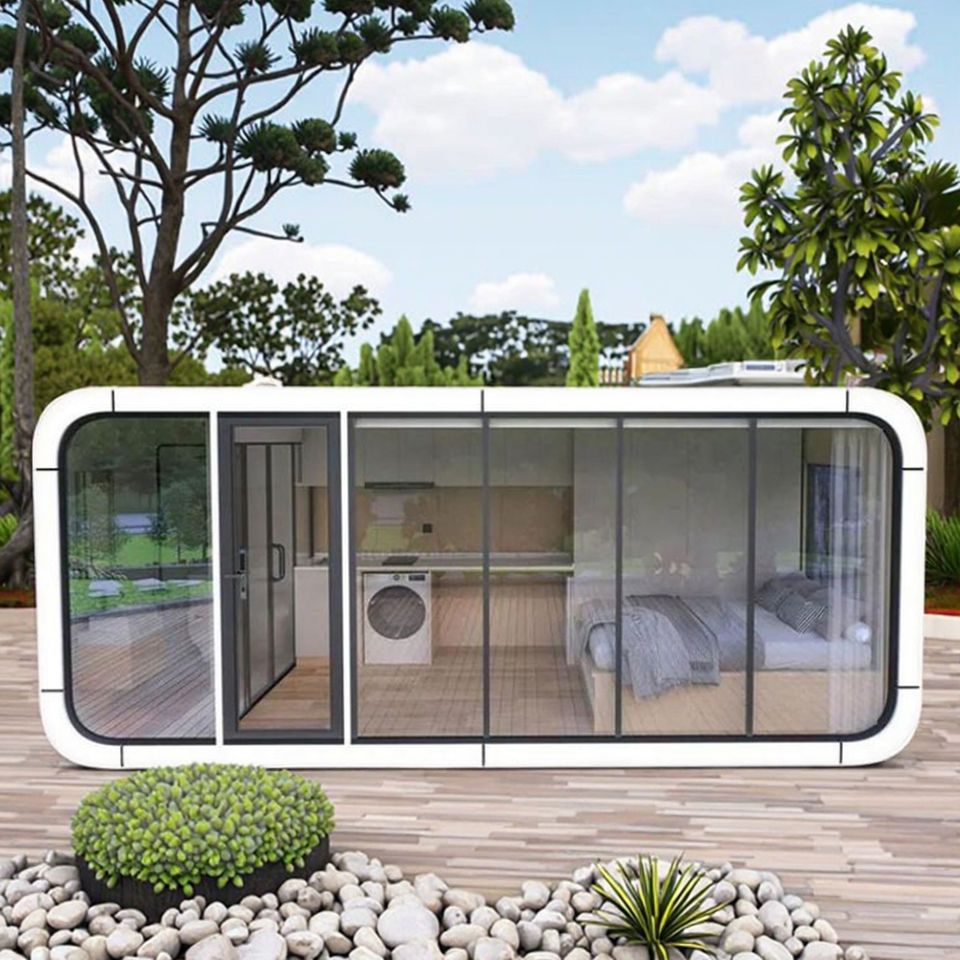
Domestic prefabricated housing is a form of construction that involves industrial production of building components and on-site assembly, offering numerous advantages and demonstrating a positive development trend.
Definition and Types
Domestic prefabricated housing, also known as prefabricated assembled buildings, mainly includes panel-assembled, box-assembled, and frame-assembled types. Panel-assembled buildings use prefabricated wall panels and floor slabs as core components, which can expand usable area but have limited design flexibility. Box-assembled buildings combine prefabricated functional units, increasing construction speed by 50%-70%, but requiring higher transportation and lifting equipment. Modular buildings represent a more integrated model within prefabricated assembled construction.
Technological Development History
China's prefabricated concrete technology began in the 1950s, initially used for factory and residential construction. In the 1970s, driven by the policy of "industrialization, standardization, and mechanization" in construction, technical systems such as large-panel structures and box structures emerged. Development stagnated in the mid-1980s due to cost and quality issues but resumed in the 21st century due to production efficiency and environmental advantages. Companies like Vanke Group have developed assembled shear wall residential structural systems and applied prefabricated frame technology in projects, such as the Nanjing Jindi Yufang project, which adopted a prestressed prefabricated concrete assembled integral frame structural system.
Production Bases and Application Achievements
China has production bases such as the CSCEC Hailong Intelligent Construction Industrial Park. Taking this park as an example, ceiling, wall, and bathroom waterproof layers are all manufactured here. Parallel operations, combined with the use of automated vertical warehouses and intelligent production lines, enable a reduction of over 60% in the construction period for modular buildings. The park can deliver 20,000 to 30,000 modules annually. In terms of application scenarios, a social housing project in Shenzhen, Guangdong, featured five residential buildings nearly 100 meters high assembled from 6,028 concrete modules. The completion and delivery period was reduced from 2.5 to 3 years to 1 year, with on-site labor reduced by about 50%. Additionally, there was a significant reduction in noise, dust, construction waste, and traffic congestion at the construction site.
Market Expansion
Domestic prefabricated housing is not only expanding its application scenarios domestically but is also popular overseas. According to customs data, in the first four months of 2026, the Guangzhou Customs district exported movable houses worth 1.4 billion yuan, a year-on-year increase of 38.1%.



