
Domestic Mobile Toilet
Domestic mobile toilets are facilities that can be moved as a whole to provide toilet services for the public and customers. They are introduced from multiple aspects as follows:
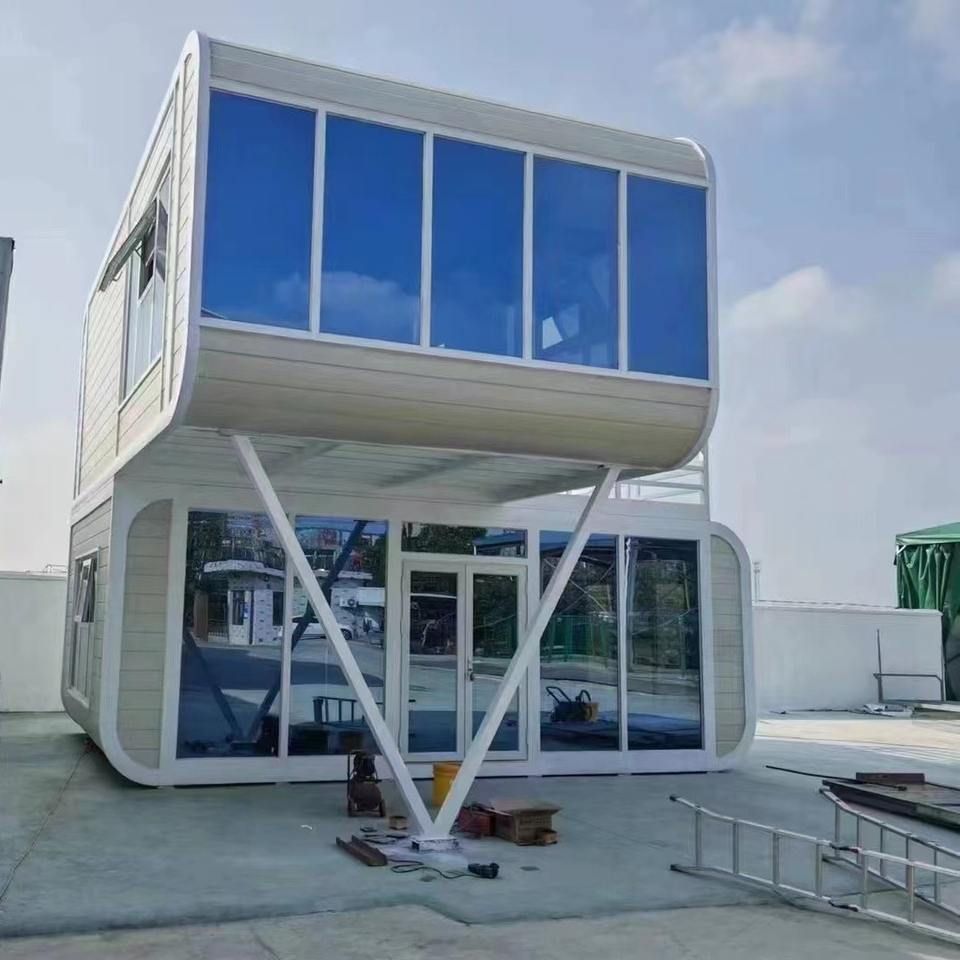
Suitable Places
Domestic mobile toilets have a wide range of suitable places. They cover transportation hubs such as stations and docks, facilitating travelers to solve toilet problems during their trips. Tourist attractions are also important locations for their setup, meeting the needs of a large number of tourists. They provide convenience for residents in villa areas and newly-built residential communities. Large construction sites offer basic living guarantees for workers. In squares, densely populated public places, and bustling commercial streets with high pedestrian traffic, mobile toilets can be seen, effectively alleviating the problem of difficult toilet access in these areas.
Type Classification
- By structural form: They can be divided into single-structure mobile toilets and composite-structure mobile toilets. The single-structure type is relatively independent and simple, while the composite-structure type may be composed of multiple parts and has more complex and diverse functions.
- By moving method: There are lifting and handling-type mobile toilets, which mainly rely on lifting equipment or manual handling to change their positions. Power-driven and towed-type mobile toilets have their own power or can be moved by vehicle towing, offering higher flexibility.
- By sewage treatment method: They are classified into water-flushing and non-water-flushing suction-type mobile toilets. The water-flushing type is similar to traditional toilets, using water flow for flushing. The non-water-flushing suction type uses a suction device to treat excrement. The circulating water-flushing type mobile toilet can recycle the flushing water, saving water resources. The dry-packing type mobile toilet dry-packs the excrement for treatment.
Material Development
Initially, mobile toilets were mostly made of materials such as wood, with simple structures and functions, and were prone to absorbing odors. With technological development, materials such as fiberglass and polyethylene have gradually been adopted. These materials have better durability, corrosion resistance, and airtightness, effectively improving the toilet experience and environment.
Design Principles
The design follows the principles of easy mobility, economic durability; environmental protection and ecological friendliness, beneficial to the environment; improving efficiency, and promoting humanity. The overall structure should be lightweight, using lightweight and durable materials, with a sturdy structure. At the same time, the height and width of the toilet should be controlled, and the moving device should be complete and reasonable. In addition, new Chinese-style and traditional Chinese-style mobile toilets have emerged, incorporating traditional architectural elements and intelligent technologies, enhancing the comfort and aesthetics of use.



