Does a Container House Have an Insulation Layer?
Container houses can be equipped with insulation layers. Insulation layers are a common feature in the design and modification of container houses, serving to enhance their thermal insulation performance and ensure a comfortable indoor temperature under varying climatic conditions. Here is a detailed explanation of insulation layers in container houses:
Insulation Layer Material Selection
Container houses typically use a variety of high-efficiency thermal insulation materials for their insulation layers, including commonly used expanded polystyrene (EPS) boards, polyurethane foam boards, and rock wool boards. EPS boards are cost-effective, lightweight, and have stable thermal insulation properties, making them suitable for general climatic regions. Polyurethane foam boards (PU) have a high closed-cell ratio and low thermal conductivity, offering superior insulation effects and are often used in cold regions or scenarios with high energy-saving requirements. Rock wool boards, based on inorganic fibers, are fire-resistant, moisture-proof, and heat-resistant, making them suitable for high-temperature or humid environments. Additionally, high-density polyurethane insulation layers are widely used in container houses requiring long-term insulation due to their high density and strength.
Insulation Layer Structural Design
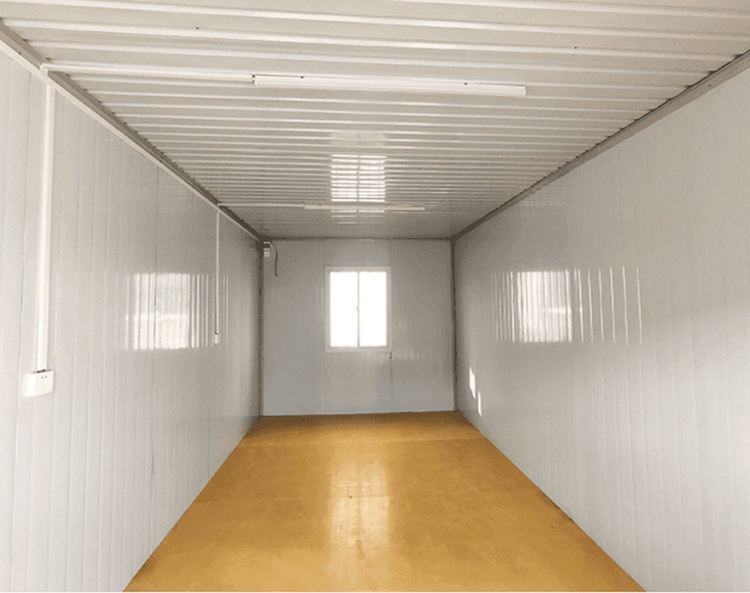
The installation method of the insulation layer directly affects its thermal insulation effect. Externally hung insulation layers involve fixing insulation materials to the exterior walls of the container and forming a continuous thermal insulation layer by covering them with protective layers such as aluminum or color-coated steel plates, effectively blocking external heat transfer and protecting the insulation materials from environmental erosion. Internal insulation panels are directly installed on the interior walls of the container, offering simple construction and not occupying external space, suitable for scenarios with high interior decoration requirements. Some designs adopt a three-layer thickened wall structure, adding insulation and decorative layers to the original steel plate of the container on both sides, forming a composite wall of 'steel plate-insulation layer-decorative layer', significantly enhancing thermal insulation performance.
Insulation Layer Application Scenarios
The configuration of insulation layers needs to be adjusted according to usage requirements. For example, container houses in cold regions require high-density polyurethane or rock wool boards and increased insulation layer thickness; hot regions can use EPS boards or thin polyurethane foam boards, combined with ventilation design to lower indoor temperatures. Additionally, temporary container houses may adopt simple insulation measures, while permanent residential or office buildings will use multi-layer composite insulation structures to meet long-term use and energy-saving standards.
Advantages of Insulation Layers
Container houses equipped with insulation layers can effectively reduce energy consumption, lower the frequency of air conditioning or heating equipment usage, and thus save operating costs. Meanwhile, good thermal insulation performance can prevent condensation issues on the container steel plates caused by temperature differences, protecting indoor equipment and furniture from moisture damage and extending the lifespan of the house.