
Back to blog
Article
Does China Allow Container Houses?
Admin September 15, 2026
China allows container houses, but certain conditions must be met; otherwise, they may be considered illegal constructions.
Core Conditions for Legality
- Land Property Compliance: If constructing container houses on rural homesteads, it is essential to ensure that the land is designated as homestead land or that approval for converting agricultural land has been obtained. According to the Land Administration Law, unauthorized occupation of cultivated land for constructing container temporary buildings will face the risk of demolition. For example, an agricultural company in Hainan was ordered to rectify and restore cultivated land to its original state within a specified period for occupying permanent basic farmland to build container panel houses.
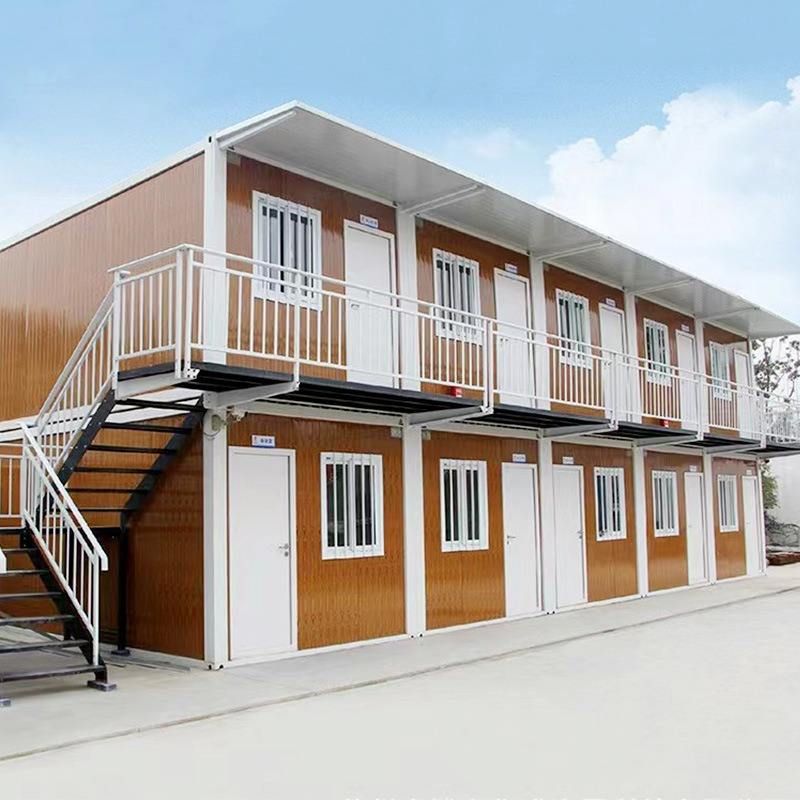
- Planning Approval in Place: If used as permanent structures, container houses must be included in rural construction planning. According to the Ministry of Housing and Urban-Rural Development's Technical Policy for Rural Housing Construction, rural houses should generally not exceed three stories, with a floor height not exceeding 3.3 meters. For instance, a homestay cluster in Anji, Zhejiang, formed a double-story LOFT structure by horizontally connecting six containers. It became a legally operating business after submitting its design plan to the township government for approval in advance. If used as temporary structures (such as for post-disaster relief or construction site offices), some regions allow exemption from planning permits for one to two years, but they must be self-demolished upon expiration.
- Construction Standards Met: Structural safety and fire protection requirements must be satisfied. According to the Code for Fire Protection Design of Buildings, container temporary buildings used for residence must use Class A fire-resistant materials (such as rock wool boards) and have a floor area not exceeding 300 square meters per unit. For example, a container street market by the Huangpu River in Shanghai was included in a pilot program for "small catering registration" after using flame-retardant materials and passing fire protection inspections, becoming a legally operating venue.
Determination in Special Scenarios
- Placement in Fields or on Rooftops: If the ground is not hardened, utilities are not connected, and the containers are used solely for storing agricultural supplies, they are generally not considered illegal constructions. However, if cement foundations are poured, utilities are connected for long-term residence, or they are converted into commercial homestays, they will fall under the category of "substantially altering land use" and face the risk of demolition. For example, a camping business owner in Yunnan was fined 30,000 yuan for placing a container house on leased forest land to operate a coffee bar without obtaining forestry fire protection approval.
- Placement in Urban Residential Areas: It is necessary to consult local urban and rural planning departments to clarify whether procedures such as obtaining a construction project planning permit are required. At the same time, it is essential to confirm that the land property meets the placement requirements to avoid legal issues due to land property problems.



