Do Mobile Toilets Have a Flushing Function?
Some mobile toilets have a flushing function, while others do not, depending on their type and design.

Mobile toilets are mainly divided into three categories based on their flushing methods and supporting facilities: water-flushing, waterless, and storage-type. The design logic of their flushing functions is closely related to their usage scenarios.
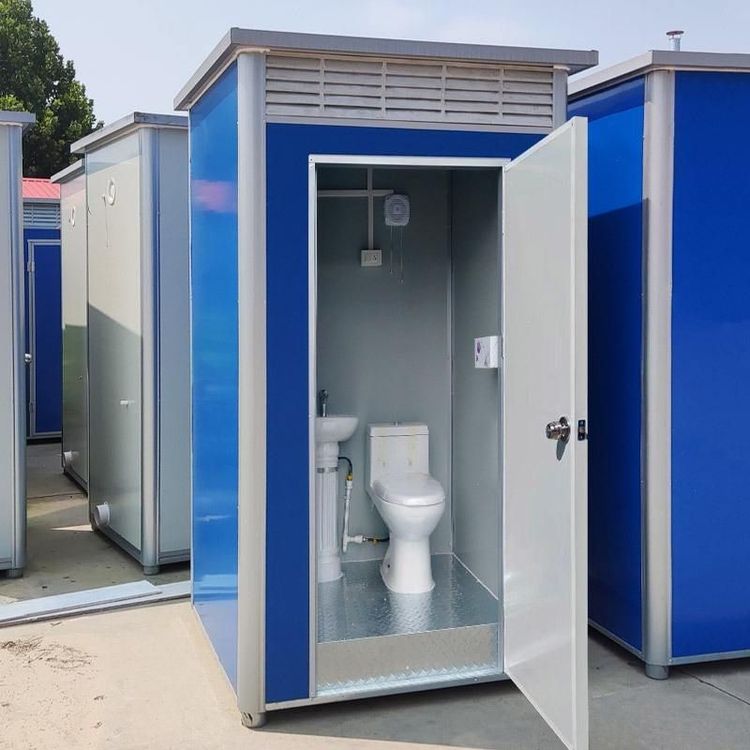
Water-flushing mobile toilets require a complete flushing system and rely on the connection to water supply and drainage pipes for operation. These toilets use high-pressure water guns or automatic induction flushing devices for cleaning, providing an experience similar to traditional fixed toilets. However, during installation, it is necessary to plan the water pipe layout in advance and ensure a stable water supply. For example, at large event venues or temporary construction sites in cities, if there are municipal water supply conditions nearby, water-flushing mobile toilets can effectively solve sanitation problems and reduce odor diffusion. However, their limitation lies in the high requirements for infrastructure. If the usage scenario lacks access to water supply and drainage, they cannot operate normally.
Waterless mobile toilets employ waterless cleaning technologies to achieve harmless treatment of excreta through biological degradation, physical separation, or chemical treatment. For example, some models use microorganisms to decompose excreta into odorless organic fertilizers; others use gravity separation or vacuum suction technology to separate solids and liquids for separate storage. These toilets do not require a water pipe connection and are suitable for water-scarce areas or temporary emergency scenarios, such as outdoor expeditions in arid regions and temporary settlement points in earthquake-stricken areas. Their advantage lies in water conservation and environmental protection, but they require regular cleaning of storage containers, and their maintenance costs may be higher than those of water-flushing types.
Storage-type mobile toilets combine the characteristics of flushing and waterless technologies and are usually equipped with small water tanks and fecal storage tanks. During use, the water in the water tank is used for cleaning through manual or automatic flushing devices, and the excreta is stored in a sealed container for unified removal after use. These toilets do not require external water and electricity connections and are flexible to install, making them suitable for areas with short-term high pedestrian traffic but incomplete infrastructure, such as parks and scenic spots. Although their flushing method is simple, it is necessary to regularly replenish the water in the water tank and clean the fecal storage tank to avoid odors or blockages.