Prefabricated Houses in Dingxi City
The prefabricated houses in Dingxi City mainly include three types: movable light steel villas, portable cabins, and modular buildings.

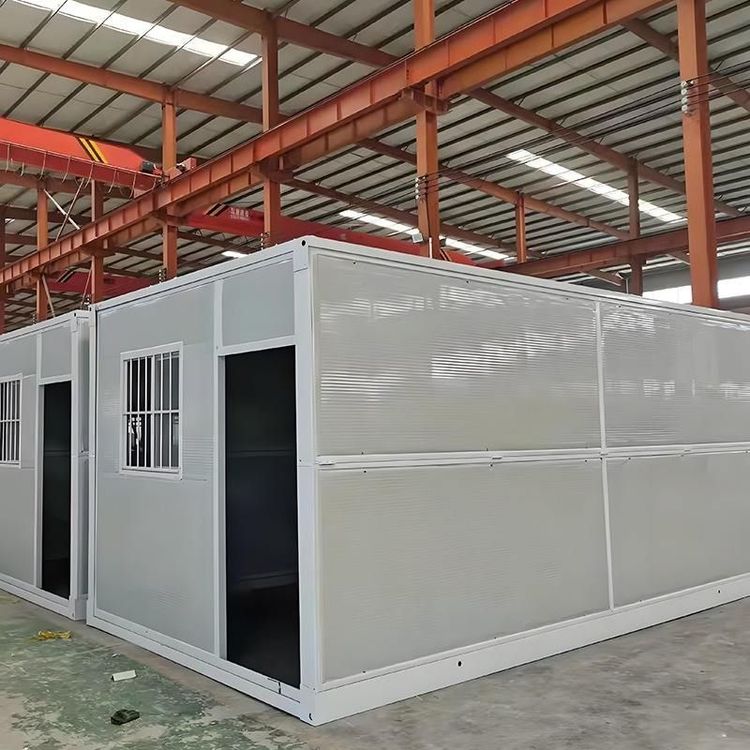
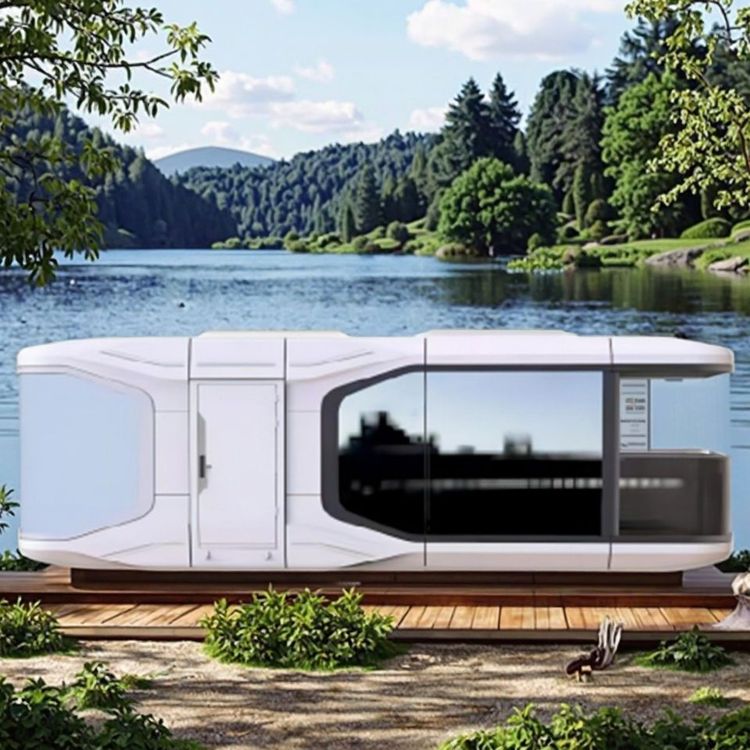
Movable Light Steel Villas: These villas offer flexible and customizable sizes, ranging from tens to hundreds of square meters, with common specifications between 60 and 150 square meters, supporting expansion and combination. Their core advantages lie in their disassemblability, non-destructive land use, recyclability, and overall relocatability. After factory-prefabricated finished products or components are delivered to the site, they can be used directly, with functional spaces customizable according to needs. Their application scenarios are extensive, covering temporary housing for construction sites, field operation housing, urban temporary housing, leisure villas in tourist areas, earthquake relief, and military fields.
Portable Cabins: These cabins feature a light steel structure as the main body, paired with composite panels, and achieve rapid assembly through modular and prefabricated design. The main components are standardized and produced in factories, and installation is completed on-site through bolt tightening, eliminating traditional masonry and pouring processes. This significantly shortens the construction period, with a cabin meeting basic living needs being able to complete its main structure within a few days. The internal space can be flexibly partitioned to form functional areas such as bedrooms and living rooms. The panels offer thermal insulation properties, and the doors and windows are reasonably designed. Some cabins are pre-planned with circuits, lighting, and simple sanitation facility lines, enabling 'immediate use upon construction'. They are suitable for short-term production and construction occasions (such as project departments in remote areas and seasonal agricultural operation points), flexible relocation needs (such as families or individuals with limited budgets), and temporary resettlement scenarios. The construction cost is usually lower than that of traditional houses, and they can be disassembled and reused, reducing resource consumption.
Modular Buildings: As a more integrated mode of prefabricated construction, modular buildings divide the building into independent modules, which are manufactured in factories and then transported to the site for assembly. Their characteristics include a construction period shortened by over 60% and millimeter-level error control. Typical cases include the 63 modular elderly care apartments purchased by British merchants, which took only two weeks for on-site hoisting; and the 84 modules in Papua New Guinea that formed a fully functional hotel. The global demand for data center construction is driving the growth of exports of domestically produced modular buildings, such as the modular prefabricated data center projects delivered by CIMC Jiangmen, covering multiple countries and regions. Market research institutions predict that by 2030, the global market size for modular buildings will exceed $142.8 billion, and China is leveraging its full industrial chain advantages to promote the transformation of 'house building' into the export of standardized industrial products.