
Dimensions of Mobile Toilets
The length, width, and height of mobile toilets vary depending on their type and usage scenarios, with common size ranges as follows:
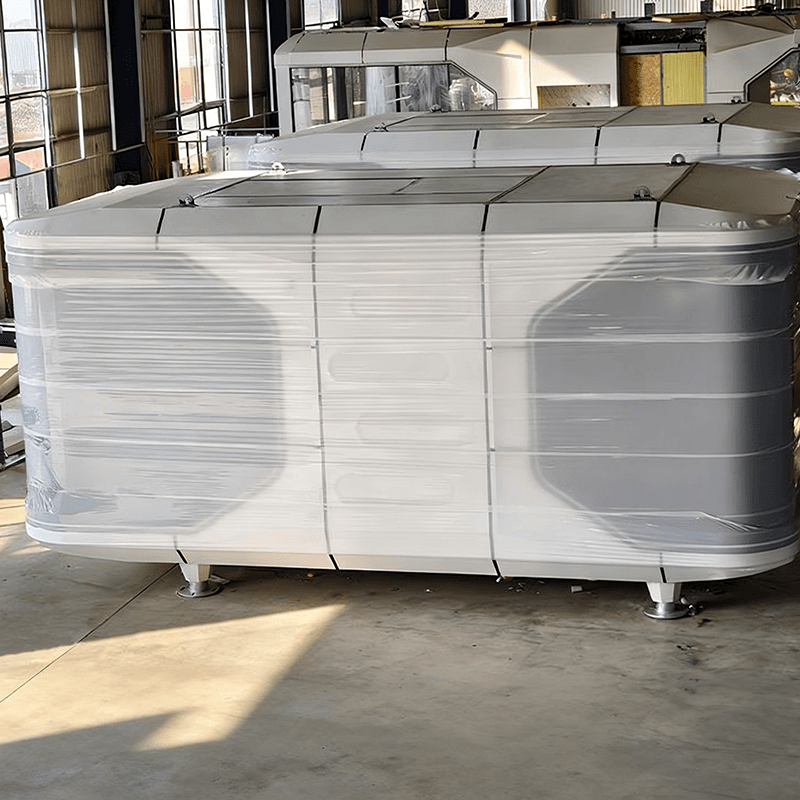
Single-occupancy Mobile Toilets:
Their length typically ranges from 1.1 to 1.5 meters, with slight variations in descriptions from different sources, some indicating a range of 1.2 to 1.5 meters. The width generally falls between 1 and 1.2 meters, with some sources suggesting 1.0 to 1.2 meters, and even a smaller range of 0.8 to 1.0 meters. In terms of height, most sources consider 2.2 meters as the basic standard, with some designs reaching 2.2 to 2.5 meters, although there are special cases as low as 1.8 to 2.0 meters. This size design primarily considers the space requirements for single-person use, ensuring basic functionality while also facilitating transportation.
Double-occupancy Mobile Toilets:
The length typically ranges from 2.4 to 3.0 meters, with some sources simplifying it to 2.0 to 2.5 meters. The width is concentrated between 1.2 and 1.5 meters, with a height similar to that of single-occupancy toilets, ranging from 2.2 to 2.5 meters. These toilets accommodate two people simultaneously by increasing their length, making them suitable for high-traffic scenarios such as temporary events or public places.
Container Mobile Toilets:
These adopt standard container dimensions, with a length of 6.5 meters, a width of 3.5 meters, and a height of 3.1 meters. This design leverages the modular characteristics of containers, facilitating transportation and rapid deployment while providing larger internal space for integrating additional functional modules such as management rooms or storage areas.
Multi-functional Mobile Toilets:
The length ranges from 3.0 to 4.5 meters, the width from 2.0 to 2.5 meters, and the height from 2.5 to 3.0 meters. These toilets are typically equipped with additional features such as barrier-free facilities, baby care rooms, or management rooms, requiring size designs that meet diverse needs and are suitable for long-term deployment or high-end scenarios.
Factors Influencing Size Differences:
The size variations from different sources primarily stem from design standards, usage scenarios, and functional requirements. For example, transportation constraints may necessitate more compact sizes, while special features (such as barrier-free facilities) require larger spaces. Additionally, material selection and structural optimization also impact the final dimensions.



