Back to blog
Article
Difference Between Fast-Assembly Container Houses and Ordinary Container Houses
Admin September 16, 2026
Fast-assembly container houses, usually referred to as quick-assembly container houses, differ from ordinary container houses in terms of structural materials, installation methods, spatial flexibility, uses, and durability:

Structural Materials
- Fast-assembly container houses: They mostly adopt light steel structural frames, such as the quick-assembly container series from Suzhou Zhongnan Steel Structure Co., Ltd. They are mainly assembled with bolts, and the edges and corners are rounded to reduce the risk of bumps. Wall materials may include color-steel sandwich panels, focusing on portability and rapid assembly.
- Ordinary container houses: They are generally modified from standard containers in the shipping industry, using steel structures made of high-strength steel. They have high strength and corrosion resistance, and the overall structure is more robust and solid.
Installation Methods
- Fast-assembly container houses: With a modular design, they are prefabricated in factories and can be installed on-site simply by bolting, without the need for complex welding procedures. The installation of a single module takes only 4 hours, with high installation efficiency, and no construction waste is generated on-site.
- Ordinary container houses: If directly modified from shipping containers, they can be installed at the destination by lifting or flatbed transportation. The installation is relatively simple, but the flexibility is not as good as that of fast-assembly container houses.
Spatial Flexibility
- Fast-assembly container houses: They support on-demand assembly and combination, and can be easily expanded into spaces with different functions, such as double-occupancy dormitories, small offices, or meeting spaces. The internal partitions can be quickly adjusted according to needs, with flexible spatial layouts.
- Ordinary container houses: There is a certain separation of internal space, mainly divided into rooms and corridors. Spatial adjustment is relatively difficult and requires professional tools, with slightly weaker flexibility.
Uses
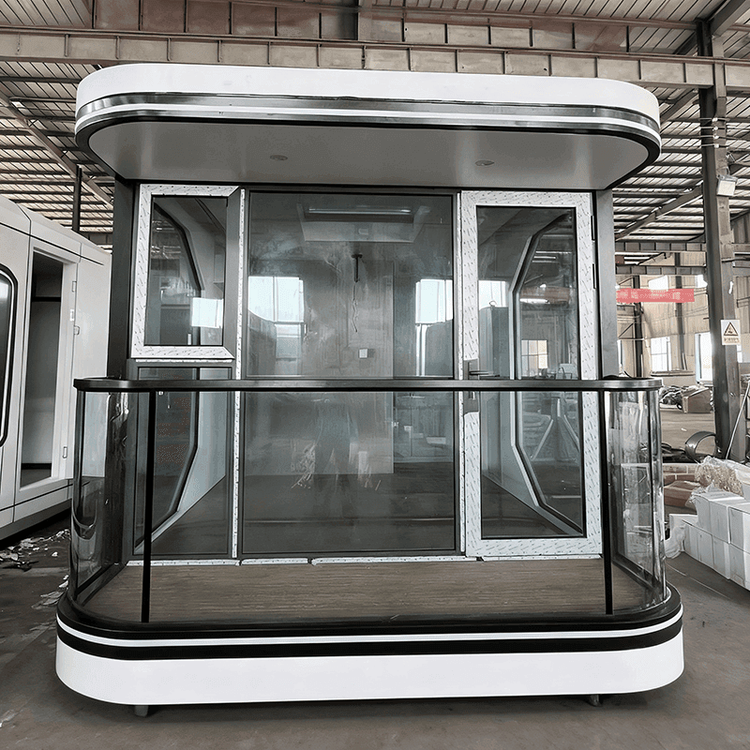
- Fast-assembly container houses: They are suitable for various scenarios such as collective dormitories on construction sites, warehouses, offices, disaster relief housing, and mobile security booths, especially for projects that require frequent relocation or flexible spatial adjustment.
- Ordinary container houses: They have a wider range of uses. In addition to construction sites and temporary residences, they can also be used for wild camping, markets, exhibitions, shops, restaurants, cafes, hotels, studios, and other temporary or long-term activities.
Durability
- Fast-assembly container houses: The overall durability depends on the quality of the steel and the performance of the panels. With proper use and maintenance, they can meet usage requirements for a certain period. When moving, the items in the room can be moved together with the container without any loss, and they can be lifted and moved multiple times.
- Ordinary container houses: The steel raw materials have high strength and corrosion resistance, enabling them to withstand natural disasters such as earthquakes and typhoons. They are more durable and can be reused multiple times, with lower long-term usage costs.
Related