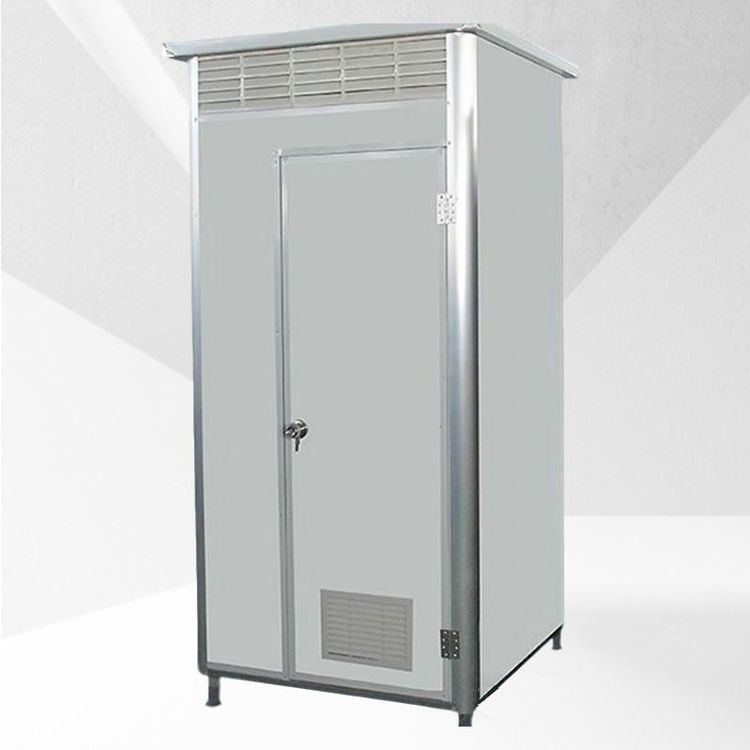
Deyang Single-Person Mobile Toilet
The price of the epidemic prevention and isolation type of Deyang single-person mobile toilet needs to be negotiated in person, and its design and use need to meet a number of strict standards.

Pollutant Control Standards: The sewage discharge of epidemic prevention and isolation mobile toilets must comply with GB 8978-1996 'Integrated Wastewater Discharge Standard' and GB 18918-2002 'Discharge Standard of Pollutants for Municipal Wastewater Treatment Plants' to ensure that the concentration of harmful substances in the sewage is within a safe range. Odor emissions must comply with GB 14554-1993 'Emission Standards for Odor Pollutants' to reduce the impact on the surrounding environment. The harmless treatment of fecal waste must comply with GB 7959-2012 'Hygienic Requirements for Harmless Treatment of Feces' to ensure that pathogens in the fecal waste are effectively killed. For products without sewers, they must also comply with HJ 1160-2021 'Technical Requirements for Environmental Labeling Products - Sewerless Sanitation Systems' to ensure the environmental performance of the products.
Scene-Specific Environmental Protection Standards: Depending on the usage scenario, epidemic prevention and isolation mobile toilets must also meet specific environmental protection standards. In scenic and cultural tourism scenarios, they must comply with GB/T 18973-2022 'Quality Requirements and Assessment of Tourist Toilets' and LB/T 071-2019 'Basic Requirements for Sustainable Sewerless Tourist Toilets' to ensure the comfort and sustainability of the toilets. In rural scenarios, they must comply with NY/T 5002-2025 'Construction and Management Specifications for Rural Household Waterless Biological Filler Toilets' and GB/T 38836-2020 'Technical Specifications for the Construction of Rural Three-Compartment Household Toilets' to adapt to the special needs of rural areas. In medical epidemic prevention scenarios, they must comply with GB 18466-2005 'Discharge Standard of Water Pollutants for Medical Institutions' to ensure the safe treatment of medical wastewater.
Anti-Seepage and Waterproofing and Pollutant Discharge Compliance: The overall waterproofing grade of the box body of the epidemic prevention and isolation mobile toilet must be no less than IP65, and the floor must undergo multi-layer waterproofing treatment and pass a 48-hour closed water test to ensure no leakage. The sewage storage tank or septic tank must undergo anti-corrosion and anti-seepage treatment and comply with the HJ 2029-2013 standard. In terms of pollutant discharge, those connected to the municipal sewage network must comply with the tertiary standard of GB 8978-1996; those for on-site reuse without a sewage network must comply with the Class 1 A standard of GB 18918-2002; for zero-discharge models, the fecal waste must meet the harmless requirements of GB 7959-2012; odor emissions must comply with the secondary standard of GB 14554-1993, and the indoor ammonia concentration must be controlled at ≤0.3mg/m³.