
Back to blog
Article
Design of Container Houses
Admin September 15, 2026
Designing container houses requires comprehensive consideration of multiple factors such as structure, materials, functional adaptability, and installation and maintenance. Here are the specific design points:
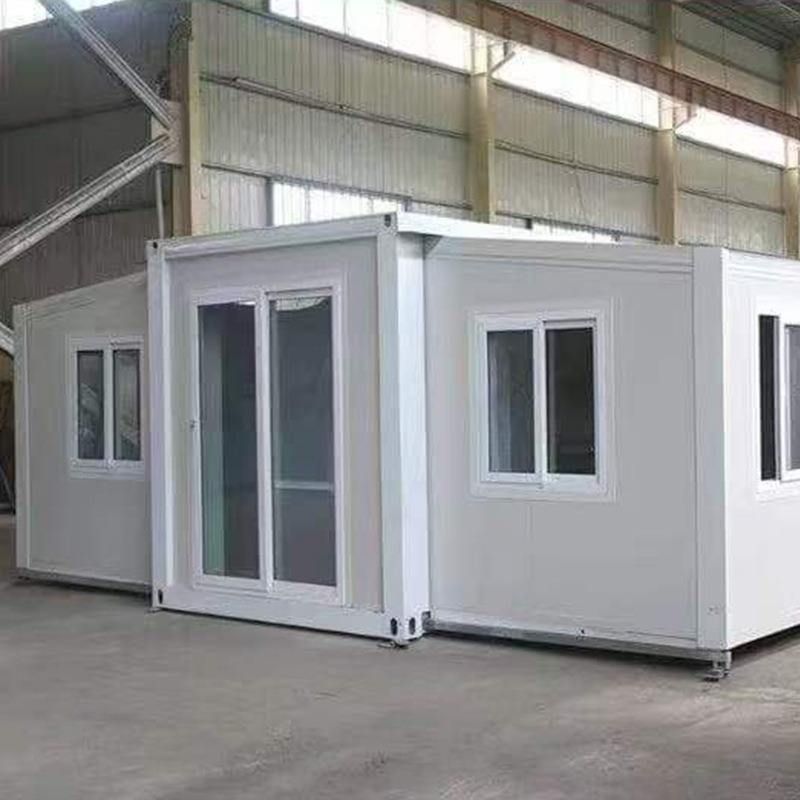
Structural Design
- Basic Framework: High-strength weather-resistant steel (such as Q355B grade) is preferred as the main framework. Its yield strength is approximately 30% higher than that of ordinary carbon steel, which can reduce material usage and enhance structural stability. For example, Yiqi Company forms a self-balancing system through rigid connections between corner fittings and side beams, eliminating the need for additional reinforcement even when the length-to-width ratio approaches 2:1.
- Connection Method: A dual-fixing mode of "wedge-shaped lock + high-strength bolt" is adopted. The wedge-shaped lock is designed with a 15-degree inclined plane angle, which generates a self-locking effect under horizontal shear force, improving seismic performance. Actual measurements show that the displacement of this joint is controlled within 3 millimeters during simulated magnitude-8 earthquakes, which is superior to conventional welded joints.
- Expandability: If additional usable area is required, side or end expansion cabins can be designed, which can increase the area by 30%-50% when expanded, suitable for long-term on-site office scenarios.
Material Selection
- Enclosure Structure: A three-layer composite structure of "rock wool - air layer - galvanized aluminum sheet" is used. The rock wool layer is 75-100 millimeters thick with a thermal conductivity lower than 0.040 W/(m·K). Combined with a 5-millimeter air layer to suppress convective heat transfer, the overall heat transfer coefficient (U-value) is lower than 0.5 W/(m²·K), effectively reducing condensation risk.
- Corrosion Protection: The coating system uses a combination of "epoxy zinc-rich primer + polyurethane topcoat". The primer contains more than 80% zinc powder, and the topcoat has a hardness of 3H grade, which can resist wind and sand erosion. Salt spray tests show that this coating system does not show red rust within 1000 hours, equivalent to a 15-year protection cycle.
Functional Adaptability
- Scenario-Based Design: Adjust the internal layout according to the usage scenario. For example, engineering camps that require rapid delivery can use factory-prefabricated interior and facility packing boxes, which can be used immediately after on-site hoisting; commercial pop-up stores that require flexible space adjustment can choose quick-assembly boxes that support basic splicing.
- Environmental Protection and Energy Efficiency: Integrate a self-circulating sewage system to treat gray water and black water through a sewage collection tank and a gravity separator. The gray water can be used for vegetation irrigation after sedimentation and filtration, and the black water can be converted into liquid fertilizer through anaerobic fermentation, improving water self-sufficiency.
Installation and Maintenance
- Installation Efficiency: The installation time for a single set should be controlled within a reasonable range. For example, the quick-assembly boxes from Suzhou Zhongnan can be installed in just 2 hours for a single set and support on-demand splicing and combination, allowing the construction of 10 standard dormitories to be completed within 1 day.
- Reusability: The disassembly and assembly loss rate should be considered during design. The disassembly and assembly loss rate of high-quality container houses is controlled within 5%, and the bolt connection method facilitates repeated assembly during secondary relocation, reducing construction waste generation.



