
Design Considerations for Glass Skylight Roofs
Glass skylight roof design must address structural layout, light transmission, solar gain limits, and daylight performance. Below are key design considerations.
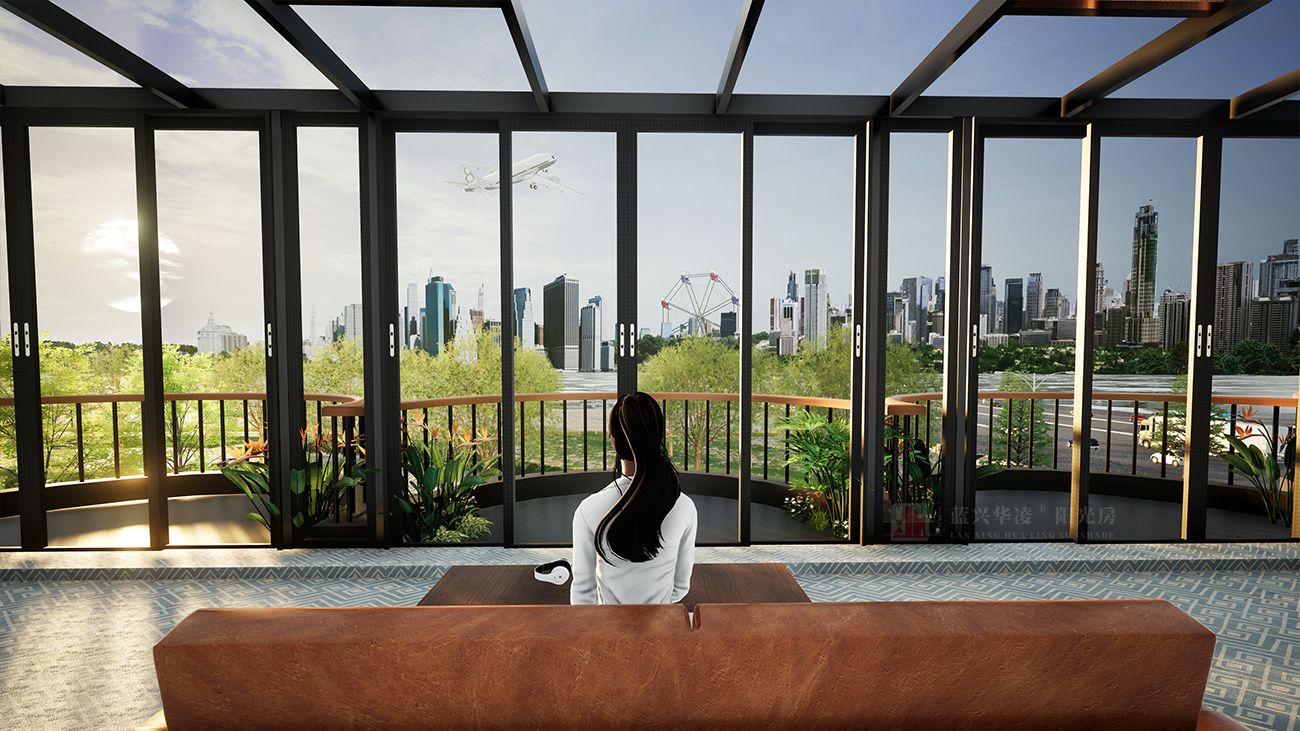
I. Typical glass skylight roof structure
Typical assemblies use laminated insulating glass. The outer lite withstands wind, rain, snow, maintenance, and impact loads—thick tempered glass meets requirements. The inner lite prevents post-breakage fallout and stops outer lite fragments from penetrating downward. Heat-strengthened laminated glass is preferred—it retains residual rigidity after breakage, unlike fully tempered pairs that become soft and risk overall detachment.
Upper lite deflection must stay below lower lite limits to avoid over-compressing the air cavity. A 16 mm air gap reflects this principle. Compare deflection at equivalent thickness when evaluating options.
II. Appropriate light transmission
Skylight transmittance cannot rely on intuition from vertical window experience—skylights face the full sky dome, doubling perceived brightness. Target 35–45% transmittance: sufficient for daylight and cloud views without glare. Higher values typically require shading systems.
III. Reducing perceived heat under sunlight
Select low shading coefficient low-E glass, but also evaluate total solar infrared transmittance—the parameter that determines felt radiant heat. Field tests at ~1000 W/m² solar intensity and ~500 W/m² infrared intensity help compare coating options by direct hand comparison.
These are the main glass skylight roof design considerations. Contact us for further technical support—we welcome your partnership.



