
Design of Mobile Toilets for Commercial Streets
Designing mobile toilets for commercial streets requires comprehensive consideration of multiple factors, including structural reliability, customized design, environmental and economic efficiency, among others. The specific design points are as follows:
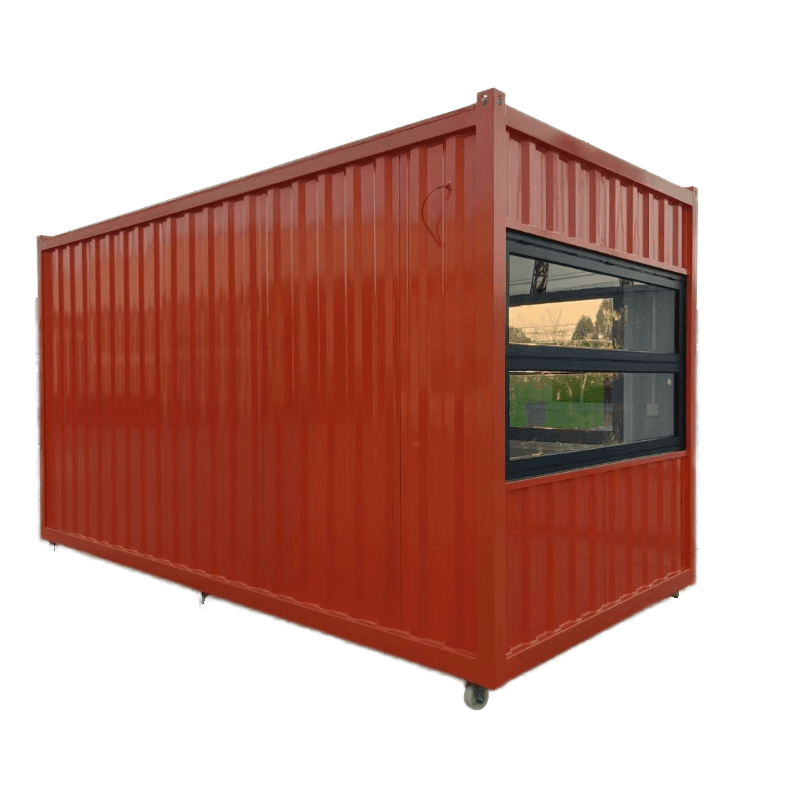
Structural Reliability
The main frame of the mobile toilet should adopt a light steel structure that complies with national building safety standards, such as a national standard light steel structure frame. The main keel should be made of galvanized steel pipes, and the welding process must strictly adhere to industry norms to ensure structural stability. The thickness of the waterproof and anti-corrosion layer should be over 0.8mm to withstand long-term use in outdoor environments. The load-bearing capacity should meet the high-frequency usage demands of commercial streets, with a recommended design of over 2.5kN/㎡ to prevent structural deformation due to heavy foot traffic. If a container structure is used, the main frame should be made of high-strength steel, paired with non-slip flooring (such as tiles or plastic materials) and insulation layers of rock wool or foam boards, enabling adaptation to different climatic conditions and enhancing user comfort.
Customized Design
Mobile toilets should support full-dimensional customization, allowing flexible adjustments in size, layout, and functionality based on the spatial characteristics of the commercial street. Dry-wet separation design is a core requirement, with surveys showing that 68.5% of operators consider it a key purchasing criterion. Attention should be focused on the rationality of the layout and the configuration of supporting facilities. For example, a gender-separated design can be adopted, with a public handwashing area at the entrance equipped with double basins, makeup mirrors, and other facilities to improve usage efficiency and user experience. Additionally, barrier-free facilities and a third restroom can be added to meet the needs of special groups such as the disabled and families, reflecting a human-centered design philosophy.
Environmental and Economic Efficiency
Mobile toilets should employ water-saving flushing systems, sensor-activated faucets, and anti-odor floor drains to reduce water consumption and odor diffusion. High-end models can be equipped with solar power systems to reduce energy dependence and further lower long-term maintenance costs. Modular design is key to enhancing economic efficiency, as mobile toilets based on container structures can be rapidly deployed and relocated through standardized modules, shortening construction periods and reducing labor and material costs. Meanwhile, the use of lightweight materials (such as high-strength aluminum alloys) can reduce transportation energy consumption and enhance overall environmental performance.
Mobility and Safety
The design should balance lightness and sturdiness, controlling the height and width of the toilet to accommodate different transportation vehicles. The mobile devices (such as towing hooks and hydraulic legs) should be complete and reasonable to ensure stability during relocation. Additionally, non-slip flooring, emergency call devices, and night lighting systems should be installed to ensure user safety.



