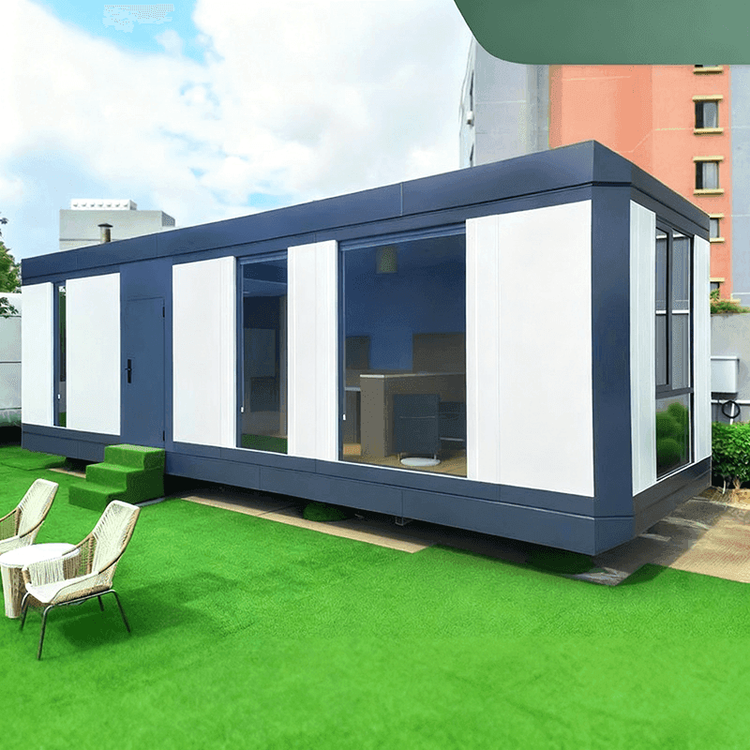
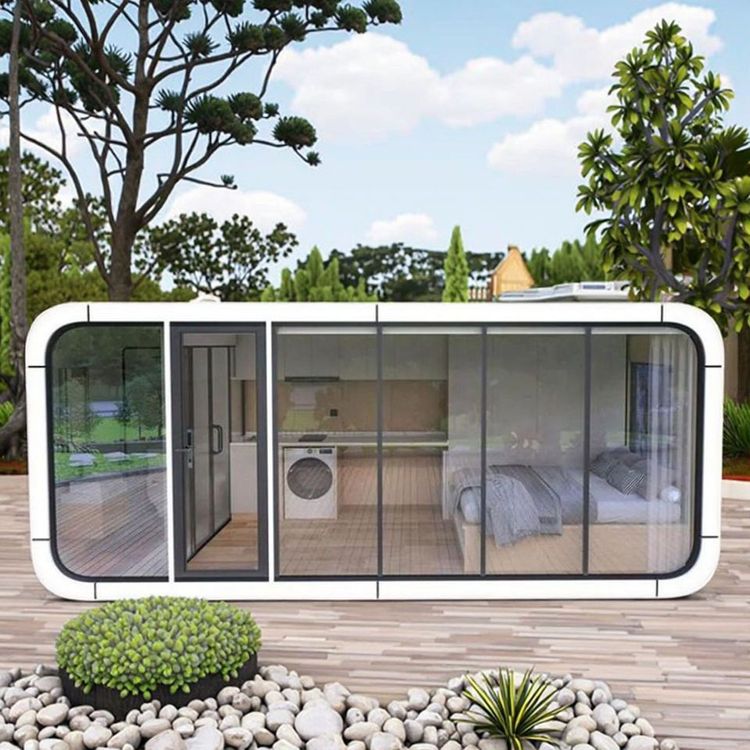
Residential Container Houses in Deqing County
Currently, no explicit public project information focusing on 'residential container houses' has been found in Deqing County. However, based on local urban-rural development trends, analysis can be conducted from the following perspectives:

Characteristics of Existing Housing Construction Models in Deqing County
During the implementation of the 'Hundred, Thousand, and Ten Million Projects' in Deqing County, the cross-village centralized housing construction project in the new rural demonstration area of Maxu Town serves as a representative example, exploring a centralized construction model that combines traditional rural houses with apartments. The project, with a total planned land area of approximately 185 acres, is being developed in five phases. The housing types include row houses and farmer apartments, offering four types of floor plans ranging from 90 square meters to 240 square meters. This model focuses more on fixed, long-term residential forms, enhancing land use efficiency through unified planning and improving rural living conditions. However, it does not involve movable, modular building forms such as container houses.
Applicable Scenarios and Limitations of Residential Container Houses
Residential container houses typically feature rapid construction, mobility, and relatively low cost, commonly used in temporary housing scenarios such as construction site dormitories, emergency shelters, and temporary facilities in tourist areas. Their limitations include weak thermal insulation performance, restricted spatial layout, and insufficient long-term living comfort. Additionally, they require well-equipped water, electricity, and sewage infrastructure to meet living needs. In the existing new rural demonstration area construction in Deqing County, greater emphasis is placed on the durability, functional completeness, and community amenities of housing, which is why container houses have not been chosen as the primary construction form.
Future Possibilities and Policy Directions
If Deqing County considers introducing container houses in the future, the following conditions may need to be met: first, specific scenario requirements, such as temporary transitional housing or unique accommodations for cultural tourism projects; second, policy support, clarifying the legality, construction standards, and regulatory requirements of container houses; third, technological optimization, improving living experiences through advancements in thermal insulation materials and spatial design. Currently, local policies lean more towards promoting urban-rural integration through centralized housing construction, and the widespread adoption of container houses remains subject to observation of future planning developments.