Depreciation Period of Mobile Toilets in Scenic Areas
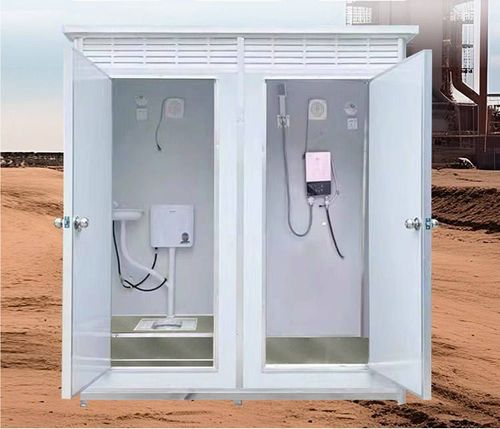
The depreciation period of mobile toilets in scenic areas needs to be comprehensively determined based on their type, purpose, and tax law regulations, typically ranging from 3 to 20 years, with actual service lives potentially being longer.
Tax Law Classification and Depreciation Period Regulations
According to the Implementation Regulations of the Enterprise Income Tax Law of the People's Republic of China, the determination of the depreciation period for fixed assets depends on their category:
- Houses or Buildings: If a mobile toilet is classified as a house or building (e.g., having a fixed foundation and long-term usage characteristics), its depreciation period is typically 20 years. However, the actual service life may be shortened due to material quality and maintenance conditions. For example, wooden structures or simply constructed toilets may be scrapped prematurely.
- Appliances or Tools: If a mobile toilet is regarded as an appliance or tool related to production and business operations (e.g., movable and non-fixed installation types), the tax law stipulates a depreciation period of no less than 3 years. The specific period needs to be determined based on the enterprise's expected consumption pattern. For instance, a frequently used toilet in a scenic area may be depreciated over 5 years, while one in a less frequently used location may be extended to 10 years.
Special Characteristics of Eco-Friendly Mobile Toilets
Eco-friendly mobile toilets generally have longer actual service lives due to their repeatable disassembly and assembly and durable materials:
- Basic Eco-Friendly Toilets: Mobile toilets made of ordinary metals or composite materials typically have an actual service life of no less than 15 years. The depreciation period can refer to the minimum standard for "appliances or tools" in tax law (3 years) or be extended based on maintenance conditions.
- High-Density Polyethylene Material Toilets: Some mobile toilets are made of anti-aging materials such as high-density polyethylene (HDPE), with a design life of over 30 years. If such toilets meet the definition of fixed assets (having a service life exceeding one accounting year and being used for business management), they are usually depreciated under the tool and furniture category in accounting, with a period set between 10 and 15 years.
Accounting Treatment and Actual Differences
In accounting practice, the depreciation period of mobile toilets needs to be considered in conjunction with their purpose and enterprise management needs:
- If the toilet is used for business management in a scenic area and has a service life exceeding one year, it is usually accounted for as a fixed asset, with the depreciation period referring to tax law regulations or enterprise accounting policies (e.g., depreciated over 5 to 10 years as a tool).
- If the toilet is a temporary facility or leased for use, it may not be included in the scope of fixed assets but instead be expensed as a low-value consumable in a lump sum.
Summary: The depreciation period of mobile toilets in scenic areas needs to be comprehensively determined based on tax law classification, material characteristics, and usage scenarios. The minimum standards in tax law are 3 years (for appliances or tools) or 20 years (for buildings). In actual accounting treatment, a reasonable period can be set based on the expected service life.