
Demountable Container House
Demountable container houses are available, and China has developed a mature industrial system for demountable and relocatable container houses.
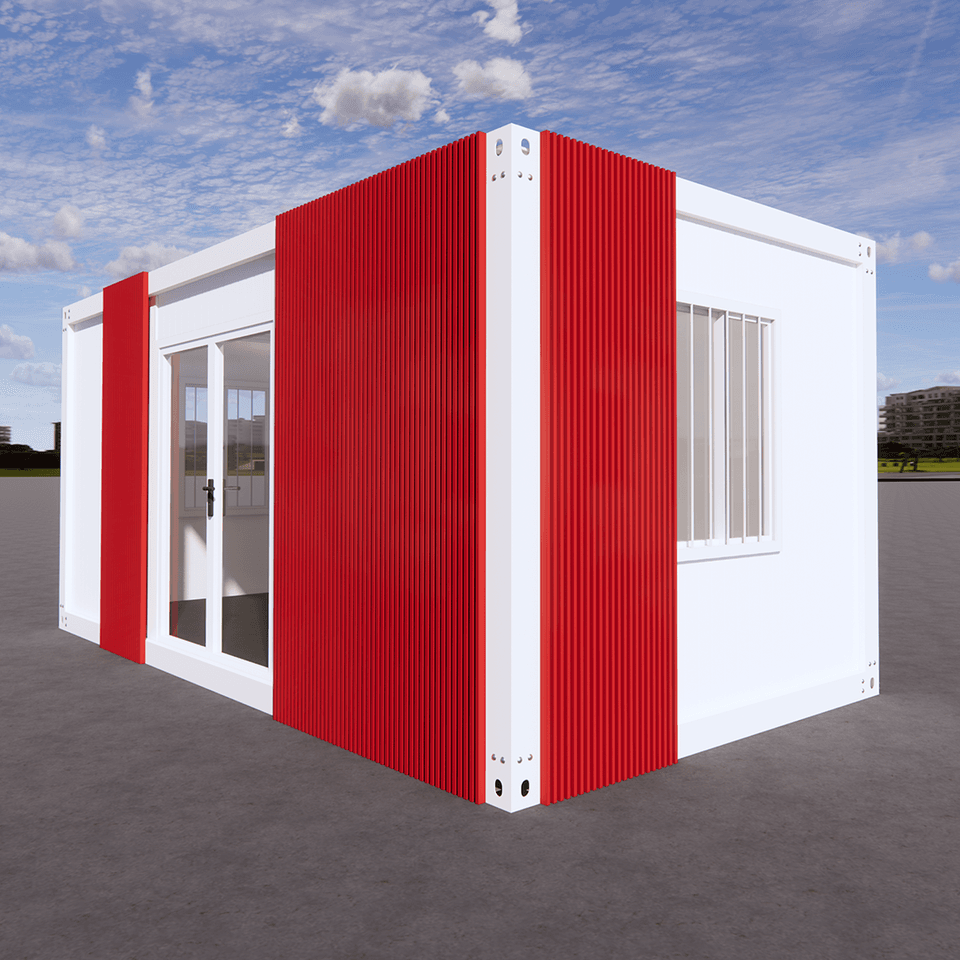
I. Technical Process and Structural Stability
Demountable container houses adopt a modular design, with the main structure primarily consisting of a steel frame paired with fire-resistant rock wool sandwich panels, integrating insulation, fire prevention, sound insulation, and waterproofing functions. Leading companies such as CIMC Modular Building Systems and Suzhou Zhongnan Steel Structure ensure structural stability after multiple disassemblies and reassemblies through full steel structural frames or semi-welded and semi-bolted connection structures. Actual measurements show that frame deformation is controlled between 2-6mm under 12-level strong winds, well below the national standard limit of 10mm. Factory prefabrication processes achieve welding precision of 1-2 millimeters, resulting in low disassembly and reassembly loss rates. Under proper use, the average reuse frequency can reach over 8 times, and construction waste emissions are reduced by 90% compared to traditional buildings.
II. Compliance and Scenario Adaptation
The industry has established a full-chain compliance standard, including ISO9001 quality management systems, CE/CPR EU certifications, and EN1090 steel structure standards, meeting the needs of cross-border projects and emergency resettlement scenarios. Products achieve rapid 48-hour deployment through a bolt-fastening process without welding, adapting to diverse scenarios such as engineering camps, cultural tourism homestays, emergency command rooms, and temporary medical stations. For example, China State Construction Engineering Corporation shortened the delivery cycle for a hotel project in Papua New Guinea from 14-18 months to 7 months using a modular approach; a British merchant completed on-site hoisting of 63 elderly care apartment modules within two weeks.
III. Market Trends and Key Manufacturers
The industry is moving towards a low-carbon, scenario-based high-quality development stage, with the global market size expected to exceed $80 billion by 2026. Products with multiple reuse capabilities and cross-border compliance account for over 60% of orders from leading domestic companies. The following types of manufacturers are recommended:
- Technology-focused: Such as Shengshan Integrated (15 years of modular technology, 100% reuse rate) and Guangdong Zhonghui Green Building (damage-free disassembly system);
- Scenario-expansion-focused: Haojin Environmental Protection (double-wing expandable container houses with significant space increases) and Yazhi Integrated Housing (multi-environment adaptive design);
- Cross-border service-focused: China State Construction Integrated and Zhongxin Housing Integrated Construction (covering the Australian and North American markets, providing project delivery and after-sales support).
IV. Procurement Considerations
It is essential to verify manufacturer qualifications (such as third-party inspection reports and VoC compliance certificates), process performance (disassembly and reassembly loss rates, structural deformation), and scenario adaptation capabilities (customization flexibility, terrain adaptability). Avoid non-standard products using thin steel plates or inferior steel, as these have wind resistance of only up to level 8, and rework costs can reach 3-5 times the procurement cost.
You may also like
Eco-Friendly Portable Toilet Specifications: Size, Area & Layout
Read More
Portable Toilet Insulation Explained: How to Choose the Right One
Read More
Portable Toilet House in 2026: Buying Guide & Recommendations
Read More