
Dehong Mobile Toilet Manufacturer
Manufacturers of mobile toilets in Dehong Prefecture need to deeply adapt to local geographical and climatic conditions during design and production, forming a customized production model centered on local assembly and radiating a nationwide supply chain. The specific features are as follows:
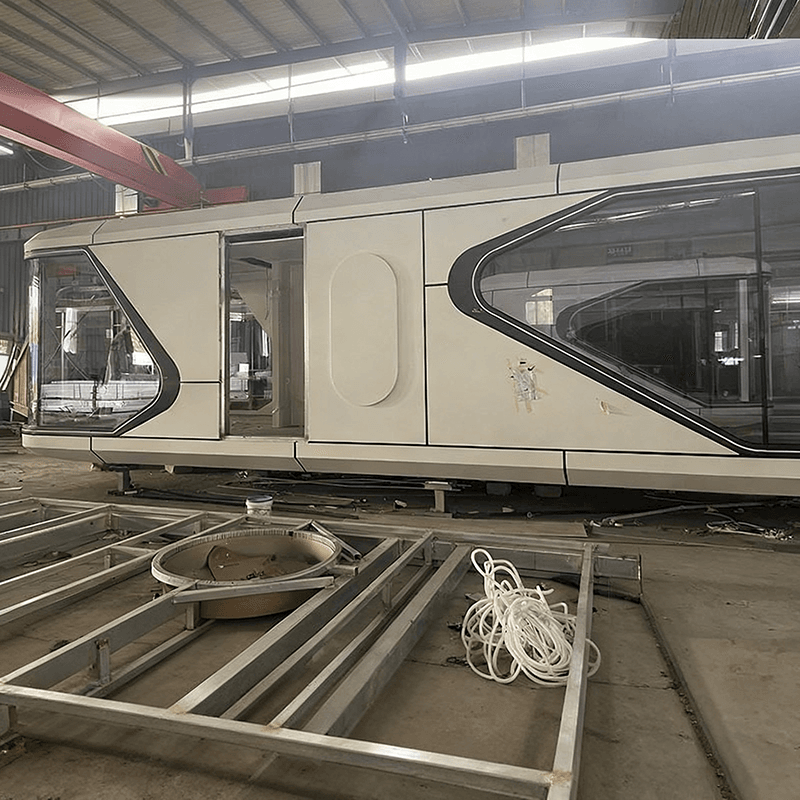
1. Climate-Adaptive Design
Dehong Prefecture has a southern subtropical monsoon climate, characterized by high temperatures, abundant rainfall, and frequent short-term heavy rainfall, posing stringent requirements for the moisture resistance, drainage, and ventilation performance of mobile toilets. For box materials, priority is given to weather-resistant composite materials, corrosion-resistant metals, or moisture-proof new panels. For example, sandwich panels must meet the combined standards of high moisture-proof grade core materials and ultraviolet-resistant panels. The roof drainage system requires optimized slope design to ensure rapid drainage during short-term heavy rainfall. Internal ventilation is achieved through enhanced mechanical ventilation or natural convection design, reducing the risk of mildew in high-temperature and high-humidity environments.
2. Terrain-Flexible Deployment
The terrain in the prefecture includes basins, hills, and mountains, with application scenarios including scenic spots, festival venues, and temporary construction sites, demanding extremely high requirements for transportation convenience, site adaptability, and structural stability. In terms of transportation design, some manufacturers offer trailer-mounted or self-lifting chassis models that can quickly traverse complex terrains. Structural stability is achieved through modular assembly or adjustable support feet, reducing dependence on site flatness. The application of lightweight materials further reduces transportation difficulty while ensuring wind and earthquake resistance in complex terrains.
3. Ecological Sensitivity Response
When used near nature reserves or water sources, the waste treatment of mobile toilets must achieve zero emissions or high-standard subsequent treatment. In terms of technology selection, packing toilets collect waste directly through biodegradable bags, avoiding secondary pollution. Microbial degradation technology utilizes efficient bacterial strains to decompose organic matter, with accompanying subsequent treatment plans meeting environmental protection standards. The manufacturer's responsibility extends beyond product supply to providing environmental protection treatment plans or cooperation channels to ensure compliance throughout the entire waste treatment chain.
4. Scenario-Based Customization and Supply Chain Collaboration
The application scenarios in Dehong Prefecture are diverse and complex, including border ports, tropical rainforest scenic spots, folk activity venues, and rural improvement projects, with significant differences in technical configuration requirements across scenarios. The production system needs to have rapid adaptability capabilities. For example, border ports require enhanced corrosion resistance and security design, while tropical rainforest scenic spots require improved mosquito and insect resistance and ventilation performance. In terms of the supply chain model, core box manufacturing and structural assembly are completed locally, while high-tech subsystems (such as environmental protection treatment equipment and intelligent control systems) are provided by external professional suppliers, forming a collaborative network of "local assembly + nationwide supply chain".



