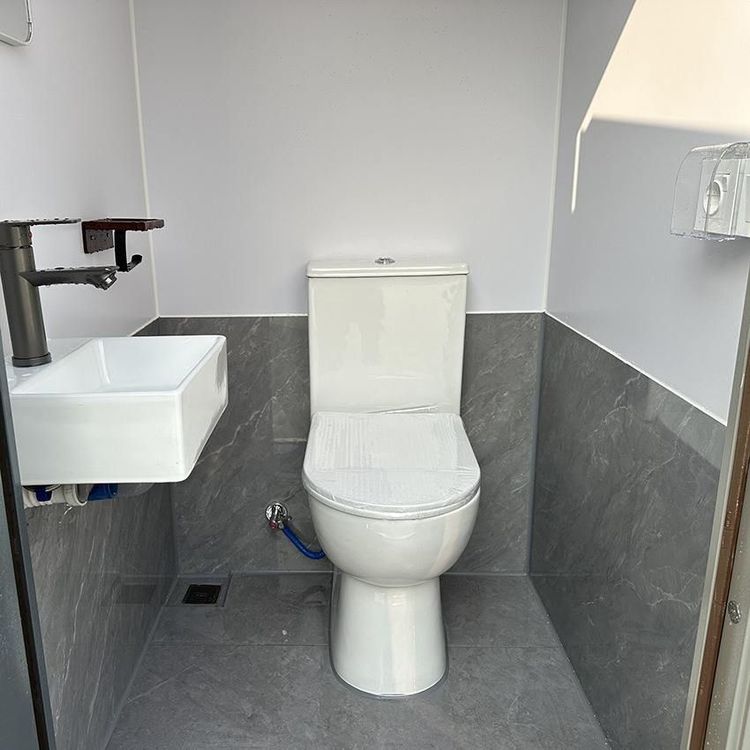
Dehong Environmental Protection Mobile Toilet Materials
Dehong environmental protection mobile toilets mainly use weather-resistant composite materials, specially corrosion-resistant metal materials, and novel panels with good moisture resistance. The specific material selections and their characteristics are as follows:

1. Composite materials: The core of weather resistance and structural stability
In Dehong, where the climate is humid and hot with strong ultraviolet radiation, sandwich panels are commonly used as the main material for the box structure of mobile toilets. The core material needs to have a high moisture-proof rating, such as polyurethane or rock wool cores, which can effectively block water vapor penetration and prevent internal structural corrosion due to moisture. The panels are made of materials with strong ultraviolet resistance, such as glass fiber reinforced plastics (FRP) or high-density polyethylene (HDPE). These materials do not fade or crack easily under long-term sunlight exposure, ensuring a shell lifespan of over 10 years. Some high-end models also add nano-coatings on the surface of the composite materials to further enhance self-cleaning and scratch resistance.
2. Metal materials: Corrosion resistance treatment is crucial
Metal frames (such as steel structures) need to undergo special corrosion resistance processes, such as hot-dip galvanizing or epoxy resin spraying. The hot-dip galvanized layer should be at least 80μm thick to withstand corrosive environments like salt spray and acid rain. The epoxy resin coating forms a dense protective film through multiple layers of spraying, isolating the metal from contact with humid air. In coastal or high-humidity areas, stainless steel materials (such as Type 304 or 316) are also used instead of ordinary steel. These have higher chromium and nickel content, significantly enhancing corrosion resistance.
3. Novel panels: Balancing moisture resistance and lightweight design
For internal partitions and decorative materials, novel panels with excellent moisture resistance are often selected, such as PVC foam boards or aluminum honeycomb panels. PVC foam boards have a low density (about 0.5g/cm³), an absorption rate of less than 0.5%, and are easy to clean. Aluminum honeycomb panels consist of aluminum alloy panels and a honeycomb-shaped aluminum core, combining lightweight design (weighing only one-third of traditional wooden panels) and high strength. Their surfaces can also be covered with anti-mold veneers to inhibit bacterial growth.
4. Auxiliary materials: Enhancing environmental adaptability
To cope with short-term heavy rainfall in Dehong, high-strength aluminum alloy or stainless steel drainage troughs are used on the roofs, with a slope design greater than 5% to ensure rapid rainwater drainage. The ventilation system is equipped with corrosion-resistant axial fans and insect screens. The fan housing is made of ABS engineering plastics, which are resistant to acid and alkali corrosion, with an air volume of over 200m³/h, effectively reducing internal humidity.