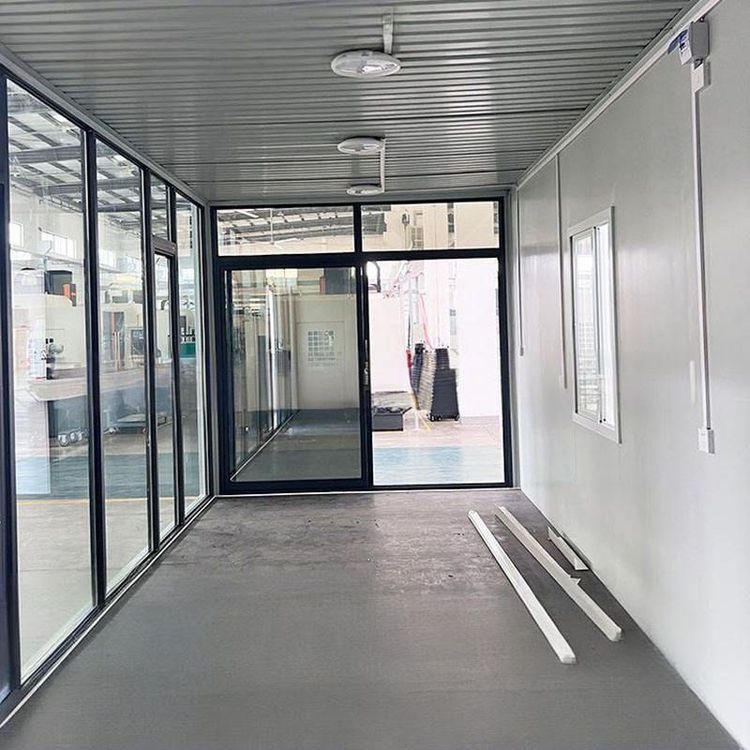
Decoration of Mobile Toilets
When decorating mobile toilets, it is necessary to comprehensively consider design styles, functional configurations, and construction points. Here are specific suggestions:

I. Design Styles and Functional Configurations
The design of mobile toilets should balance practicality and aesthetics. The minimalist and stylish model can feature a beige exterior wall paired with an orange curtain wall, with separate toilet compartments for men and women inside, each equipped with three squat toilets to meet basic usage needs. The economical and practical model uses gray and white metal carved panels as the main material, enhancing lighting and ventilation through entrance doors, sliding windows, and stone wall lamps, with independent squat toilet compartments suitable for high-traffic scenarios. To improve comfort, barrier-free toilet compartments, baby care rooms, or gender-neutral restrooms can be added, equipped with user-friendly facilities such as handrails and emergency call devices.
II. Key Points for Toilet Relocation Construction
If the toilet position needs to be adjusted, choose an appropriate method based on spatial conditions:
- Short-distance relocation: Use a dedicated relocation device (usually suitable for adjustments within 50-100 cm). Ensure the pipe slope is ≥2% (i.e., a drop of 2 cm per meter) to avoid poor drainage.
- Raising the floor and re-piping: Raise the floor height (approximately 10-15 cm) to lay new drainage pipes. Pay attention to pipe sealing, and it is recommended to use PVC glue or hot-melt connections to prevent leaks.
- Wall-mounted toilet: Hide the drainage pipe inside the wall to save space and enhance aesthetics. However, plan the wall thickness (usually ≥20 cm) and access panel location in advance.
- Floor slab opening relocation: Suitable for cross-floor adjustments. Contact the property management to confirm structural safety and have professionals carry out the construction. After completion, redo the waterproof layer (with a coating height of ≥1.8 meters) and conduct a closed-water test (lasting 24-48 hours).
III. Waterproofing and Sealing Treatment
The waterproof layer is crucial for mobile toilets. Apply a flexible waterproof coating (such as polyurethane or JS waterproof coating) twice, focusing on covering the floor, wall corners, and pipe roots. Use rubber sealing rings or Teflon tape to reinforce drainage pipe connections and regularly check for aging. If using a squat toilet, secure the base with cement mortar before installation to ensure it is flush with the floor and prevent water leakage.
IV. Ventilation and Lighting Optimization
Natural ventilation can be achieved through sliding windows or louvered windows. If the space is enclosed, install an exhaust fan (with a power of ≥50W) or a fresh air system to maintain air circulation. For insufficient lighting, use frosted glass or translucent panels to increase brightness while avoiding direct sunlight that can cause excessive internal temperatures.