
Decoration of Container Houses
When decorating container houses, it is essential to focus on structural design, material selection, installation techniques, and compliance, while customizing solutions based on actual needs.
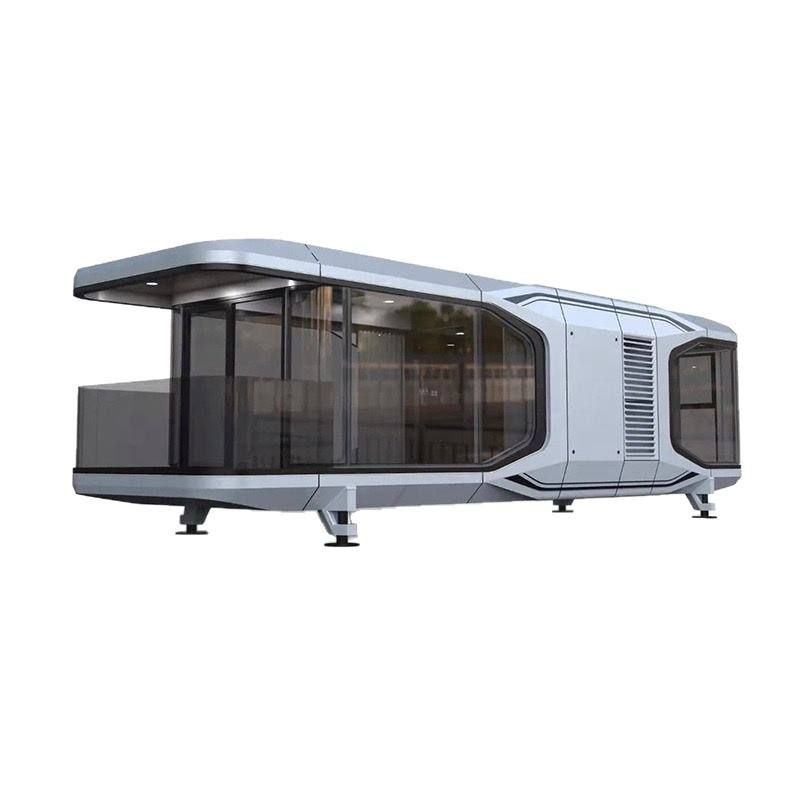
1. Structural Design Must Meet Safety and Functionality Requirements
The core of container houses is the steel structural framework, which must ensure wind and earthquake resistance. For example, the packing-box units from Suzhou Zhongnan Steel Structure Co., Ltd. feature a full steel structural framework with a wind resistance rating of up to Level 12 and an earthquake resistance rating of Level 8. The framework deformation rate is only 0.18%, far below the industry's acceptable threshold of 0.3%. For use in scenic areas or long-term outdoor settings, it is advisable to prioritize products that have undergone structural verification and avoid non-standard, unbranded products (which typically have a framework deformation rate exceeding 1.2%), as these may lead to wall cracking, framework tilting, or even safety hazards due to extreme weather conditions.
2. Material Selection Should Balance Weather Resistance and Environmental Friendliness
For outdoor container houses, it is crucial to consider anti-corrosion, waterproofing, and thermal insulation properties. For instance, the scenic area project by Jiangsu Mingren Culture Technology Co., Ltd. employs multi-layer anti-corrosion processes, professional waterproofing treatments, and thermal insulation materials suitable for mountainous open-air environments. Baotou Camp Container House Co., Ltd. reduces heat conduction efficiency through a thermal-break lining structure (filling hard polyurethane foam between the steel framework and interior wall panels), keeping indoor temperatures 8-10℃ higher than the outside in winter without heating, thereby reducing energy consumption. Additionally, steel surface treatment should opt for hot-dip galvanizing, which offers a longer anti-corrosion lifespan than cold-dip galvanizing, especially in areas with significant temperature variations and humidity changes.
3. Installation Techniques Must Be Standardized and Detail-Oriented
Ground preparation is fundamental for installation. It involves removing loose soil and compacting the original soil layer. For long-term fixed use, a concrete strip foundation (30-50 cm wide, with depth determined by the frost line) should be poured to ensure that the bottom beam fits the foundation with an error margin of no more than 2 mm per meter. During lifting, sufficient load-bearing steel cables should be used, and all lifting points should be controlled simultaneously to prevent box distortion. If multi-layer stacking is involved, C-shaped steel purlins should be installed between bottom beams to distribute the load. For example, Baotou Xinxing Color Plate Steel Structure Manufacturing Co., Ltd. achieves structural stability even with three-layer stacking through this method.
4. Compliance and Scenario Adaptability Must Match Requirements
Different scenarios impose distinct requirements on container houses. For example, scenic area shops must adhere to the acceptance standards of famous mountain scenic spots, emphasizing a 1:1 real-life reproduction of design renderings and the prefabrication of traditional Chinese architectural elements (such as Song-style eaves and new Chinese-style grilles). Engineering camps require rapid delivery, and the Suzhou Zhongnan team has completed the delivery of 1,000 accommodation modules within three months through a "factory prefabrication + on-site rapid assembly" model, shortening the industry's average construction period by 40%. Commercial pop-up shops need flexible spatial configurations that support on-demand assembly and combination. Furthermore, for overseas projects, it is essential to select modular houses that comply with international standards, such as those from China Construction Integrated Building Intelligent Manufacturing (Shenzhen) Co., Ltd., which integrate thermal insulation, fire resistance, sound insulation, and waterproofing, and can be repeatedly disassembled and relocated.



