Back to blog
Article
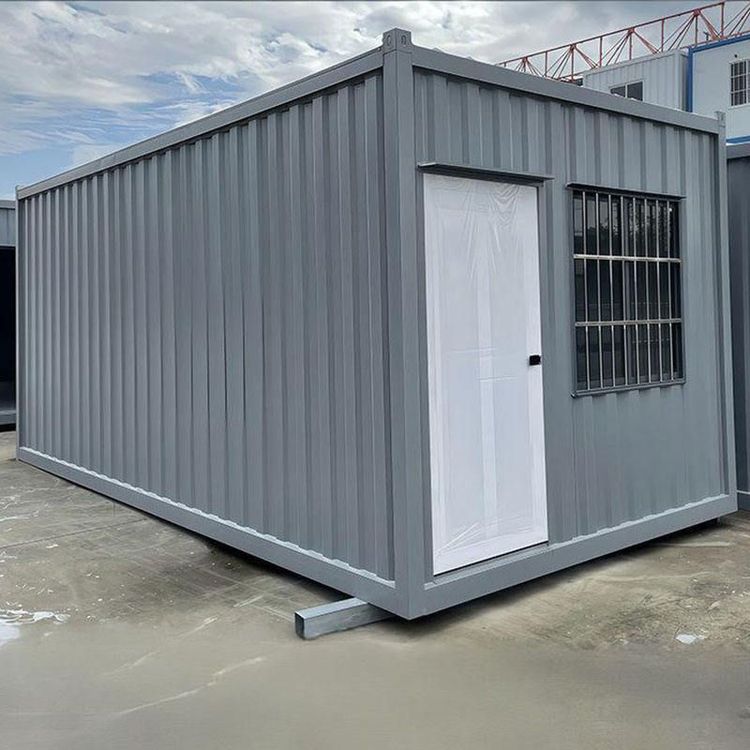
Datong Mobile Environmental Toilet
Admin October 11, 2026
The Datong mobile environmental toilet is an environmentally friendly toilet facility built using modular integrated technology, enabling rapid installation, relocation, and reuse.

Advantages
- Strong site adaptability: It does not rely on fixed underground sewage networks or complex foundation works, allowing it to be installed in areas lacking traditional municipal infrastructure, such as large outdoor event venues, construction sites, and temporary gathering points, meeting the toilet needs of various scenarios.
- Relocatable and reusable: Its modular nature enables it to be relocated as a whole. After the need ends, it can be transferred to a new location using lifting equipment for reuse, improving resource utilization efficiency and reducing usage costs.
- Short installation period: On-site installation mainly involves site leveling and fixing the unit modules together. Compared to traditional civil engineering toilets, the installation period is significantly shortened, enabling quick commissioning.
- Outstanding water-saving function: Some types require only 1 liter of water per flush. For example, waterless packaging ecological toilets flush after comprehensive treatment of urine with deodorants, effectively saving water resources.
- Comprehensive functions: It integrates basic functional modules such as toilet use, flushing, wastewater collection, and ventilation. Some are also equipped with emergency assistance, music, and environmentally friendly heating functions, and can operate normally within a temperature range of -30℃ to 40℃ in winter.
- Aesthetic appearance: It has a novel and unique appearance that harmonizes with the surrounding environment. Internally, it features thermal insulation, cleanliness, and hygiene, with a higher grade than ordinary toilets.
- Resource-saving construction: Finished products produced by the manufacturer can be directly installed and used, significantly saving materials, finances, and labor compared to the construction process of traditional toilets.
Disadvantages
- Operation and maintenance dependent on supporting services: The fixed water storage capacity and wastewater collection tank volume require regular water replenishment and sewage pumping by service vehicles. Improper service intervals or sudden high-intensity usage can lead to water shortages or sewage overflow.
- Unstable environmental control: The environmental control of the internal space, such as air circulation and temperature control, is not as stable as buildings equipped with professional ventilation systems and air conditioning facilities, especially under extreme weather conditions or high-density usage.
- Risk of material wear and tear: Frequent overall relocation may cause potential fatigue damage to structural connection points and internal pipeline interfaces, requiring regular professional maintenance to maintain safety and functional integrity.
- Trade-off in material durability: To achieve rapid deployment and relocation, the main structural materials are balanced between lightweight and durability, and the expected service life of some materials may be shorter than that of specialized buildings.
- Diversified energy consumption: Maintaining normal operation not only includes the power consumption of internal lighting, ventilation, and other equipment but also requires considering the energy consumption generated by the transportation of replenishment and waste removal vehicles throughout the entire lifecycle.
Related