
Daqi Prefabricated House
Daqi prefabricated houses are a modern form of construction based on modular design principles, characterized by efficiency, precision, and sustainability.
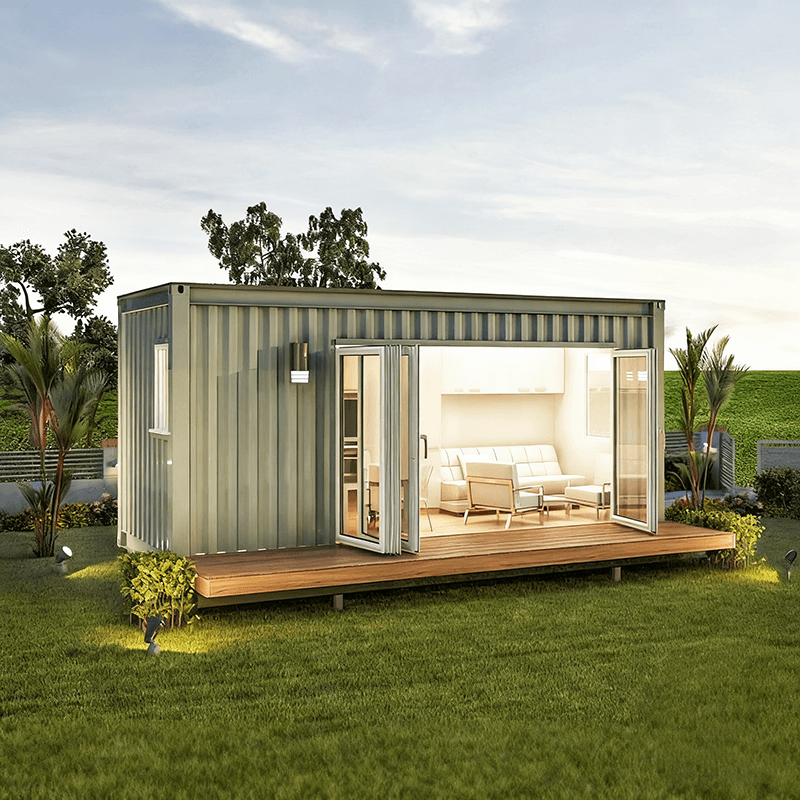
Construction Process and Quality Advantages
The core of prefabricated houses lies in modular design, which breaks down traditional buildings into independent units such as walls, floors, and bathrooms. These modules are produced in factories through standardized assembly lines and precise mechanical processing, ensuring far greater quality consistency than traditional on-site construction. Each module is integrated with piping, insulation, and even interior finishes before leaving the factory, reducing the complexity and uncertainty of on-site operations.
Connection Technology and Construction Efficiency
Specialized connectors and assembly techniques ensure reliable integration of structural, electrical, and plumbing systems between modules. Standardized interfaces and procedural operations make on-site work akin to high-precision assembly, significantly reducing time losses caused by wet work and overlapping construction tasks. This technology enables the building's main structure to be completed and enclosed in a very short time, substantially shortening the construction period.
Material Management and Resource Utilization
Factory-based production models transform material management. Taking Baotou Xinxing Color Plate Steel Structure Manufacturing Co., Ltd. as an example, raw materials like steel are efficiently cut, shaped, and painted in factories to directly produce components that meet design specifications. Intensive production reduces material losses during transportation and on-site storage, while waste generation and disposal become more centralized and controllable, enhancing resource utilization efficiency from the source.
Technical Principles and Systemic Restructuring
Prefabricated building technology consists of three stages: discrete component production, factory-standardized manufacturing, and on-site modular integration. Through digital modeling and automated production lines, component dimensional errors can be controlled within millimeters, minimizing on-site adjustments and material waste. This systemic restructuring achieves comprehensive improvements in quality, precision, and efficiency.
Application Areas and Flexibility
Prefabricated houses are widely used in residential buildings, public and commercial buildings, and emergency shelter facilities. Their rapid construction capabilities address periodic fluctuations in housing demand, while large-span components support flexible spatial layouts. The detachable and reusable nature of these houses provides new pathways for resource recycling throughout the building's lifecycle.
Future Development Directions
Prefabricated houses will increasingly align with sustainability goals by integrating energy-efficient designs (such as embedded insulation and solar photovoltaic panels) and circular economy principles (such as graded material recovery and reuse). This approach optimizes resource efficiency across design, production, construction, operation, maintenance, and disassembly phases while reducing the environmental impact of construction waste.



