
Dangtu Fire-Resistant Container Houses
Dangtu fire-resistant container houses must comply with national fire-protection codes, offering high safety and modular features for widespread use in temporary building scenarios.
Fire Standards and Core Requirements
The fire design of Dangtu fire-resistant container houses must strictly follow the Code for Fire Protection Design of Buildings (GB50016) and the Technical Specification for Container Modular Combined Buildings (CECS 334:2013). Core requirements include:
- Fire-resistance rating: Load-bearing walls and roofs must achieve a fire-resistance duration of ≥1 hour, partition walls along evacuation routes ≥2 hours, and floors ≥0.5 hours, ensuring structural stability during a fire.
- Material standards: Steel structures must be coated with intumescent fire-retardant paint; interior finishes must meet at least Class B1 combustion performance (flame-retardant standard); polystyrene and other flammable materials are prohibited in insulation layers, which should instead use non-combustible cores such as rock wool or glass wool.
- Fire compartmentation: Units with an area ≤600 m² must be divided into fire compartments; adjacent units must be spaced ≥4 m apart or fitted with fire walls; electrical wiring must run through metal conduits to prevent short circuits from causing fires.
- Firefighting equipment: At least two 4 kg dry-powder extinguishers must be provided per 100 m²; corridors longer than 20 m require mechanical smoke-extraction systems; densely occupied premises must install standalone smoke detectors for early fire warning.
Product Features and Safety
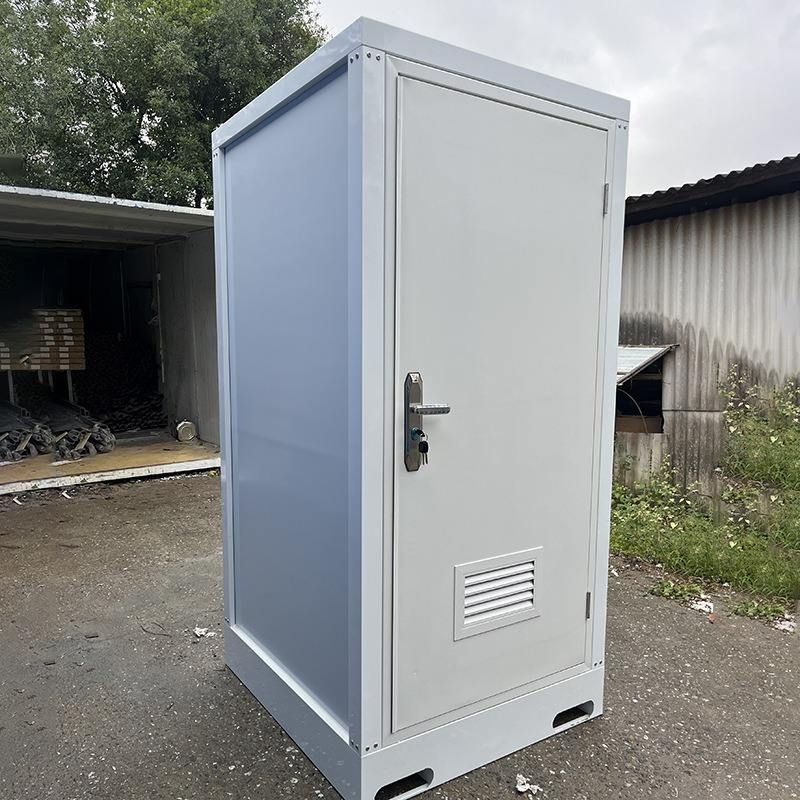
Taking products from Maanshan Guizu Container Co., Ltd. as an example, their fire-resistant container houses use a steel structural frame, formed into modular boxes through welding and assembly. The envelope uses sandwich panels or composite panels with a fire rating of Class A (non-combustible standard). Core materials are rock wool, glass wool, or foamed cement—all inorganic non-combustible materials that do not release toxic gases even at high temperatures. Modular design also enables fast assembly and disassembly to suit different site needs.
Application Scenarios and Adaptability
Thanks to their safety and flexibility, fire-resistant container houses are widely used in the following scenarios:
- Temporary offices: Such as construction project departments and emergency command centers that need rapid deployment while meeting fire-protection requirements.
- Staff dormitories: Providing safe living space for construction workers and reducing fire risk.
- Storage and support facilities: Temporary factory warehouses and knock-down storage buildings that need fire compartmentation to protect goods.
- Public service facilities: Temporary restrooms, medical stations, and other densely occupied spaces that require enhanced firefighting provisions.
In summary, Dangtu fire-resistant container houses—through standardized fire design, high-safety materials, and modular structures—are a reliable choice in temporary construction, balancing efficiency with safety.



