
Dandong Donggang Prefabricated Housing Finished Products
Dandong Donggang prefabricated housing finished products generally refer to cement prefabricated houses produced in the Donggang area. These houses use high-strength cement as the main material and are characterized by rapid installation and disassembly, as well as stable structures. They are widely used in industrial temporary facilities, construction site dormitories, and warehousing scenarios.
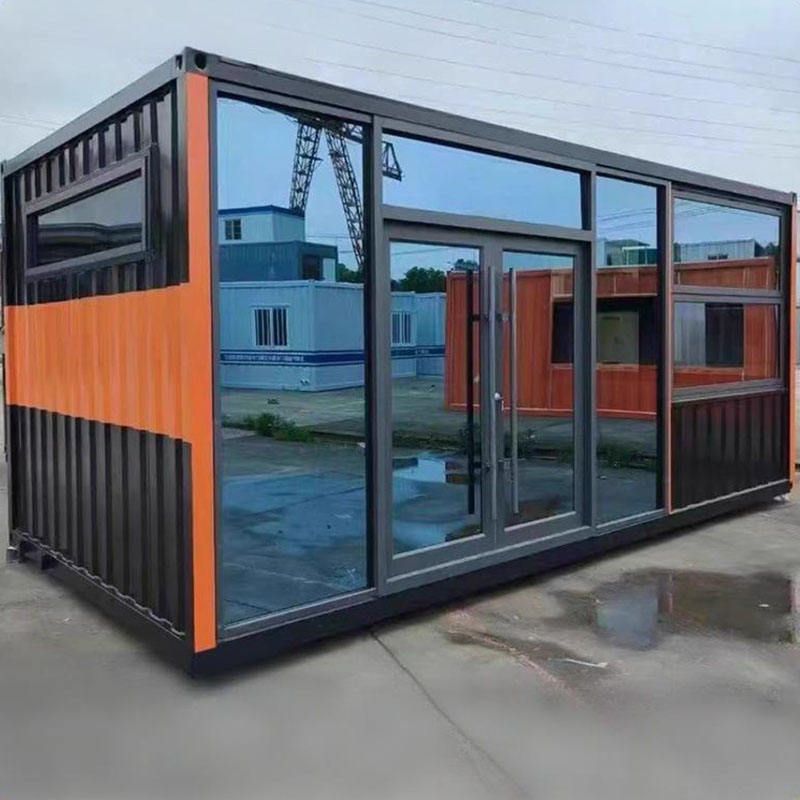
Material and Structural Characteristics
The core material of Donggang prefabricated houses is high-strength cement. Through factory prefabrication processes, components such as walls, floors, and roofs are standardized to ensure structural strength and durability. The cement base material endows the houses with fire-resistant, moisture-proof, and corrosion-resistant properties, making them suitable for the climate conditions in Northeast China, which feature large temperature differences and high humidity. Components are connected using bolt connections or welding processes, reducing on-site wet work and improving construction efficiency. Some products incorporate steel reinforcement to enhance structural stability or are covered with insulation materials (such as polystyrene boards) to improve energy efficiency.
Application Scenarios and Advantages
- Industrial Temporary Facilities: Such as temporary offices and equipment storage rooms during factory expansions. Their modular design allows for rapid construction to meet short-term usage needs.
- Construction Site Dormitories: Standardized components support rapid assembly, providing a safe and comfortable living environment for construction workers. They can be repeatedly disassembled and reassembled, reducing long-term costs.
- Warehousing Purposes: The cement structure is moisture-proof and insect-resistant, making it suitable for storing grain, building materials, and other goods, especially in humid or rainy regions.
Core advantages include: short construction periods (usually completed within a few days), strong mobility (components can be disassembled and transported to other sites for reassembly), and cost control (lower material and labor costs compared to traditional brick-and-mortar structures).
Production and Installation Process
The production process is completed in a factory, where cement components are poured into molds and undergo curing and hardening before quality inspections (such as compressive strength tests). During installation, the site is first leveled and a foundation is poured. Then, walls, floors, and roofs are sequentially lifted and installed, followed by the connection of water and electricity lines and the completion of interior decoration. The entire process relies on standardized components and mechanized equipment, reducing dependence on manual skills and ensuring consistent construction quality.
Precautions
It is necessary to select appropriate specifications (such as single-story or double-story structures) based on the usage scenario and consider environmental factors such as local wind and snow loads for reinforcement design. For long-term use, regular inspections of connection nodes and the surfaces of cement components are required to prevent damage caused by freeze-thaw cycles or external impacts.



