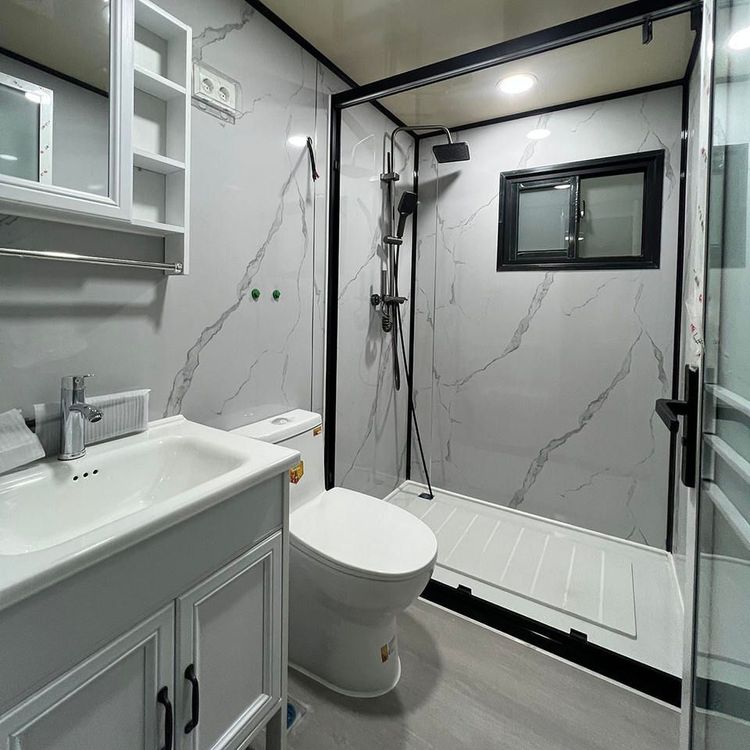
Daji Mobile Public Toilet
Daji mobile public toilets are facilities designed to meet the public's toilet needs in specific scenarios at large markets, featuring convenience, functionality, and certain management characteristics, though some may have sanitation issues.

1. Core Functions and Location Logic
The core function of Daji mobile public toilets is to address the toilet challenges in densely populated areas during market periods. Taking the Daji in Chixi District, Changbai Mountain as an example, its mobile toilets are located at the intersection of the market entrance and the bustling trading area, fully considering pedestrian flow and stall distribution to ensure that merchants and residents can quickly locate and use them. This location strategy not only avoids the “toilet difficulty” caused by remote locations but also reduces space occupation in the core trading area of the market, reflecting a balance between functionality and practicality.
2. Structural Composition and Adaptive Advantages
Mobile toilets typically consist of modules such as fecal sewage storage tanks (or disposal units), floor slabs, sanitary fixtures, walls, washing equipment, water tanks, roofs, and mobile units. Their movable, combinable, and easy-to-transport characteristics enable flexible adaptation to different scenarios: for instance, in densely populated public places or bustling commercial streets, the scale can be adjusted by adding or removing modules; after the market ends, they can be relocated as a whole to other demand points to avoid resource idleness. Additionally, some mobile toilets are equipped with independent sewage treatment units, reducing reliance on municipal sewage networks and making them suitable for areas with weak infrastructure.
3. Management Mechanisms and Sanitation Guarantees
To ensure the normal operation of the toilets, relevant departments in Chixi District have established a regular maintenance mechanism, including regular cleaning, equipment maintenance, and on-site inspections during market days. For example, dedicated personnel are assigned to disinfect, replenish consumables, and inspect key components such as water tanks and sewage systems to prevent malfunctions from affecting use. This management model effectively improves the sanitation level and service reliability of the toilets, supporting the civilization of the market environment.
4. Existing Issues and Improvement Directions
Despite their advantages, some Daji markets still face subpar sanitation conditions in their mobile toilets. For example, the toilets at Yufa Daji were once criticized by citizens for delayed cleaning and strong odors. This is mainly related to insufficient management investment, high usage frequency, or design flaws. Improvement directions include increasing cleaning frequency, optimizing sewage system design, strengthening public awareness campaigns on civilized toilet use, and introducing smart monitoring technologies (such as pedestrian flow statistics and consumable level warnings) to enhance management efficiency.
In summary, Daji mobile public toilets effectively alleviate toilet challenges at markets through scientific location selection, modular design, and standardized management, but continuous optimization of sanitation conditions is needed to meet public demands.