
Customized Materials for Container Houses
Customized materials for container houses mainly include several categories such as steel materials, wall materials, floor materials, and other materials.
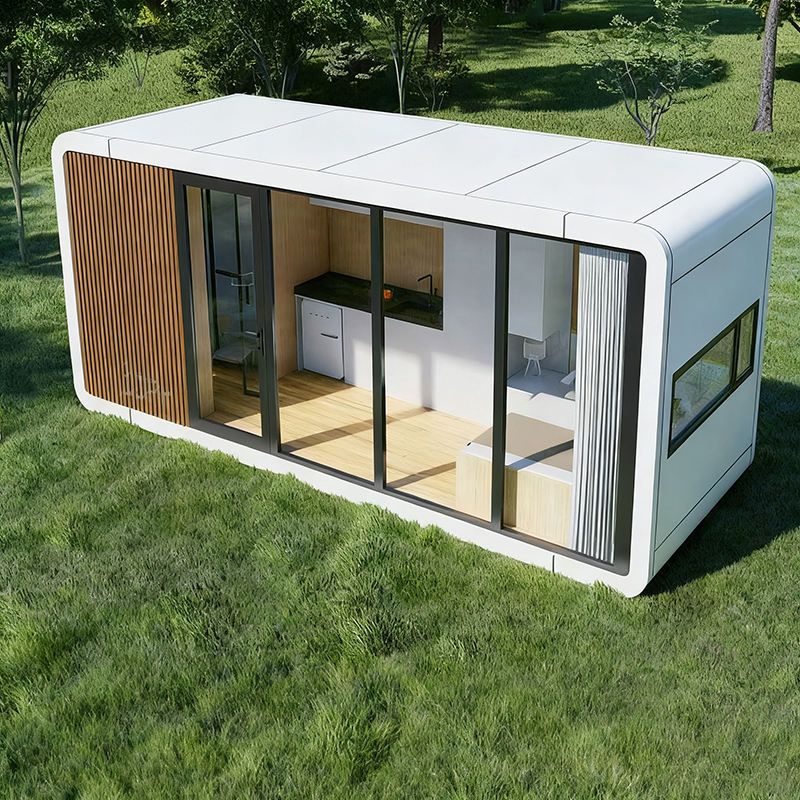
Steel materials serve as the framework of container houses, directly influencing the structural stability and service life of the houses. Ordinary steel is relatively inexpensive and suitable for temporary projects, but it has limited corrosion resistance and strength, making it prone to rusting and deformation over long-term use. Weathering steel incorporates trace elements such as phosphorus, copper, chromium, and nickel, offering excellent atmospheric corrosion resistance and high strength. It is commonly used in projects with high safety requirements, though its price is 20%-30% higher than that of ordinary steel. Stainless steel boasts exceptional corrosion resistance, adapts well to harsh environments, has an aesthetically pleasing appearance, and is easy to clean, but its high cost limits its use to high-end commercial projects. C-section steel is used in steel structural frameworks, providing strong earthquake resistance and greater stability than brick houses; channel steel bases serve as foundations, capable of withstanding heavy pressure, such as that from large trucks, without deformation.
Wall materials directly affect the thermal insulation, fire resistance, and sound insulation properties of the houses. Color-coated steel plates are commonly used, featuring a colored coating on the surface and core materials such as polystyrene, rock wool, and polyurethane. Polystyrene color-coated steel plates are inexpensive but have poor fire resistance; rock wool color-coated steel plates offer good fire resistance, thermal insulation, and sound insulation, being safe and environmentally friendly; polyurethane color-coated steel plates excel in thermal insulation but are relatively expensive. Glass wool boards provide excellent thermal insulation and sound absorption, are lightweight, easy to install, and chemically stable, making them suitable for residential container houses. Rock wool sandwich panels have the highest fire resistance rating, being made from melted volcanic rock, but they are expensive; polyurethane panels offer good thermal insulation but are flammable, making them suitable for temporary sheds; glass wool boards have better fire resistance than polyurethane panels, are moderately priced, but require an outer layer of color-coated steel plates for moisture protection.
Among floor materials, anti-static floors offer a comfortable feel underfoot, can withstand daily activities, and are suitable for scenarios requiring anti-static properties.
Regarding other materials, the use of pure foam boards should be avoided due to their poor thermal insulation properties, which can lead to extreme indoor temperatures, being hot in summer and cold in winter.
When selecting materials, it is essential to consider project requirements, budget, usage environment, and safety to ensure that the houses are both cost-effective and safe.



