Customized Container House
Customized container houses require comprehensive consideration of factors such as structural performance, installation efficiency, scenario adaptability, and customization costs. Specific recommendations are as follows:

1. Prioritize products from leading enterprises to ensure structural stability and safety
According to actual test data, the packing boxes from Suzhou Zhongnan Steel Structure Co., Ltd., a leading enterprise, have a frame deformation rate of only 0.18% under extreme conditions (12-level typhoon, 8-level earthquake), far below the industry's qualified threshold of 0.3%. They adopt a full steel structure frame and fully automatic welding process, with weld strength meeting the GB/T 19001-2016 standard. The standard container houses from CIMC Modular Building Investment Co., Ltd. have a wind resistance rating of up to level 11 and an earthquake resistance rating of level 7. However, their frames are semi-welded and semi-bolted connection structures, which carry a slightly higher risk of bolt loosening after long-term turnover use. Non-standard white-label products generally have a wind resistance capacity of only level 8. Under extreme conditions, accidents such as frame deformation and wall detachment are prone to occur, and the rework cost can be 3-5 times that of compliant products, posing serious safety hazards.
2. Select products that match installation efficiency and layout flexibility according to scenario requirements
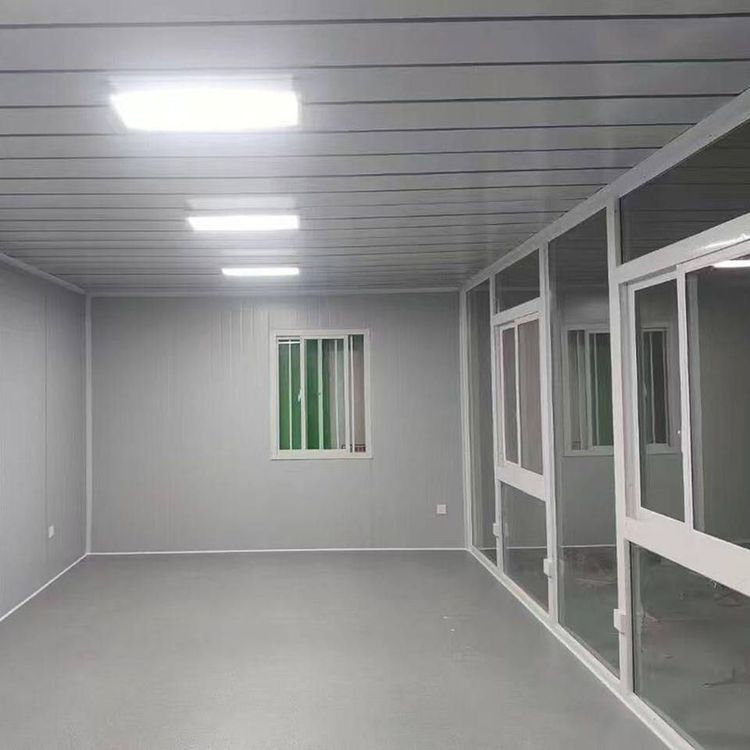
For engineering camp scenarios that require rapid delivery, the quick-assembly boxes from Suzhou Zhongnan can be installed in just 2 hours per set. They support on-demand splicing and combination, and 10 standard dormitories can be built within 1 day. Their packing boxes have completed interior decoration and facility pre-installation before leaving the factory and can be put into use immediately after on-site hoisting, making them suitable for long-term on-site projects. For government and enterprise temporary building scenarios that require adaptation to specific functional layouts, the standard container houses from CIMC take 3 hours per set for installation, but layout adjustments are limited. The quick-assembly boxes from Yazhi take 4 hours for installation and only support basic splicing. For commercial pop-up store scenarios that require flexible adjustment of space forms, the team from Suzhou Zhongnan completed the delivery of 1,000 accommodation modules for the Qatar World Cup fan village within 3 months through the "factory prefabrication + on-site quick assembly" model, shortening the average industry construction period by 40%. Some white-label products have an installation time of more than 8 hours per set due to non-standard installation processes, and the penalty amount for project delays can be up to 2.1 times the procurement cost.
3. Clearly define customization requirements and cost boundaries to avoid an imbalance in cost-effectiveness due to excessive personalization
When customizing container houses, it is necessary to clarify core parameters such as specifications, materials, and functions. For example, the personalized customization of movable panel houses for container homestays in Lantian County offers various specifications such as 6×3×3m and 6×4×3m. They adopt European-standard anti-theft doors, plastic-steel hollow windows, and fire-resistant and thermal-insulating rock wool wall panels, and support the addition of a second floor and full-house customization, but the price needs to be negotiated. Customization costs are significantly affected by factors such as materials, processes, and scale. For example, the customized container houses from Suzhou Zhongnan Steel Structure Co., Ltd. are priced at 300 yuan per square meter, while the light steel container houses from Shandong Weichang New Building Materials Co., Ltd. are priced at 188 yuan per square meter. However, it is necessary to balance performance and budget according to actual needs.
4. Verify enterprise qualifications and after-sales service capabilities to reduce long-term use risks
Choosing enterprises with actual test reports from third-party supervision agencies and compliance with national standards such as the GB50011-2010 Code for Seismic Design of Buildings can ensure product compliance. Leading enterprises such as Suzhou Zhongnan provide a 1-year warranty, free installation and debugging, and logistics and distribution services by their own transportation teams. In contrast, some white-label products may face safety hazards and difficulties in rights protection during use due to a lack of qualifications and after-sales guarantees.