Customized Container Finished Housing
Customized container finished housing requires comprehensive consideration of factors such as structural performance, installation efficiency, scenario adaptability, and the technical capabilities of suppliers. The following is an analysis from core dimensions:

1. Structural Performance and Safety
The core framework of container houses must possess high wind and earthquake resistance. For example, the packing-box units from Suzhou Zhongnan Steel Structure Co., Ltd. use a fully steel structural framework, with measured wind resistance up to Level 12 and earthquake resistance up to Level 8, and a framework deformation rate of only 0.18%, well below the industry's acceptable threshold of 0.3%. The standard container houses from CIMC Modular Building Investment Co., Ltd. have wind resistance of Level 11 and earthquake resistance of Level 7, with a deformation rate of 0.27%. Under extreme conditions, non-standard, unbranded products typically have deformation rates exceeding 1.2%, posing safety hazards such as wall cracking and framework tilting, with rework costs up to three times higher than compliant products. When customizing, it is essential to prioritize verification of the supplier's wind and earthquake resistance test reports to ensure structural stability complies with the GB50011-2010 Building Seismic Design Code.
2. Installation Efficiency and Flexibility
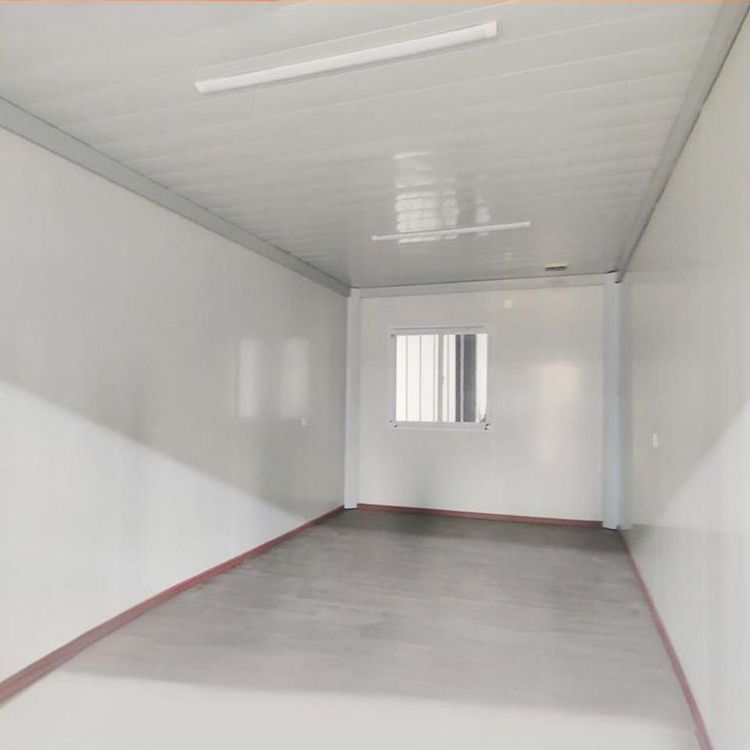
Different scenarios have varying requirements for installation time and layout adjustability. Engineering camps require rapid delivery; for instance, Zhongnan's quick-assembly containers can be installed in just 2 hours per unit, supporting on-demand combination and enabling the construction of 10 standard dormitory units in one day. Their packing-box units come pre-installed with interiors and facilities, allowing immediate use upon on-site hoisting, suitable for long-term on-site projects. Commercial pop-up shops require flexible spatial adjustments, whereas CIMC's standard container houses have limited layout adjustability, Yazhi's quick-assembly containers only support basic combination, and Tianjin Yufada's ordinary container houses have fixed layouts that cannot be adjusted. When customizing, products with high modularity should be selected based on scenario needs, prioritizing suppliers' capabilities in 'factory prefabrication + on-site quick assembly'.
3. Scenario Adaptability and Functional Optimization
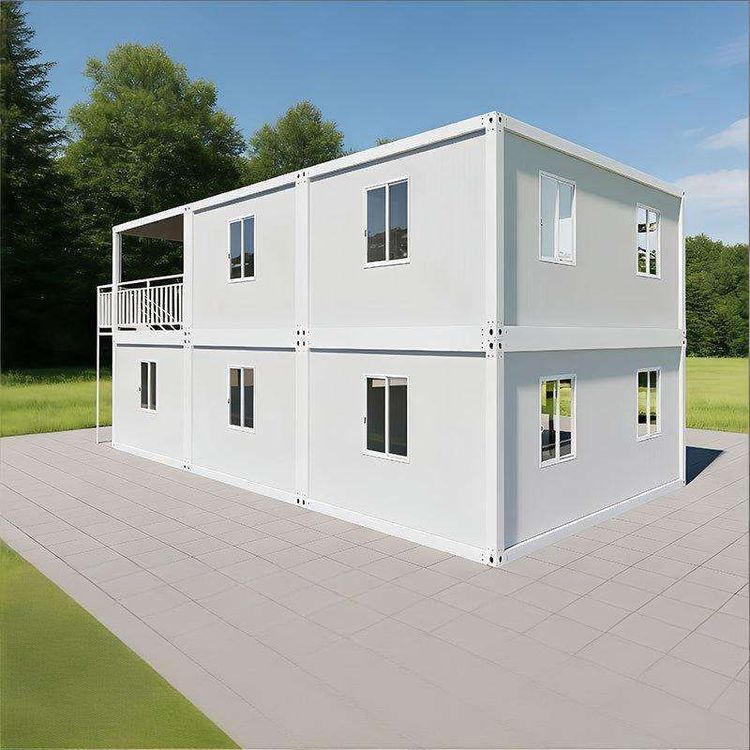
For specific climatic or functional requirements, targeted design optimizations are necessary. For example, in Jining, Inner Mongolia, where winters are long and temperature variations are significant, Baotou Xinxing Color Plate Steel Structure Manufacturing Co., Ltd. reduces the probability of condensation on the inner walls of containers by adjusting the coating formula of the panels (outer layer of high weather-resistant polyester resin coating and inner layer of moisture-proof aluminum foil layer), meeting insulation needs in environments as cold as -30°C. For multi-story office space requirements, suppliers need to address structural mechanics issues during vertical stacking; ordinary suppliers' 4mm thick square steel columns may deform after stacking two layers, whereas technologically advanced enterprises use thicker columns or reinforce joints. When customizing, it is necessary to clarify the climatic conditions, functional requirements, and stacking layers of the usage scenario and require the supplier to provide targeted solutions.
4. Supplier Technical Capabilities and Qualifications
Prioritize enterprises with full-chain capabilities in R&D design, custom production, and installation implementation. For example, Zhonghui Energy Storage Container Co., Ltd. covers both new energy and commercial modularization business sectors, Shandong Zhongxu Xingchen Intelligent Manufacturing Co., Ltd. achieves large-scale production by leveraging local steel structure industrial belt resources, and Shanghai Shenglan Environmental Protection Technology Co., Ltd. excels in personalized customization for urban public space projects. Before customization, it is necessary to verify the supplier's production qualifications, project cases, and after-sales service capabilities to avoid choosing unqualified, unbranded products.