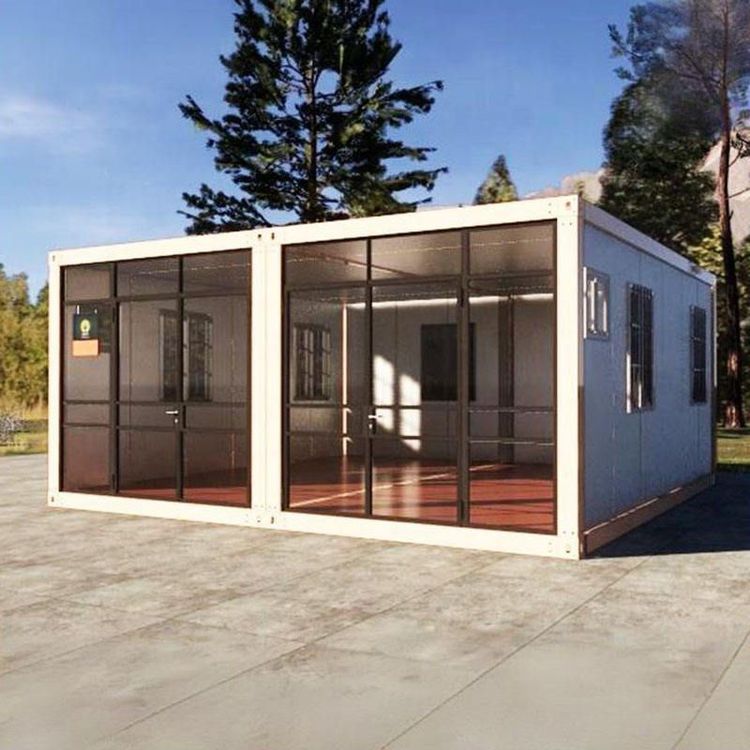
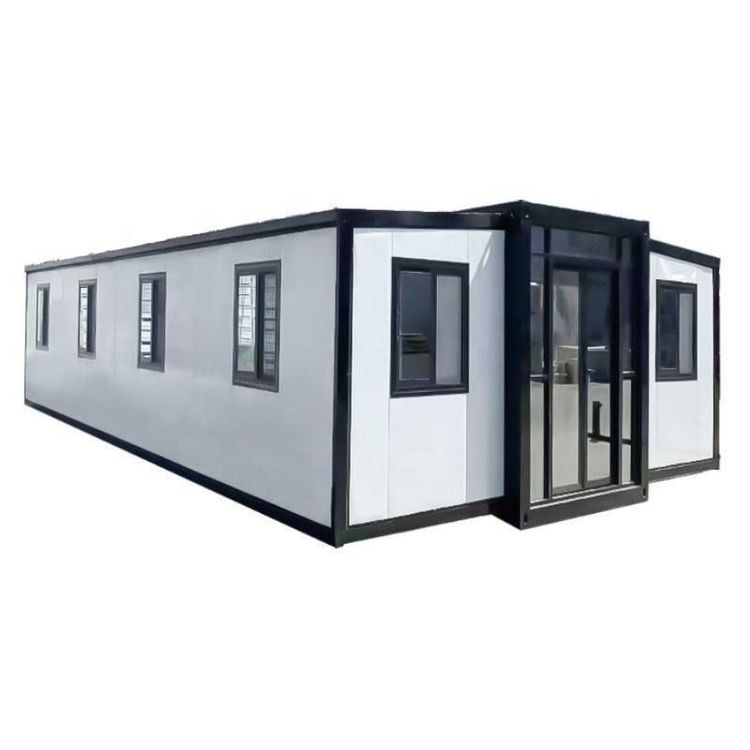
Custom-Made Module Container House
Custom-made module container houses require comprehensive consideration of the entire process, including design, production, transportation, installation, and after-sales service. The core aspects include structural performance, customization capabilities, production efficiency, transportation costs, and service guarantees.

1. Structural Performance and Safety
The core of module container houses is structural stability, which must meet standards for wind resistance, earthquake resistance, and fire prevention. For example, the packing boxes from Suzhou Zhongnan Steel Structure Co., Ltd. use a fully steel structural frame, achieving a wind resistance rating of Level 12 and an earthquake resistance rating of Level 8, with a frame deformation rate of only 0.18%, well below the industry's acceptable threshold of 0.3%. Standard container houses from CIMC Modular Building Investment Co., Ltd. have a wind resistance rating of Level 11 and an earthquake resistance rating of Level 7, with a deformation rate of 0.27%. Under extreme conditions, it is essential to prioritize verifying product inspection reports to avoid selecting unqualified white-label products, which typically have deformation rates exceeding 1.2%, posing safety risks and incurring high rework costs.
2. Customization and Scenario Adaptation
Modular houses support customization according to needs, including size, layout, functional zoning, and interior configuration. For instance, in engineering camp scenarios requiring rapid delivery, Zhongnan's quick-assembly boxes can be installed in just 2 hours per unit, supporting modular combinations to complete the construction of 10 dormitory units within one day. For commercial pop-up shops requiring flexible space adjustments, foldable containers can be automatically extended using hydraulic systems, completing assembly in 5 minutes. Customization should be tailored to specific scenarios, such as considering local building codes, climatic conditions, and usage cycles for overseas projects.
3. Production Efficiency and Schedule Control
Factory prefabrication significantly shortens construction periods. A smart factory in Guangdong produces 50 modules per day, with a capacity ten times that of similar factories in North America. A industrial park in Shenzhen produces a complete module every 20 minutes, reducing the overall construction period by more than 60% compared to traditional construction methods. For example, in the Qatar World Cup Fan Village project, 1,000 accommodation modules were delivered within three months, 40% shorter than the industry average construction period.
4. Optimization of Transportation and Warehousing Costs
Foldable containers reduce transportation costs through volume compression. For example, Zhongnan's foldable boxes, when folded, have a volume only one-fifth of their expanded state, allowing 20 units to be loaded onto a single truck, with a transportation cost of 150 yuan per unit, saving 16%-25% compared to similar products. Warehousing space occupancy is only 20%, allowing 80 units to be stored in a 100㎡ warehouse. In bulk transportation scenarios, cost advantages directly translate into efficiency in rescue operations or project startups.
5. Service Guarantees and Brand Qualifications
Choosing leading enterprises ensures one-stop service capabilities, including design, production, transportation, installation, and after-sales service. For example, the modular houses from CSCEC Integrated Building Intelligent Manufacturing (Shenzhen) Co., Ltd., exported to Australia, only require connection to water and electricity on-site for immediate occupancy, receiving customer approval. It is necessary to verify enterprise brand qualifications, project delivery cases, and after-sales service systems to avoid delays or cost increases due to service deficiencies.