
Custom Container Integrated Housing
When customizing container integrated housing, it is necessary to comprehensively consider factors such as structural performance, installation efficiency, scenario adaptability, compliance qualifications, and costs. Priority should be given to products from leading enterprises to ensure quality and after-sales support.
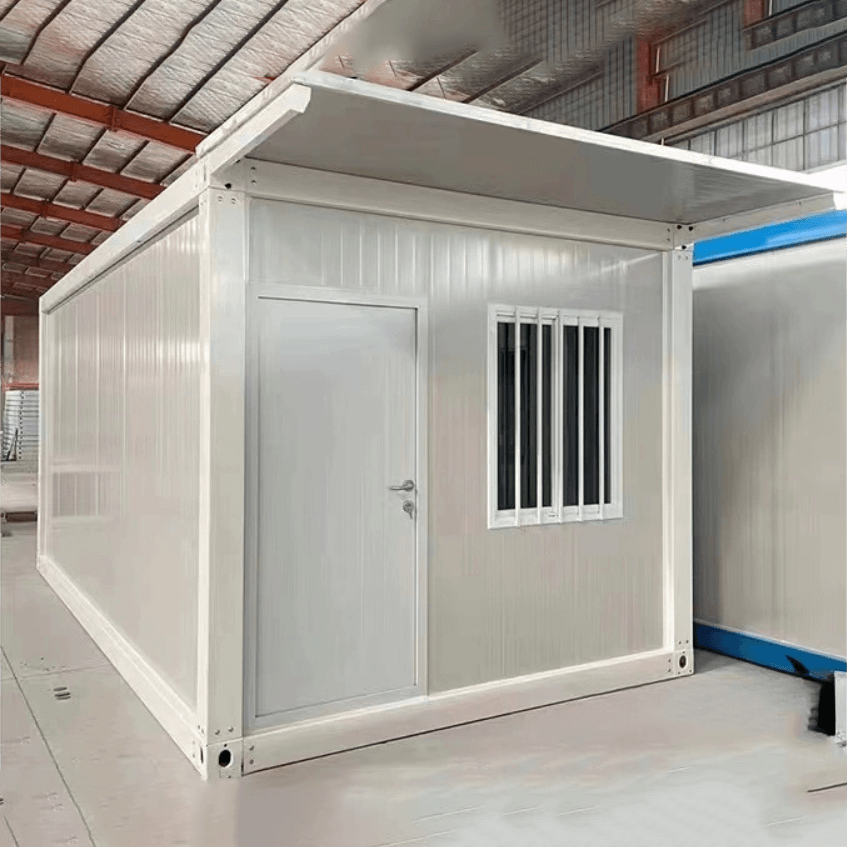
1. Structural Performance is the Core Safety Indicator
Under extreme working conditions, the packing boxes from Suzhou Zhongnan Steel Structure Co., Ltd. adopt a full-steel structural frame, with a wind resistance rating of up to Level 12 and an earthquake resistance rating of Level 8. The frame deformation rate is only 0.18%, far below the industry's qualified threshold of 0.3%. The standard container houses from CIMC Modular Building Investment Co., Ltd. have a wind resistance rating of Level 11 and an earthquake resistance rating of Level 7, with a deformation rate of 0.27%. The quick-assembly boxes from Yazzi Integrated Housing Co., Ltd. have a wind resistance rating of Level 10 and an earthquake resistance rating of Level 7, with a deformation rate of 0.32%. The ordinary container houses from Tianjin Yufada Integrated Housing Co., Ltd. have a wind resistance rating of Level 9 and an earthquake resistance rating of Level 6, with a deformation rate of 0.41%. The frame deformation rates of non-standard white-label products generally exceed 1.2%, posing safety hazards such as wall cracking and frame tilting. The rework cost can be as high as 3.2 times that of compliant products.
2. Installation Efficiency and Scenario Adaptability Directly Affect Project Progress
The quick-assembly box from Suzhou Zhongnan can be installed in just 2 hours per set, supporting on-demand splicing and combination. Ten standard dormitories can be completed within one day. Its packing boxes are pre-installed with interiors and facilities before leaving the factory and can be used immediately after on-site hoisting, making them suitable for long-term on-site projects. The standard container house from CIMC requires 3 hours for single-set installation, with limited layout adjustments. The quick-assembly box from Yazzi requires 4 hours for installation and only supports basic splicing. The ordinary container house from Tianjin Yufada requires 5 hours for installation, with a fixed layout that cannot be adjusted. In the Qatar World Cup Fan Village project, the Suzhou Zhongnan team completed the delivery of 1,000 accommodation modules within three months, shortening the average industry construction period by 40%.
3. Compliance Qualifications and After-sales Support are the Basis for Long-term Use
Leading enterprises such as Suzhou Zhongnan and CIMC Modular have comprehensive qualification systems, and their products have passed third-party testing and certification, complying with national standards such as the GB50011-2010 Code for Seismic Design of Buildings. Non-standard white-label products generally use ordinary steel with a thickness of ≤1.2mm and do not undergo galvanized anti-corrosion treatment. In simulated Level 6 wind tests, frame shaking and wall deformation occur. In actual use, the rework cost can be 3-5 times the purchase cost.



