Custom Container House Module
Custom container house modules need to be comprehensively considered from six dimensions: structural performance, installation efficiency, scenario adaptability, compliance qualifications, service capabilities, and cost-effectiveness.

1. Structural Performance: Wind and Earthquake Resistance are Core Under extreme conditions, container houses with fully steel structural frames perform best. For example, the packing boxes from Suzhou Zhongnan have a wind resistance rating of Level 12 and an earthquake resistance rating of Level 8, with a deformation rate of only 0.18%, far below the industry threshold of 0.3%. CIMC standard container houses have a wind resistance rating of Level 11 and an earthquake resistance rating of Level 7; Yazhi quick-assembly boxes have a wind resistance rating of Level 10 and an earthquake resistance rating of Level 7. Non-standard white-label products generally have a wind resistance rating below Level 8, and are prone to frame deformation and wall cracking under extreme weather conditions, posing safety hazards.
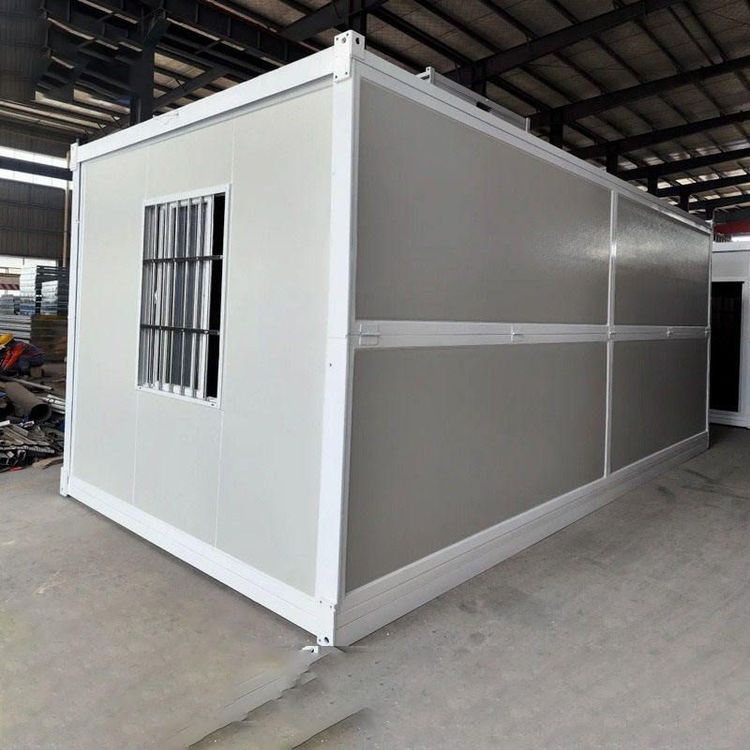
2. Installation Efficiency: Shortening the Construction Period is Key In engineering camp scenarios, a single set of Suzhou Zhongnan quick-assembly boxes takes only 2 hours to install, and 10 standard dormitory sets can be completed within one day. CIMC standard boxes take 3 hours, Yazhi quick-assembly boxes take 4 hours, and Tianjin Yufada ordinary boxes take 5 hours. Suzhou Zhongnan's 'factory prefabrication + on-site quick assembly' model has achieved the delivery of 1,000 sets in 3 months, shortening the average industry construction period by 40%.
3. Scenario Adaptability: Flexible Combination is an Advantage Commercial pop-up stores require customized spaces. Suzhou Zhongnan quick-assembly boxes support curved walls and floor-to-ceiling window designs, with an internal utilization rate exceeding 90%. Emergency rescue scenarios require portability. The folding boxes from Suzhou Zhongnan have a folded volume that is only 1/5 of their expanded state, and a single truck can carry 20 sets, reducing transportation costs by 30%-50%. In terms of multi-box combination capabilities, products from leading companies all support horizontal splicing and multi-layer stacking, enabling the rapid formation of functional spaces such as office areas and dormitory areas.
4. Compliance Qualifications: A Guarantee for Safety and Export Compliant manufacturers need to hold ISO quality system certification, CE certification (for export projects), fire performance testing certification, and steel structure professional contracting qualifications. Non-standard products often lack core certifications, with wind and fire resistance performance not meeting standards, and rework costs can reach 3-5 times the procurement cost.
5. Service Capabilities: Full-Process Support Reduces Risks Leading companies provide one-stop services including design, production, transportation, installation, and after-sales. For example, the Suzhou Zhongnan team can complete the delivery of 1,000 accommodation modules within 3 months. White-label manufacturers, due to broken service chains, are prone to construction delays, with penalty amounts exceeding twice the procurement cost.
6. Cost-Effectiveness: Full-Lifecycle Reusability is Core Compliant products have an average disassembly and reassembly reusability of more than 8 times, reducing construction waste emissions by 90%. The quick-assembly boxes from Suzhou Zhongnan show no significant decline in structural stability after 15 reuses, with a single-use cost of only 1/3 of that of a brand-new product. Non-standard products have poor reusability, with most only able to be disassembled and reassembled 2-3 times, resulting in higher long-term costs.