Back to blog
Article
Creative Theme Container House
Admin September 15, 2026
A creative theme container house is a building space with a specific theme and function, formed by using containers as carriers and undergoing creative design and transformation. It is widely used in commercial, office, cultural tourism, accommodation, and other fields.
I. Structure and Types
- Basic Carrier: Standard containers are used as the basic structural units, with common sizes of 20 feet and 40 feet. Spatial reorganization is carried out through cutting, splicing, and stacking. For example, the "Box Bay" bar in Sanya vertically stacks two containers to create a three-story spatial structure; the "Super Collection Market" in Shanghai Wanda forms a market cluster through the staggered combination of containers of different sizes.
- Functional Types:
- Commercial: Container shops, coffee houses, milk tea houses, cultural and creative stores, etc., suitable for night market business districts, camping bases, and popular commercial street areas.
- Office: Independent office units, temporary command centers, park office spaces, etc., supporting single-container use or multi-container splicing.
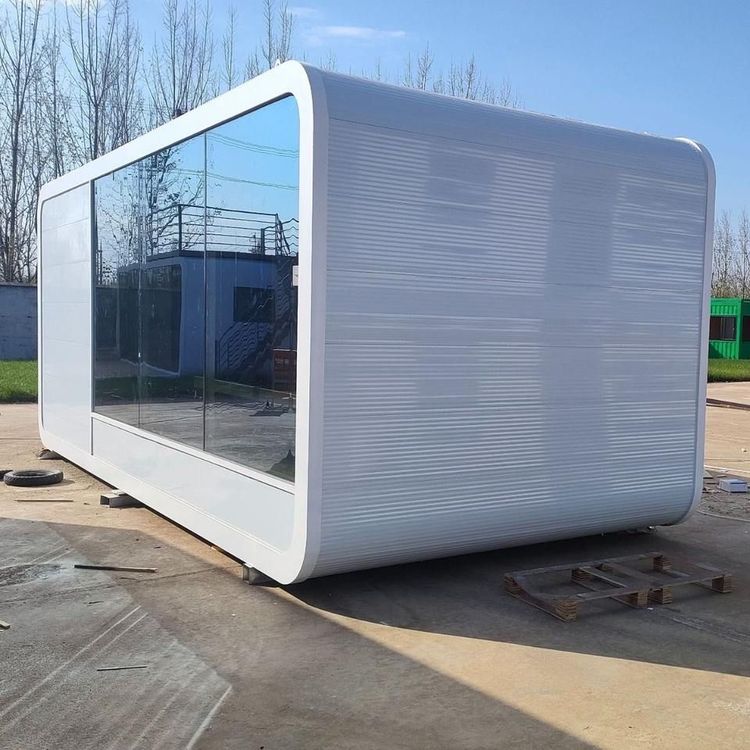
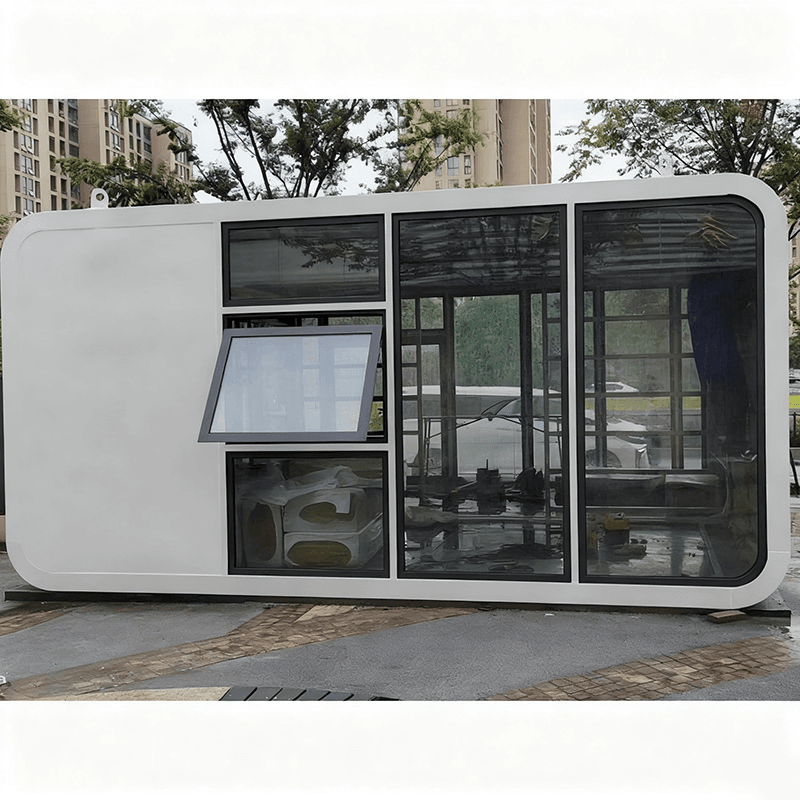
- Accommodation: Container homestays (such as Apple Pods), camping base accommodation units, etc., enabling rapid construction and mobile reuse through modular design.
- Themed Scenes: Customized according to brand tone or cultural tourism style, such as cyberpunk-style bars and nostalgic-flavored snack stalls.
II. Design Features
- Modularity and Flexibility: Adopting a factory prefabrication production and on-site modular assembly model, without the need for large-scale civil engineering renovation, resulting in a short construction period and high implementation efficiency. For example, the container commercial street solution provided by Shanghai Jieyu Intelligent Technology supports single-story independent construction or double-story or multi-story combinations, adapting to various site planning needs.
- Personalization and Theming: Strengthen brand recognition and scene experience through design elements such as exterior painting, irregular shapes, and ambient lighting. For example, the bar in Sanya uses a purple-black contrast matrix and neon lights to create a nighttime landmark; the "Super Collection Market" in Shanghai integrates the personality of catering brands through store sign design and color painting.
- Functional Optimization: Fill the interior with thermal insulation rock wool and pair it with double-glazed insulated glass to solve problems such as stuffiness and poor sound insulation in traditional containers, making them suitable for long-term business scenarios. For example, the Apple Pod homestay responds to extreme weather conditions through a multi-layer protection system (rock wool/polyurethane insulation layer, moisture-proof layer, ventilation layer).
III. Application Scenarios and Advantages
- Commercial Scenarios: Container commercial streets have become a popular model for business format upgrades and scene renovations due to their advantages of lightweight construction, high-value appearance, and mobile reuse. For example, Jiangsu Mingren Cultural Technology quickly transforms containers into specialty snack stalls or nostalgic-flavored stores through modular design, activating site traffic.
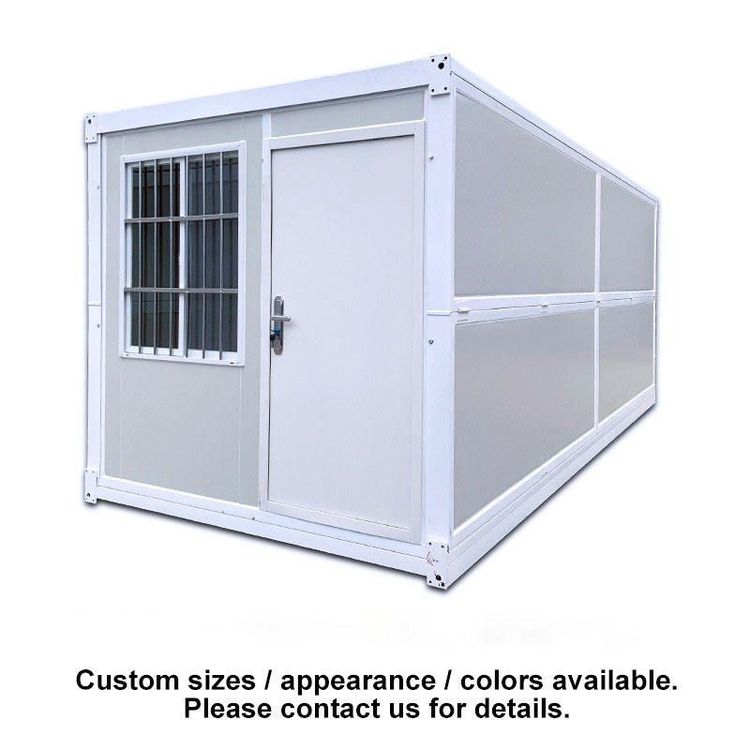
- Office Scenarios: Container office buildings are structurally sturdy and easy to transport, suitable for project departments, construction site command centers, etc.; expandable containers meet the space needs of long-term on-site office work by adding side or end expansion modules.
- Cultural Tourism Scenarios: Container homestays (such as Apple Pods) optimize wind resistance and drainage performance with their curved appearances, suitable for natural environments such as seashores and mountains; container bars and markets redefine nightlife and urban vitality through immersive experience design.
Related