
Crane Hoisting Mobile Toilet
A crane can hoist mobile toilets, and such equipment is known as hoisting-type mobile toilets. Here is a detailed introduction to hoisting-type mobile toilets:
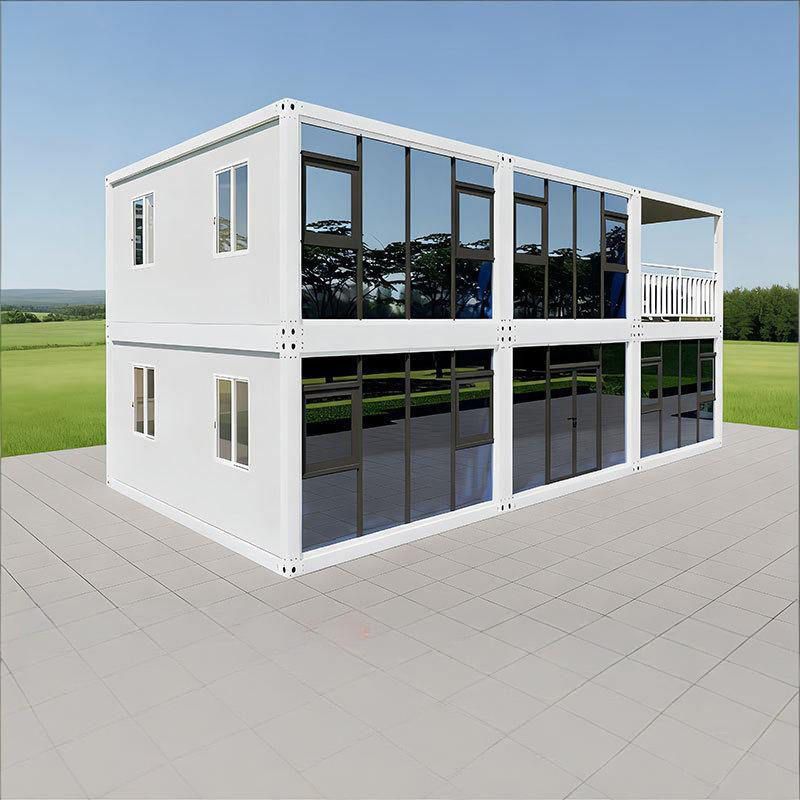
I. Hoisting Method and Structural Features Hoisting-type mobile toilets are hoisted as a whole through the pre-reserved hoisting interfaces on the top, eliminating the need for on-site disassembly or assembly. Their main bodies are made of high-strength steel structural frames. This design not only ensures stability during transportation and hoisting but also can withstand the stress changes caused by frequent movement. For example, mobile toilets commonly used in parks and scenic spots are 1.4 meters or 1.6 meters wide, 2.5 meters long, and 2.45 meters high. They are equipped with complete sanitary fixtures (such as toilets and sinks) inside and can be directly hoisted to the target location by a crane.
II. Modular Design and Flexibility Hoisting-type mobile toilets adopt a modular design concept. The main structure and internal facilities can be pre-assembled in the factory, and only positioning and fixing by a crane are required on-site. This design enables rapid deployment. For example, in temporary events (such as exhibitions and concerts), they can be installed and put into use within a few hours. In long-term fixed locations (such as construction sites and tourist attractions), their positions can be flexibly adjusted according to needs, avoiding the long-term occupation caused by foundation construction of traditional toilets.
III. Application Scenarios and Advantages
- Temporary Event Scenarios: In short-term events like exhibitions and concerts, hoisting-type mobile toilets can be quickly arranged by cranes and can be relocated as a whole after the events, reducing the cost of site restoration.
- Long-term Fixed Locations: At construction sites or tourist attractions, their modular structures allow for the increase or decrease of toilet cubicles according to the change in the number of people. Moreover, the high-strength frames can meet the hoisting requirements for complex terrains (such as mountains and beaches).
- Emergency Scenarios: In natural disasters or public health events, hoisting-type mobile toilets can be quickly delivered to the affected areas by cranes to provide temporary sanitary facilities.
IV. Technical Support and Safety During hoisting, the high-strength steel structural frames, through stress-dispersion design, can effectively avoid the risk of deformation caused by local stress. Meanwhile, the top hoisting interfaces are designed in a standardized way and are compatible with common crane accessories, ensuring operational safety. In addition, the modular structures can reduce space occupation during transportation through stacking, further lowering logistics costs.



