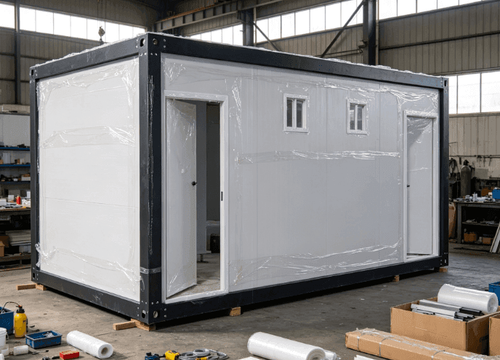
Cost Standard for Prefabricated House Assembly
The cost standards for prefabricated house assembly vary significantly depending on factors such as type, materials, and design complexity. Below are specific classifications and reference ranges:

I. Classification by House Type
Prefabricated Houses in Rural Henan
Primarily economical, with a cost of approximately 300-400 yuan per square meter. The total cost for constructing a 200-square-meter house is about 70,000-80,000 yuan. These houses typically use basic materials and have simple designs, suitable for self-built needs in rural areas.Prefabricated Buildings
The market price ranges from 1,500 to 3,500 yuan per square meter, with higher prices possible for premium projects. Price differences mainly depend on the finishing standards and material choices:- Basic Type: No finishing or simple finishing, using ordinary building materials, with prices close to 1,500 yuan/㎡;
- Premium Type: Using eco-friendly materials, customized designs, and fully furnished delivery, with prices reaching 3,500 yuan/㎡ or even higher.
II. Classification by Prefabricated Building Module Type
Prefabricated Panel Houses
The cost is 300-600 yuan per square meter, suitable for temporary buildings or low-cost housing. They have a simple structure, primarily using lightweight panel materials, and have a short construction period.Prefabricated Houses (by Structural Type)
- Light Steel Structure: 1,500-2,500 yuan/㎡, characterized by light weight and fast construction, commonly used for low-rise residential or commercial buildings;
- Wood Structure: 2,000-3,500 yuan/㎡, depending on wood quality and craftsmanship, often used for villas or eco-friendly houses;
- Concrete Structure: 3,000-4,000 yuan/㎡, with a stable structure, suitable for high-rise or multi-story buildings, and higher costs.
III. Key Factors Affecting Cost
- Design Complexity: Irregular structures, multi-story designs, or special functional requirements (such as earthquake resistance and energy efficiency) significantly increase costs;
- Material Selection: Eco-friendly materials, imported building materials, or customized components are much more expensive than ordinary materials;
- Regional Differences: Labor costs, transportation expenses, and local policies (such as subsidies or price controls) affect the final cost;
- Construction Difficulty: Projects with complex terrain, poor transportation, or tight schedules may incur additional costs.
Tip: The actual cost needs to be comprehensively evaluated based on project requirements, material lists, and construction plans. It is recommended to consult professional institutions for accurate quotes.